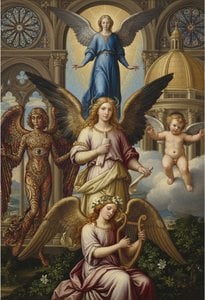
მხატვრის ბიოგრაფია
Annibale Carracci: Architect of Baroque Vision
Annibale Carracci, born in Bologna in 1560 and tragically passing away in Rome in 1609, stands as a pivotal figure in the transition from Renaissance to Baroque art. More than simply a painter, he was an architect of visual experience, a master who meticulously blended classical ideals with dynamic energy and a profound understanding of color and light. His career, though relatively short, profoundly shaped the artistic landscape of Rome and left an indelible mark on generations of artists. Carracci’s legacy isn't defined by individual masterpieces alone, but rather by his role as a teacher and mentor, fostering a revolutionary approach to painting that prioritized drama, movement, and a return to monumental scale—elements that would become hallmarks of the Baroque style.
Early Life and The Accademia degli Incamminati
Annibale’s artistic journey began within the family workshop in Bologna, an environment steeped in tradition yet ripe with intellectual curiosity. He was apprenticed to his father, Prospero Carracci, a respected painter known for his frescoes in churches and palaces. However, Annibale's ambition extended beyond simply replicating established styles; he sought to understand the very principles underlying artistic creation. In 1582, alongside his brothers Agostino and Ludovico, and cousin Francesco, he founded the *Accademia degli Incamminati* – “The Progressives” – a groundbreaking art school in Rome. This institution wasn’t merely a place for instruction; it was a deliberate attempt to break from the prevailing Mannerist style, which favored elegance and artificiality. The Carracci brothers envisioned an academy that would return to the classical ideals of harmony, proportion, and naturalism, drawing inspiration from both the North European Renaissance masters like Dürer and Raphael, and the vibrant color palettes and atmospheric effects of Venetian painters such as Titian. The *Incamminati*’s curriculum emphasized life drawing – a radical departure from the studio practice of copying models from memory – ensuring that students developed a deep understanding of human anatomy and form. This commitment to direct observation would become a defining characteristic of their work.
Influences and Artistic Style
Carracci's artistic style was remarkably eclectic, reflecting his broad exposure to diverse artistic traditions. He absorbed the linear clarity of Florentine masters like Raphael, skillfully employing perspective and anatomical accuracy. Simultaneously, he embraced the Venetian influence—the rich, luminous colors, atmospheric effects, and dramatic lighting that characterized Venetian painting. This synthesis resulted in a unique visual language marked by both classical restraint and Baroque dynamism. His compositions often featured grand narratives, populated with idealized figures engaged in heroic or mythological scenes. Carracci was particularly adept at creating illusionistic spaces – vast architectural settings that seemed to extend beyond the confines of the canvas—a technique he honed during his work on the frescoes for Palazzo Farnese. He meticulously studied classical sculpture and architecture, striving to recreate the monumental grandeur of ancient Rome in his paintings. His use of color was equally sophisticated, employing a carefully balanced palette of warm and cool tones to create depth and atmosphere.
Major Works and Legacy
Annibale Carracci’s most significant contributions are undoubtedly found within the frescoes decorating the Salone degli Uffici in Palazzo Farnese in Rome. These monumental works, completed between 1597 and 1608, represent the culmination of his artistic vision. The *Trionfo di Bacco* (Triumph of Bacchus), *Apollo e Dafne* (Apollo and Daphne), and *Venere e Adone* (Venus and Adonis) are considered masterpieces of Baroque art, showcasing Carracci’s mastery of composition, color, and illusionistic space. Beyond the Farnese frescoes, he also contributed to the decoration of the Cappella Cerasi in Santa Maria del Popolo, alongside his brother Agostino. His influence extended far beyond Rome; he trained numerous students who went on to become leading artists throughout Italy and Europe. Figures like Giovanni Scalzi and Carlo Maderno benefited immensely from Carracci’s teachings, carrying forward his innovative approach to painting.
Historical Significance
Annibale Carracci's importance lies not just in the beauty of his art but also in his role as a catalyst for change within the artistic world. He helped usher in a new era of realism and dynamism, challenging the established conventions of Mannerism and paving the way for the Baroque style. His emphasis on life drawing, classical ideals, and dramatic composition profoundly influenced subsequent generations of artists. While his career was tragically cut short by illness, his legacy endures as one of the most important figures in the development of Western art, a true architect of visual experience who forever altered the course of painting history.



 წინასწარი ნახვა
 გადართვა ბეჭდზე
 გაგზავნა
 გაზიარება
 დეტალები

 ჩამოტვირთვა
 მსგავსები
 რენტგენოგრაფიული კვლევა
 სლაიდშოუ
 სტატისტიკა

 გადასართად დაწვრილებით ნახეთ






































 მინის ჩარჩოს არჩევანი ხელმისაწვდომია მხოლოდ 110 სმ-ზე ნაკლები ზომისთვის