Salvador Dalí’s “Eclipse and Vegetable Osmosis”: A Descent into Surrealist Dreamscape
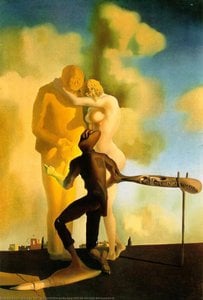
Salvador Dalí's "Eclipse and Vegetable Osmosis," painted in 1934, isn’t merely a landscape; it’s an immersion. This pivotal work from the heart of Dalí’s surrealist period offers a glimpse into the artist’s meticulously constructed inner world—a realm where logic dissolves and the subconscious reigns supreme. More than just a visual representation, it's a carefully orchestrated exploration of perception, time, and the unsettling beauty of decay and rebirth. The painting immediately commands attention with its arresting composition: a stark red path bisects an otherwise desolate scene, leading towards a solitary tree adorned with an umbrella, a symbol of both protection and the unknown. The backdrop—a hazy expanse suggesting either a beach or desert—further amplifies the sense of disorientation and invites the viewer to become an active participant in deciphering its enigmatic narrative.
Contextualizing the Vision: Surrealism and Dalí’s Experimentation
“Eclipse and Vegetable Osmosis” emerged during a period of intense experimentation for Dalí, a time when he was actively pushing the boundaries of artistic expression. Influenced by Cubism's fragmentation of form and Futurism’s embrace of dynamism, Dalí sought to capture not just what *looked* like reality but also the subjective experience of it—the fleeting thoughts, anxieties, and desires that shape our perception. The painting reflects his deep engagement with psychoanalysis, particularly Freud’s theories on dreams and the unconscious mind. The deliberate juxtaposition of seemingly unrelated elements – a horse, an umbrella, a decaying tree – creates a tension that mirrors the unsettling nature of dream imagery. It's a deliberate attempt to bypass rational thought and tap into a deeper, more primal level of understanding.
Symbolism Unveiled: Horses, Umbrellas, and the Path of Transformation
The symbolism within “Eclipse and Vegetable Osmosis” is layered and deliberately ambiguous. The horse, a recurring motif in Dalí’s work, represents strength, power, and even death—a potent symbol of both vitality and vulnerability. Its placement on the red path suggests a journey, perhaps one fraught with challenges and uncertainties. The umbrella, often interpreted as a shield against the anxieties of the unknown, offers a fragile defense against the encroaching darkness of the eclipse. The tree itself is particularly significant; its decaying state hints at mortality and the cyclical nature of life and death, while simultaneously suggesting growth and transformation—a visual metaphor for the passage of time and the enduring spirit of nature. The two figures in the background are thought to represent the observer’s role in interpreting reality, inviting us to actively engage with the painting's mysteries.
Technique and Artistic Influence: A Masterful Blend
Dalí’s meticulous technique is evident in every detail of “Eclipse and Vegetable Osmosis.” He employed a highly polished, almost photographic realism—a hallmark of his style—to render the surreal elements with startling clarity. The use of vibrant colors, particularly the intense red of the path, draws the eye and intensifies the painting’s emotional impact. Beyond his technical skill, Dalí was deeply influenced by Renaissance masters like Raphael and Leonardo da Vinci, evident in the careful composition and attention to detail. This masterful blend of surrealist concepts with classical artistic principles is what elevates “Eclipse and Vegetable Osmosis” beyond mere fantasy—it's a profound meditation on the nature of reality itself.
A Timeless Masterpiece: Reproduction and its Significance
WahooArt offers meticulously crafted, hand-painted reproductions of "Eclipse and Vegetable Osmosis," ensuring that the essence of Dalí’s vision is faithfully preserved. These aren't simply prints; they are works of art created by skilled artists who understand the nuances of Dalí’s style and technique. Owning a reproduction allows you to bring this captivating surrealist landscape into your home or office, sparking conversation and inviting contemplation. As with all of Dalí’s work, “Eclipse and Vegetable Osmosis” continues to challenge our perceptions and remind us that reality is often far stranger—and more beautiful—than we might initially believe. Consider it a portal to the depths of the subconscious, a testament to the power of art to transcend the boundaries of logic and imagination.



 წინასწარი ნახვა
 შეიძინეთ ხელით შესრულებული ნახატი
 გაგზავნა
 გაზიარება
 დეტალები

 ჩამოტვირთვა
 მსგავსები
 რენტგენოგრაფიული კვლევა
 სლაიდშოუ
 სტატისტიკა

 გადასართად დაწვრილებით ნახეთ






































 მინის ჩარჩოს არჩევანი ხელმისაწვდომია მხოლოდ 110 სმ-ზე ნაკლები ზომისთვის