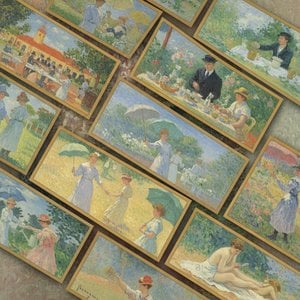
Landscape at Cagnes: A Moment of Tranquility Captured by Renoir
Pierre-Auguste Renoir’s “Landscape at Cagnes,” painted in 1907, is more than just a depiction of a Provençal scene; it's an immersion into a fleeting moment of serenity and light. This captivating fresco, now beautifully rendered as a handmade oil painting reproduction available through WahooArt.com, offers a glimpse into the artist’s mature style – a harmonious blend of Impressionism’s vibrant color palette with a subtle, almost nostalgic quality that speaks to his later years.
The scene unfolds along a dusty path winding its way through a grove of olive trees, their silvery branches framing a view of a modest farmhouse nestled amongst the rolling hills. The composition is deceptively simple: a dirt road leading into the distance, punctuated by the figures of several individuals – a woman gracefully walking towards the viewer, and others glimpsed in the background, adding a touch of human presence to the otherwise solitary landscape. A single bird soars overhead, injecting a sense of movement and vitality into the tranquil tableau. It’s a scene that immediately evokes a feeling of warmth, peace, and connection with nature – qualities deeply rooted in Renoir's artistic philosophy.
The Painter’s Technique and Impressionistic Style
Renoir’s masterful technique is evident in every brushstroke. He employs loose, expressive strokes of color to capture the dappled sunlight filtering through the trees, creating a shimmering effect that dances across the canvas. The colors are rich and luminous – deep greens, warm yellows, and hints of azure blue – all blended seamlessly together with remarkable fluidity. This technique is characteristic of Impressionism, where the goal was not to meticulously represent reality but rather to convey the *impression* of it—the fleeting effects of light and atmosphere. Notice how he uses broken color, layering hues to create depth and luminosity, a hallmark of his later work.
The painting’s composition is carefully balanced, drawing the eye towards the distant path while simultaneously anchoring it in the immediate foreground. The placement of the figures – particularly the woman walking alone – invites contemplation and encourages the viewer to lose themselves in the scene's quiet beauty. It’s a deliberate choice that underscores Renoir’s fascination with capturing not just landscapes, but also the emotional resonance they evoke.
A Glimpse into Renoir’s Later Years and Cagnes
“Landscape at Cagnes” was painted during a pivotal period in Renoir's life. In 1907, he purchased the estate of Les Collettes near Cagnes-sur-Mer on the French Riviera, seeking respite from the hustle and bustle of Paris and its demanding art scene. This move marked a significant shift for the artist, who had previously favored urban subjects. Cagnes offered him a slower pace of life, surrounded by the beauty of nature – olive groves, vineyards, and the azure waters of the Mediterranean—inspiring a new wave of landscape paintings that are among his most beloved.
The painting itself reflects this newfound appreciation for the natural world. It’s a departure from some of his earlier, more overtly social scenes, focusing instead on the quiet beauty of the countryside. The presence of the woman walking alone suggests a sense of solitude and introspection—a theme that would become increasingly prominent in Renoir's work during his later years.
Preserving Beauty: WahooArt’s Hand-Painted Reproductions
WahooArt.com offers exquisite, handmade oil painting reproductions of “Landscape at Cagnes,” allowing art enthusiasts to bring this masterpiece into their homes and experience its beauty firsthand. Unlike mass-produced prints, these reproductions are created by skilled artisans who meticulously recreate Renoir's technique and color palette using traditional methods. The result is a stunningly accurate representation that captures the essence of the original painting while retaining its own unique charm.
Investing in an WahooArt reproduction isn’t just about acquiring a beautiful piece of art; it’s about preserving a legacy—a testament to Renoir's artistic genius and his enduring ability to capture the beauty of the world around him. Explore more of Renoir’s captivating works on WahooArt.com and delve deeper into the Impressionist movement with a comprehensive overview available at Wikipedia. And for those seeking to further appreciate Renoir’s life and work, consider visiting the Musée Marmottan Monet in Paris, where many of his original paintings are on display.



 წინასწარი ნახვა
 შეიძინეთ ხელით შესრულებული ნახატი
 გაგზავნა
 გაზიარება
 დეტალები

 ჩამოტვირთვა
 მსგავსები
 რენტგენოგრაფიული კვლევა
 სლაიდშოუ
 სტატისტიკა

 გადასართად დაწვრილებით ნახეთ






































 მინის ჩარჩოს არჩევანი ხელმისაწვდომია მხოლოდ 110 სმ-ზე ნაკლები ზომისთვის