A Moment of Parisian Grace: Pierre-Auguste Renoir’s “Figures in a Landscape”
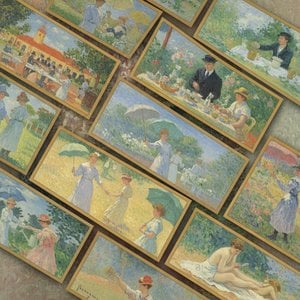
Pierre-Auguste Renoir's "Figures in a Landscape," painted in 1900, isn’t merely a depiction of a pleasant afternoon; it’s a shimmering distillation of Impressionist ideals – a celebration of light, color, and the fleeting beauty of human connection within nature. This oil on canvas captures three women strolling through a verdant landscape, their figures bathed in dappled sunlight, creating an atmosphere of serene contemplation and quiet joy. The painting stands as a testament to Renoir’s mastery of portraying movement and emotion through subtle brushstrokes and a vibrant palette, firmly establishing it as a cornerstone of his early Impressionist period.
The scene unfolds with remarkable fluidity. Renoir eschews sharp outlines and precise details in favor of capturing the *impression* of light and atmosphere. Notice how he uses broken color – applying small strokes of pure pigment side-by-side rather than blending them—to create a luminous effect, particularly evident in the foliage and the figures’ garments. The greens range from deep emerald to pale sage, while the sunlight filters through the trees, casting shifting patterns of light and shadow across the scene. This technique isn't simply about representation; it’s about conveying the *experience* of being present within that moment – a feeling of warmth, tranquility, and gentle movement.
Style and Composition: Echoes of Impressionism
“Figures in a Landscape” is deeply rooted in Renoir’s early Impressionist style. He was heavily influenced by artists like Monet and Manet, particularly their exploration of capturing fleeting moments and the effects of light. However, Renoir's work possesses a distinct warmth and sensuality that sets it apart. The composition itself is deceptively simple: three women, seemingly unconcerned with any grand narrative, simply enjoying each other’s company amidst the beauty of nature. This focus on everyday life – a common theme in Impressionism – elevates the painting beyond mere landscape depiction.
The background—a lush, unspecified landscape—is rendered with remarkable skill. Renoir masterfully employs atmospheric perspective, using cooler tones and softer details to suggest distance. The trees are not sharply defined but rather suggested through layers of color and texture, creating a sense of depth and space. This technique isn’t just about visual realism; it's about evoking the *feeling* of being immersed in a natural setting – a feeling of openness, freedom, and connection with the environment.
The Women of the Scene: Symbolism and Emotion
While the precise identities of the women remain enigmatic, their postures and expressions invite speculation. They are dressed in flowing garments—a characteristic feature of Renoir’s work—that seem to ripple and move with the breeze. Their relaxed stances and gentle smiles suggest a sense of contentment and camaraderie. Some art historians interpret these figures as representing female friendship and leisure, reflecting the social changes occurring in Paris at the turn of the century.
The inclusion of a dog adds another layer of interest to the scene. The animal’s presence reinforces the theme of companionship and suggests a connection between humans and nature. It's a small detail that contributes significantly to the painting's overall sense of warmth and intimacy. Renoir was known for his ability to capture not just the outward appearance but also the underlying emotions of his subjects, and “Figures in a Landscape” is a prime example of this talent.
Bringing Renoir’s Magic Home: A Handmade Reproduction
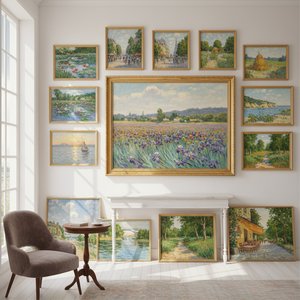
If you're captivated by the beauty and evocative power of "Figures in a Landscape," consider investing in a high-quality reproduction from WahooArt. Our skilled artists meticulously recreate each masterpiece using traditional oil painting techniques, ensuring that every detail – from the delicate brushstrokes to the vibrant colors – is faithfully represented. Unlike prints or digital images, our reproductions capture the *texture* and *depth* of the original painting, offering a truly immersive experience.
We offer a range of sizes and framing options to suit your individual taste and décor. Whether you’re looking to add a touch of Impressionist charm to your living room, bedroom, or office, a “Figures in a Landscape” reproduction is sure to bring joy and inspiration for years to come. Explore our collection today and discover the timeless beauty of Pierre-Auguste Renoir.
To learn more about this painting and its reproduction process, visit our dedicated page. Browse other stunning Renoir works, including “After Bathing” and “Bust of a Girl,” here. Discover the hidden stories behind art, on our blog.
WahooArt – Bringing Art History to Life.



 წინასწარი ნახვა
 გადართვა ბეჭდზე
 გაგზავნა
 გაზიარება
 დეტალები

 ჩამოტვირთვა
 მსგავსები
 რენტგენოგრაფიული კვლევა
 სლაიდშოუ
 სტატისტიკა

 გადასართად დაწვრილებით ნახეთ






































 მინის ჩარჩოს არჩევანი ხელმისაწვდომია მხოლოდ 110 სმ-ზე ნაკლები ზომისთვის