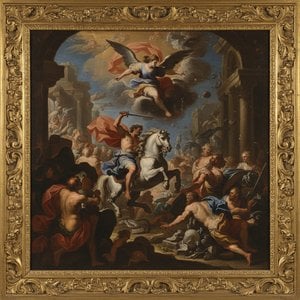
ნახვა ინტერьерში ნახვა AR რეჟიმში შეიძინეთ ხელით შესრულებული ნახატი გადასვლა ციფრულ გამოსახულებაზე გაგზავნა
დეტალები გზამკვლევი დამატება ფავორიტებში ჩამოტვირთვა მსგავსები რენტგენოგრაფიული კვლევა სლაიდშოუ სტატისტიკა

Self-Portrait

Discover Nicolas Poussin's 'Self-Portrait' (1649), a masterpiece of French Baroque classicism. Admire its realism, symmetry & influence on Ingres – a window into the artist’s workshop and profound artistic dedication.

ნიკოლა პუსენი - ფრანგი ბაროკოს მხატვერი, რომელმაც თავისი ნაშრომებით საფუძველი ჩათა საფრანგეთის კლასიციზმისთვის. ცნობილია ისტორიული და მითოლოგიური სცენების, მშვიდი პეიზაჟებისა და ღრმა ფილოსოფიური შინაარსის ტილოებით.

გიკლე / ხელოვნების პრინტი

მუზეუმის დონის ჟიკლე ან ტილოზე ბეჭდვა სწრაფი წარმოებისა და დასრულების მოქნილი ვარიანტებით. ( შეიძინეთ ხელით შესრულებული ნახატი გადასვლა ციფრულ გამოსახულებაზე)

Corner sample of the P118B picture frame: ღუმლში ჩამჭედი პოლისტიროლი, 5 cm wide and 3 cm thick
P118B ₾10
Corner sample of the P118H picture frame: ღუმლში ჩამჭედი პოლისტიროლი, 5 cm wide and 3 cm thick
P118H ₾10
Corner sample of the P118W picture frame: ღუმლში ჩამჭედი პოლისტიროლი, 5 cm wide and 3 cm thick
P118W ₾10
Corner sample of the P438Z picture frame: ღუმლში ჩამჭედი პოლისტიროლი, 5.5 cm wide and 3.5 cm thick
P438Z ₾10
Corner sample of the P508JH picture frame: ღუმლში ჩამჭედი პოლისტიროლი, 7 cm wide and 3.5 cm thick
P508JH ₾12
Corner sample of the P508YH picture frame: ღუმლში ჩამჭედი პოლისტიროლი, 7 cm wide and 3.5 cm thick
P508YH ₾12
Corner sample of the P805H picture frame: ღუმლში ჩამჭედი პოლისტიროლი, 5 cm wide and 3.5 cm thick
P805H ₾10
Corner sample of the P805Z picture frame: ღუმლში ჩამჭედი პოლისტიროლი, 5 cm wide and 3.5 cm thick
P805Z ₾10
Corner sample of the P919BZ picture frame: ღუმლში ჩამჭედი პოლისტიროლი, 7 cm wide and 3.5 cm thick
P919BZ ₾10
Corner sample of the P919G picture frame: ღუმლში ჩამჭედი პოლისტიროლი, 7 cm wide and 3.5 cm thick
P919G ₾10
Corner sample of the P919XJ picture frame: ღუმლში ჩამჭედი პოლისტიროლი, 7 cm wide and 3.5 cm thick
P919XJ ₾10
Corner sample of the P959ZH picture frame: ღუმლში ჩამჭედი პოლისტიროლი, 5 cm wide and 3 cm thick
P959ZH ₾10
Corner sample of the P968JZ picture frame: ღუმლში ჩამჭედი პოლისტიროლი, 6 cm wide and 4 cm thick
P968JZ ₾12
Corner sample of the W106C picture frame: მასიური ხე, 5 cm wide and 3 cm thick
W106C ₾8
Corner sample of the W218G picture frame: მასიური ხე, 5 cm wide and 3 cm thick
W218G ₾10
Corner sample of the W218JH picture frame: მასიური ხე, 5 cm wide and 3 cm thick
W218JH ₾8
Corner sample of the W218Y picture frame: მასიური ხე, 5 cm wide and 3 cm thick
W218Y ₾10
Corner sample of the W307PJ picture frame: მასიური ხე, 6 cm wide and 3 cm thick
W307PJ ₾10
Corner sample of the W316G picture frame: მასიური ხე, 6 cm wide and 3 cm thick
W316G ₾10
Corner sample of the W316PJ picture frame: მასიური ხე, 6 cm wide and 3 cm thick
W316PJ ₾8
Corner sample of the W316Y picture frame: მასიური ხე, 6 cm wide and 3 cm thick
W316Y ₾10
Corner sample of the W398PJ picture frame: მასიური ხე, 5 cm wide and 3 cm thick
W398PJ ₾8
Corner sample of the W4111J picture frame: მასიური ხე, 6.5 cm wide and 3.5 cm thick
W4111J ₾10
Corner sample of the W500HY picture frame: მასიური ხე, 7 cm wide and 5 cm thick
W500HY ₾15
Corner sample of the W500JH picture frame: მასიური ხე, 7 cm wide and 5 cm thick
W500JH ₾15
Corner sample of the W692G picture frame: მასიური ხე, 8 cm wide and 4 cm thick
W692G ₾12
Corner sample of the W849H picture frame: მასიური ხე, 5 cm wide and 3 cm thick
W849H ₾8
Corner sample of the W940BG picture frame: მასიური ხე, 7.5 cm wide and 4.5 cm thick
W940BG ₾15
Corner sample of the W953PJ picture frame: მასიური ხე, 6 cm wide and 3.5 cm thick
W953PJ ₾8

სტანდარტული ზომა
ინდივიდუალური ზომა
CM
INCH

აირჩიეთ ჩვენს მიერ წინასწარ განსაზღვრული ზომებიდან, რომლებიც ნაწარმოების ორიგინალურ პროპორციებს შეესაბამება.

სიგანე
სიმაღლე

შეიყვანეთ თქვენთვის საჭირო სიგანე და სიმაღლე, რათა იგი მოერგოს თქვენს ჩარჩოს ან კედელს. ბეჭდვისას შესაძლებელია მხოლოდ მისი შემცირება და არა გაზრდა, ამიტომ სხვა ფორმის ზომის შემთხვევაში გამოსახულება ნაწილობრივ იკარგება. სანამ რაიმეს დაბეჭდავთ, ჩვენ გამოგიგზავნით ციფრულ მაკეტს დასდასტურებლად. ამ გვერდზე ნაჩვენები სურათი არ ასახავს რეალურ ჭრას — ამას მხოლოდ მაკეტი გვიჩვენებს.

მიწოდება მთელ მსოფლიოში () 2 კვირაში, სტანდარტული 4/5 კვირის ნაცვლად. (27 ოქტომბერი)

უფასო ექსპრეს მიწოდება მთელ მსოფლიოში
მაღალი ხარისხის ტილო
ტრანსპორტირების სრული დაზღვევა
საბაჟო გადასახადების დაბრუნების გარანტია
ფერების სრული შესაბამისობის გარანტია
დაბრუნების 100-დღიანი პერიოდი (მხოლოდ წარმოების დეფექტის შემთხვევაში)
100% თანხის სრული დაბრუნების გარანტია
ფასდაკლება დიდი რაოდენობით შეკვეთისას

ჯამური ღირებულება

₾ 177

Self-Portrait

გიკლე / ხელოვნების პრინტი

რეპროდუქციის ზომა

-

ჯამური ღირებულება

₾ 177

მოკლე ფაქტები

  • Artistic style: Classical, realistic
  • Medium: Oil on canvas
  • Influences: Italian masters
  • Subject or theme: Self-reflection
  • Artist: Nicolas Poussin

ტესტი ხელოვნების შესახებ

თითოეულ კითხვაზე მხოლოდ ერთი სწორი პასუხია.

კითხვა 1:
What is the primary subject depicted in Nicolas Poussin’s ‘Self-Portrait’?
კითხვა 2:
Based on the image description, what is noticeable about the figure partially obscured on the left side of the painting?
კითხვა 3:
The presence of a clock on the wall in Poussin’s ‘Self-Portrait’ primarily serves to emphasize which aspect?
კითხვა 4:
Nicolas Poussin’s work is often associated with which artistic movement?
კითხვა 5:
Considering Poussin’s background, where did he spend a significant portion of his artistic career?

A Portrait of Contemplation: Unveiling Nicolas Poussin’s Self-Portrait

The year 1649 marks a pivotal moment in the artistic journey of Nicolas Poussin, a period etched into his oeuvre with an exquisite blend of introspection and classical restraint. This self-portrait, a remarkably intimate depiction of the artist himself, transcends mere likeness; it’s a window into the mind of a man wrestling with profound questions about art, faith, and the very nature of representation. Painted during his formative years in Rome – a city he considered his true home after abandoning his native Normandy – the work speaks volumes about Poussin's evolving artistic philosophy and his deep engagement with the legacy of antiquity.

The composition is deceptively simple, yet profoundly layered. Poussin, clad in a dark robe that suggests both solemnity and intellectual rigor, sits before an unseen viewer. His gaze is direct, almost challenging, conveying a sense of seriousness and quiet contemplation. The inclusion of two figures – partially obscured on either side – adds a subtle narrative complexity, hinting at the social and intellectual circles within which Poussin moved during this period. These secondary characters aren’t mere decorative elements; they subtly enrich the scene, suggesting a life lived beyond the confines of his studio and the demands of his commissions.

The Language of Classical Restraint

Poussin's technique is characterized by an almost obsessive attention to detail and a masterful command of light and shadow. He employs a muted palette – predominantly browns, grays, and deep blues – creating a sense of atmospheric depth and drawing the viewer into the scene’s quiet intimacy. The brushwork is smooth and refined, reflecting his commitment to classical ideals of beauty and harmony. Unlike the vibrant colors favored by Venetian painters, Poussin prioritized clarity and order, meticulously rendering each element with an unwavering focus on accuracy and proportion.

Notably, the background features a clock, a recurring motif in Poussin’s work that symbolizes the passage of time and the fleeting nature of earthly existence. This detail reinforces the portrait's contemplative mood, inviting viewers to consider not only Poussin’s present state but also his place within the broader context of history and eternity. The wall itself is rendered with a subtle texture, suggesting the solidity of the Roman architecture that so profoundly influenced his artistic vision.

Symbolism and the Pursuit of Ideal Beauty

Beyond its technical brilliance, this self-portrait is laden with symbolic meaning. Poussin’s book – held casually in his hand – represents his intellectual pursuits and his deep engagement with classical literature and philosophy. It speaks to his desire to elevate art beyond mere representation, aiming instead to capture the essence of beauty and truth through reasoned observation and careful study. The act of holding the book also suggests a deliberate choice—a conscious decision to engage with ideas that transcend the immediate concerns of daily life.

The portrait’s overall effect is one of profound serenity and intellectual curiosity. It's not a flamboyant display of ego, but rather a quiet affirmation of Poussin’s artistic principles and his unwavering commitment to the pursuit of classical ideals. It offers a rare glimpse into the soul of a master artist, inviting us to contemplate the complexities of his creative process and the enduring power of art to illuminate the human condition.

A Legacy in Reproduction

WahooArt is proud to offer meticulously crafted hand-painted reproductions of Nicolas Poussin’s ‘Self-Portrait.’ Each reproduction captures the nuances of Poussin's technique, from the subtle gradations of light and shadow to the delicate texture of his brushstrokes. Whether you are an art enthusiast, a collector seeking to expand your collection, or an interior designer looking for a timeless piece to elevate your space, our reproductions provide an authentic connection to this seminal work of art. Experience the grandeur and intellectual depth of Poussin’s vision in stunning detail – a testament to his enduring legacy.

კითხვები და პასუხები

შესაძლებელია თუ არა ნიკოლა პუსენი-ის „Self-Portrait“-ის ნახვა სხვადასხვა განათების პირობებში?

ნიკოლა პუსენი-ის „Self-Portrait“-ის რენტგენოგრაფია გვერდი წარმოადგენს ინტერაქტიულ გამსინჯებელს, რომელიც საშუალებას გაძლევთ გადაიკვლიოთ ნამუშევრის თერთმეტი ოპტიკური ფენა, მათ შორის რენტგენოსებრი ხედიც.

ნიკოლა პუსენი-ის „Self-Portrait“ ღია ფერების ნამუშევარია თუ მუქი?

„Self-Portrait“-ის საერთო სიკაშკაშე არის deep_shadow, ხოლო მისი განათება — Dark.

არის თუ არა ნიკოლა პუსენი-ის „Self-Portrait“ ცნობილი ნამუშევარი?

ნიკოლა პუსენი-ის „Self-Portrait“-ის პოპულარობის დონე შეფასებულია როგორც Iconic.


მხატვრის ბიოგრაფია

ნიკოლა პუსენი: კლასიკური იდეალების მცველის ბიოგრაფია

ნიკოლა პუსენი, ფრანგი რენესანსული მხატვრის სახელწოდება, რომლის შემოქმედებასაც საფრანგეთის ხელოვნების განვითარებაში უდიდესი როლი დაედო, დღემდე აღფრთოვანებს მსოფლიოს. 1594 წლის ივნისში, ნორმანდიის პროვინციის ანდელების მახლობლად დაბადებული პუსენი, თავისი ცხოვრების უმეტესი ნაწილი რომში გაატარა, სადაც ისტორიული და მითოლოგიური თემებზე შესრულებულ ტილოებს ქმნიდა. მისი ნამუშევრები ხასიათდება სიმარჯვემდე განზომილებული კომპოზიციებით, მკაფიოდ განსაზღვრული ხაზებით და ფერების ჰარმონიულმაგვარობით, რაც მას კლასიკურ ხელოვნებასთან უშუალო კავშირს აძლევს. პუსენის ადრეული ნაშრომები ტიციანის ვენეციური სკოლის გავლენას იჩვენებს, თუმცა მალევე მან ეს სტილი εγκαταუვა და უფრო რაციონალური და დისციპლინირებული მიდგომა გამოაცხადა, რომელიც რაფაელის კლასიკურ იდეალებზე იყო დაფუძნებული.

რომის წლები: კლასიკური იდეალების დამკვეთება

რომი პუსენისთვის მხოლოდ სტუდია არ ყოფილა; ეს მისი ინტელექტუალური საწარმოო ცენტრი გახდა. ის იმჟამინდელი მეცნიერებს, არქეოლოგებსა და სხვა მხატვრებთან ურთიერთობაში იყო ჩართული, განსაკუთრებით კასიანო დარ პოცოსთან, რომლის უღრმესი ცოდნა ანტიკური სამყაროს შესახებ ხელოვანიზე დიდ გავლენას ახდენდა. დარ პოცოს ძალისხმევითი მუშაობა αρχαίων μνημείων დეტალური აღწერით, პუსენს ისტორიული სიამდვილისადმი ს respeto და მის ტილოებში სამუდაგო მნიშვნელობის 부여ების სურვილი უყარა კვალი. სწორედ ამ პერიოდში პუსენი იმხოვრებოდა ფანცაბიონტური ზედმეტილობიდან და უფრო მკაფიო, დაბალანსებული და ხაზოვანი კომპოზიციებისკენ მიმართავდა. ის სიძულებით ვისწავლობდა რაფაელის ნაშრომებს, მის ჰარმონიულ წყობასა და გრაციოზულ ფორმებს ითვისებდა, პარალელურად კი ძველი ქანდაკებებისგანაც შთამოსაზღვრებას პოულობდა.

ისტორიული, მითოლოგიური და რელიგიური თემები

პუსენის შემოქმედება წარმოუდგენლადหลากหลาย იყო, მაგრამ მას ყველაფერს აერთიანებდა კლასიკურ იდეალებისადმი ერთგვანება. ის ხშირად აღწერდა ძველი ისტორიიდან მომავალი ეპიზოდებს – მაგალითად, გერმანიკუსის ტრაგიკულ ბედს, სადაც სიმამაცესა და მორალურ ძალას უნახავს. მისი მითოლოგიური ტილოები არ იყო მხოლოდ ცნობილი მოთხრობების გადამეოხება; ეს ადამიანის ბუნების შესწავლა იყო, ხშირად ალეგორიული მნიშვნელობით გაჯერებული. *არკადიის* სერია, განსაკუთრებით მისი გამორჩეული ნაწილი *Et in Arcadia ego*, მის ფილოსოფიურ სიღრმეს სიმბოლურად წარმოადგენს, რომელიც სიცოცხლის ხანმოძიებლობისა და მეხსიერების განუვალ ძალას იკვლევს. რელიგიური თემებზე მუშაობი დროსაც პუსენი კლასიკურ თავშეკავებას ინარჩუნებდა, ზედმეტი ემოციურობისგანარიგება გონიერი და საფიქრო წარმოდგენის სასარგებლოდ. მოგვიანებით, მისი შემოქმედებაში უფრო მეტად აყვავდნენ ფართო პეიზაჟები, რომლებიც რეალიზმს იდეალიზებულ ფორმებთან ერწყმის გზით ჰარმონიულ და მშვიდობიან სურათებს ქმნიდა.

შემორჩენილი მემკვიდრეობა: საფრანგეთის ხელოვნების ფორმირება

მიუხედავად იმისა, რომ პუსენი თავისი კარიერის უმეტესი ნაწილი საზღვარგუნეთში გაატარა, მისი გავლენა საფრანგეთის ხელოვნებაზე უდიდესი იყო. 1640 წელს იგი მოკლე ხნით საფრანგეთს επιστρέφει და კარდინალ რიშელიუს მიერ სამეფო მხატვრად დაინიშნა, თუმცა სასახლის მოთხოვნებმა და ინტრიგებმა მას შეაფერხა. მალევე ის კვლავ რომში დაბრუნდა და იქამდე συνέχίζει να ζωγραφίζει, სანამ 1665 წელს გარდაცვალების დრო არ 찾아왔ა. კლასიკურ პრინციპებზე მისი ერთგვანება საფრანგეთში მხატვრების სწავლისა და საქმიანობის სტანდარტის დასაზოგვერებას უწყობდა ხელს, გენერაციების მხატვრებს ზემოქმედებას უკონკლუენტო. ისAcadémie Royale de Peinture et de Sculpture-ის წევრი გახდა, რაც მისი პოზიციის განმტკიცებას საფრანგეთის კლასიციზმის ერთ-ერთი მნიშვნელოვანი ფიგურად უზრუნველყოფდა. ჟაკ-ლუი დავიდი და პოლ სეზანი ხშირად გამოხატავდნენ მის მიმართ აღფრთოვანებას, რაც მისი მემკვიდრეობის სიმძლერის 증거ა. მისი მემკვიდრეობა 단순మైన стилистического имитации-ისგან πολύ περισσότερο είναι; ეს არის კლასიკური იდეალებისადმი ერთგვანება – მხატვრის 증거, რომელმაც არა მხოლოდ სამყაროს აღწერა სურდა, არამედ მას ბრძნულებითა და زیباییთ აყვავებდა.
  • σημαντικά έργα: *Γερμανικού του θάνατος*, *Η σειρά των επτά μυστηρίων*, *Ένας Ρωμαϊκός δρόμος*, *Ο τυφλός Ωρίωνας*, *Οι εποχές*.
  • Βασικά χαρακτηριστικά: Κλασική σύνθεση, γραμμικότητα, ιστορικά και μυθολογικά θέματα, ήρεμες τοπίες.
ნიკოლა პუსენი

ნიკოლა პუსენი

1594 - 1665 , Франция

მოკლე ფაქტები

  • Artistic Movement Or Style: ბაროკო, კლასიციზმი
  • Artists Or Movements Influenced By This Artist:
    • ჟაკ-ლუი დავიდი
    • პოლ სეზანი
  • Artists Who Influenced This Artist:
    • რაფაელი
    • ტიციანი
  • Date Of Birth: 1594 წლის 24 ივნისი
  • Date Of Death: 1665 წლის 19 ნოემბერი
  • Full Name: ნიკოლა პუსენი
  • Nationality: ფრანგი
  • Notable Artworks:
    • Germanicus-ის სიკვდილი
    • წირვის საიდუმლოება
    • რომაული გზი
    • Orion Blinded
    • The Seasons
  • Place Of Birth: ლე 안დელი, საფრანგეთი
აღმოაჩინეთ ხელოვნების ნაწარმოებები თემების, სტილისა და მახასიათებლების მიხედვით დაჯგუფებული.