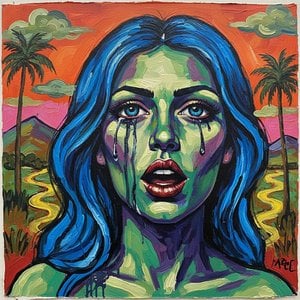
Laurette with Long Locks: A Portrait of Introspection in Fauvist Color
Henri Matisse’s “Laurette with Long Locks,” painted in 1916, isn't merely a portrait; it’s an immersion into a world saturated with color and emotion. This captivating work, rendered in the heart of his Fauvist period, offers a glimpse into the artist’s revolutionary approach to representation – one that prioritized feeling over strict realism. The painting depicts Laurette, a close friend of Matisse's, captured not as a photographic likeness but as an embodiment of mood and inner life, all conveyed through a vibrant, almost hallucinatory palette.
The style is undeniably Fauvist, characterized by bold, arbitrary color choices that prioritize emotional impact over naturalistic depiction. Matisse abandons the muted tones favored by Impressionism, instead employing intense reds, blues, greens, and yellows – colors that seem to vibrate with energy. These hues aren’t blended smoothly; they are applied in distinct blocks and planes, creating a sense of dynamism and immediacy. The simplified forms, particularly the head and shoulders, contribute to this effect, reducing the subject to her essential features while amplifying the power of color.
A Dance of Form and Color
Matisse’s technique is both spontaneous and meticulously controlled. He employs loose, expressive brushstrokes – visible in the swirling patterns of the hair and the textured surface of the skin – yet these are balanced by a surprising degree of structural clarity. The face is defined with confident lines, suggesting an underlying geometry beneath the vibrant color. The background, rendered in softer shades, provides a subtle contrast to the subject’s intensity, drawing the viewer's eye directly to Laurette’s gaze.
Notice how Matisse uses color not just to describe appearance but to evoke feeling. The deep blues and greens of the hair create a sense of mystery and introspection, while the warm reds and yellows in her skin suggest vitality and passion. The overall composition feels almost theatrical – as if capturing a fleeting moment of profound emotion.
Echoes of Modernism and Symbolism
"Laurette with Long Locks" emerged during a period of immense artistic upheaval, marked by the rise of Cubism and other avant-garde movements. Matisse, however, remained committed to his own unique vision, drawing inspiration from both Post-Impressionist masters like Van Gogh and Gauguin and Japanese woodblock prints – particularly their use of flattened perspective and bold color combinations. The portrait’s simplified forms and emphasis on decorative patterns reflect these influences.
Beyond its formal innovations, the painting is rich in symbolism. Laurette's direct gaze invites contemplation, suggesting a depth of character beyond her physical appearance. Her slightly melancholic expression hints at hidden emotions – perhaps a quiet sadness or a sense of longing. The long locks of hair, a prominent feature of the composition, could symbolize both beauty and vulnerability.
A Timeless Portrait of Inner Life
“Laurette with Long Locks” is more than just a beautiful painting; it’s a testament to Matisse's ability to capture the essence of human experience through color and form. It remains a powerful example of Fauvist art, demonstrating how emotion can be conveyed through bold abstraction. Today, reproductions of this iconic work continue to resonate with viewers, offering a glimpse into the artist’s revolutionary vision and inviting us to contemplate the complexities of the human spirit.



 წინასწარი ნახვა
 გადართვა ბეჭდზე
 გაგზავნა
 გაზიარება
 დეტალები

 ჩამოტვირთვა
 მსგავსები
 რენტგენოგრაფიული კვლევა
 სლაიდშოუ
 სტატისტიკა

 გადასართად დაწვრილებით ნახეთ






































 მინის ჩარჩოს არჩევანი ხელმისაწვდომია მხოლოდ 110 სმ-ზე ნაკლები ზომისთვის