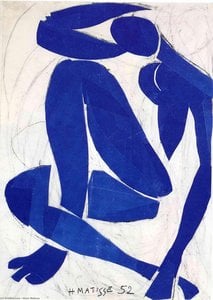
A Moment of Serenity: Henri Matisse’s “A Nude Lying on Her Back”
Henri Matisse's "A Nude Lying on Her Back," painted in 1927, isn’t merely a depiction of a reclining woman; it’s an immersion into a carefully constructed world of color, tranquility, and subtle emotional depth. This intimate scene, measuring just 66 x 92 cm, transcends the simple act of portraying the human form, offering instead a profound meditation on rest, contemplation, and the beauty found in quietude—a hallmark of Matisse’s mature style. The painting immediately draws the eye with its bold palette – a striking red wall acting as a vibrant counterpoint to the muted tones of the woman's skin and the surrounding fabrics. This deliberate contrast isn’t jarring; rather, it creates a sense of warmth and intimacy, suggesting a private sanctuary within the confines of the room.
Matisse’s masterful use of Fauvist techniques is evident in every brushstroke. He abandons traditional perspective and realistic representation in favor of flattened forms, simplified shapes, and an intense focus on color as the primary means of expression. The woman's body isn’t rendered with anatomical precision; instead, it’s a collection of vibrant blocks of color—a study in curves and planes that convey a sense of relaxed fluidity. Notice how he uses overlapping hues to create depth and volume, suggesting the softness of her skin and the drape of her garments without resorting to meticulous detail. The placement of the chair, vases, and book further contributes to this carefully orchestrated composition, hinting at a moment of leisurely repose—a suggestion that she is not simply lying there but engaged in an internal dialogue with herself.
The Language of Color: Fauvism and Matisse’s Vision
“A Nude Lying on Her Back” firmly establishes Matisse as a pivotal figure within the Fauvist movement, a revolutionary artistic approach that prioritized color over form. Emerging in France around 1905, Fauvism rejected the muted tones and realistic depictions of Impressionism, embracing instead a vibrant, often jarring, use of color to evoke emotion and create visual impact. Matisse’s work exemplifies this philosophy perfectly; he uses color not to represent reality but to express his subjective experience of it. The red wall isn't simply a backdrop; it pulsates with energy, reflecting the woman’s inner state of serenity. The subtle variations in tone—the pinks and peaches of her skin, the blues and greens of the fabrics—are carefully chosen to create a harmonious yet dynamic visual effect.
Furthermore, Matisse's exploration of color is deeply rooted in his interest in Japanese prints, particularly those of Hiroshige. He admired their bold compositions, simplified forms, and masterful use of color to convey atmosphere and emotion. This influence can be seen in the way he uses color to create a sense of space and depth within the painting—a technique that anticipates later developments in modern art. The deliberate lack of shading or detailed rendering further emphasizes this connection to Japanese aesthetics, prioritizing flattened planes and vibrant hues over traditional modeling techniques.
A Reflection on Femininity and Contemplation
Beyond its formal qualities, “A Nude Lying on Her Back” offers a poignant meditation on femininity and the act of contemplation. The woman’s relaxed posture, calm expression, and closed eyes suggest a state of deep repose—a moment of escape from the demands of daily life. She is not presented as an object of desire or eroticism, but rather as a figure of quiet dignity and inner peace. This deliberate choice reflects Matisse's broader interest in portraying women in serene and contemplative poses, often imbued with a sense of timelessness and grace.
The inclusion of the book beside her bed subtly reinforces this theme of contemplation. It suggests that she is not simply resting but engaging in an act of intellectual or spiritual reflection—a quiet moment of self-discovery. The painting, therefore, becomes more than just a depiction of a reclining nude; it’s a visual poem about the beauty and significance of stillness, introspection, and the human capacity for finding solace within oneself. It's a testament to Matisse's ability to capture not just the appearance of a subject but also its essence—its mood, its inner life.
Bringing Matisse’s Vision Home: A High-Quality Reproduction
WahooArt offers meticulously crafted, hand-painted oil painting reproductions of Henri Matisse’s “A Nude Lying on Her Back,” allowing you to experience the full impact of this masterpiece in your own home. Our skilled artisans replicate Matisse's distinctive style with exceptional attention to detail, ensuring that every brushstroke and color nuance is faithfully reproduced. Unlike mass-produced prints, our reproductions capture the texture and depth of the original painting, creating a truly authentic work of art.
Whether you’re an avid art collector, a design enthusiast seeking to elevate your interior space, or simply someone who appreciates the beauty of classic art, a WahooArt reproduction of “A Nude Lying on Her Back” is a stunning addition to any collection. Explore our selection and bring home a piece of Matisse's enduring legacy – View 'A Nude Lying on Her Back' by Henri Matisse.



 ნახვა ინტერьерში
 შეიძინეთ ხელით შესრულებული ნახატი
 გაგზავნა
 გაზიარება
 დეტალები
 გზამკვლევი

 ჩამოტვირთვა
 მსგავსები
 რენტგენოგრაფიული კვლევა
 სლაიდშოუ
 სტატისტიკა


 სრული ტექსტის ნახვა






































 მინის ჩარჩოს არჩევანი ხელმისაწვდომია მხოლოდ 110 სმ-მდე ზომისთვის