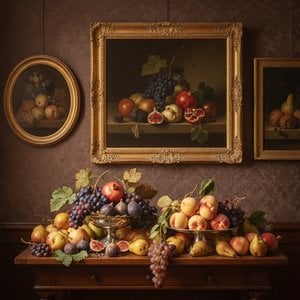
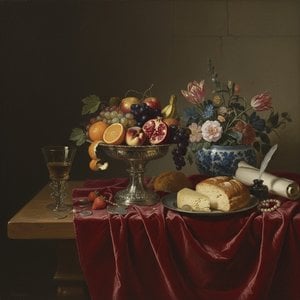
Giuseppe Arcimboldo: A Visionary Pioneer of Composite Portraiture
Giuseppe Arcimboldo (1527-1593), born in Milan during the tumultuous Renaissance, stands apart from his contemporaries not merely as a painter but as an artist who fundamentally reimagined the conventions of portraiture. While many artists of his era meticulously replicated idealized likenesses—often adhering to strict aristocratic standards—Arcimboldo dared to challenge these traditions with breathtaking originality. His canvases aren’t simply representations of faces; they are elaborate constructions, meticulously assembled from disparate natural elements – fruits, vegetables, flowers, books, and musical instruments – transforming the human visage into a vibrant tapestry of organic forms.
- The Fruit Basket: A Symbol of Renewal
- Arcimboldo’s Technique - Illusionism at Its Finest
- Renaissance Symbolism and Arcimboldo's Vision
- Influence Beyond Milan – Caravaggio and Subsequent Artists
- A Lasting Legacy: Why Arcimboldo Remains Relevant Today
The Fruit Basket: A Symbol of Renewal
“Reversible Head with Basket of Fruit,” painted circa 1590, exemplifies Arcimboldo’s signature approach. The artwork depicts a human head composed entirely of meticulously arranged apples and oranges—a visual paradox that immediately draws the viewer's eye. This seemingly fantastical image isn’t merely decorative; it carries profound symbolic weight rooted in Renaissance beliefs about nature and metamorphosis. Apples, traditionally associated with immortality and knowledge, intertwine with oranges symbolizing fertility and abundance. The basket itself serves as a container of these symbols, reinforcing Arcimboldo’s intention to convey an overarching message of regeneration and cyclical renewal—a concept central to humanist thought during the period.
Arcimboldo’s Technique - Illusionism at Its Finest
Arcimboldo's mastery lay in his masterful use of illusionistic painting techniques. He achieved this remarkable feat through painstaking layering and blending of pigments, creating an astonishingly convincing trompe l'oeil effect. Each element—the apples, oranges, basket weave—is rendered with meticulous detail, capturing the textures and contours of its constituent parts to create a unified visual experience. This technique demanded immense patience and precision, reflecting Arcimboldo’s dedication to elevating painting beyond mere representation into a realm of sensory illusion.
Renaissance Symbolism and Arcimboldo's Vision
Arcimboldo’s work aligns seamlessly with the broader intellectual currents of the Renaissance. The humanist preoccupation with observing and interpreting the natural world fueled his artistic endeavors, mirroring the burgeoning interest in scientific inquiry and philosophical contemplation. Furthermore, Arcimboldo’s composite heads functioned as allegories—visual metaphors designed to communicate complex ideas about human virtue, intellect, and spirituality. By transforming recognizable forms into fantastical representations of nature, he invited viewers to engage in a dialogue with profound symbolic implications.
Influence Beyond Milan – Caravaggio and Subsequent Artists
Arcimboldo’s innovative approach undeniably impacted subsequent generations of artists. Notably, there's evidence suggesting that his “Reversible Head” may have inspired Caravaggio’s painting *Boy with a Basket of Fruit*, demonstrating the enduring influence of Arcimboldo’s stylistic vision. Similarly, Giovanni Ambrogio Figino and Fede Galizia adopted similar techniques in their own fruit still lifes, perpetuating Arcimboldo's legacy as a pioneer of artistic experimentation.
A Lasting Legacy: Why Arcimboldo Remains Relevant Today
Giuseppe Arcimboldo’s “Reversible Head with Basket of Fruit” continues to captivate audiences centuries after its creation. Its audacious blend of art and nature, coupled with its masterful illusionistic technique, transcends stylistic conventions and speaks to fundamental questions about perception and representation. More than just a beautiful artwork, it serves as a testament to the transformative power of imagination—a reminder that true artistry lies in challenging established norms and forging new paths toward creative expression.



 წინასწარი ნახვა
 შეიძინეთ ხელით შესრულებული ნახატი
 გაგზავნა
 გაზიარება
 დეტალები

 ჩამოტვირთვა
 მსგავსები
 რენტგენოგრაფიული კვლევა
 სლაიდშოუ
 სტატისტიკა


 გადასართად დაწვრილებით ნახეთ






































 მინის ჩარჩოს არჩევანი ხელმისაწვდომია მხოლოდ 110 სმ-ზე ნაკლები ზომისთვის