Oil On PaperWallArtAbstract Expressionism
 1949Modern
 46.0 x 51.0 cm
このページに掲載されている作品は著作権法によって保護されており、当社の許可なく同一の複製物を制作または販売することは法律で禁じられています。この保護は、以下のような国際条約に基づき執行されます。 ベルヌ条約 および、以下の条項に定められたものを含む各国の法律により、 米国著作権法 第17編。
敬意を払った法的な代替手段として、私たちはオリジナルにインスピレーションを与えられた、カスタムの手描きアートワークを提供しています。私たちの熟練したプロのアーティストは、元の作品が持つスタイル、情緒、そして芸術的なエッセンスを注意深く研究し、独自の創作物でありながら、同じ感性を呼び起こすような、新しくユニークな作品を作り上げます。
この手法は、著作権で保護された作品の複製や複写を伴わないため、著作権法に完全に準拠しています。これは単なる模倣ではなく、創造的な再解釈です。元の作品からインスピレーションを受けつつも、それとは異なる、全く新しい絵画を生み出すものです。
当社のアーティストが、お客様のご希望のサイズと額縁に合わせて、キャンバスに手描きで制作する油彩画です。 ( プリント版に切り替え デジタル画像販売へ切り替え)





























作品のオリジナル比率に合わせた、当店の規定サイズからお選びください。

フレームや壁のスペースに合わせて、ご希望の幅と高さを入力してください。本作品は手描きのため、異なる比率のサイズをご希望の場合、絵画の周囲を少し広げて描くか、あるいは端を少しカットして調整することが可能です。お客様のご要望に合わせます。制作を開始する前に、仕上がりを確認するためのデジタルモックアップをお送りいたします。このページに表示されている画像は完成品の実物ではなく、あくまでモックアップによるイメージです。
Zot
複製画サイズ一覧
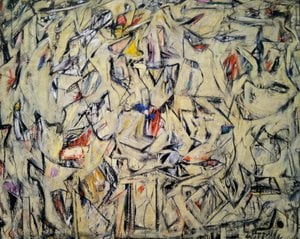
Willem de Kooning's "Zot," painted in 1949, isn’t merely a painting; it’s an embodiment of the fervor and uncertainty that characterized the height of Abstract Expressionism. This monumental canvas—measuring 46 x 51 cm—immediately confronts the viewer with a landscape dominated by stark white space punctuated by bursts of energetic pigment. It's a visual declaration of spontaneity, rejecting traditional representational conventions in favor of conveying raw emotion and psychological depth.
The painting’s compositional strategy defies easy categorization. Rather than adhering to linear perspective or establishing a discernible horizon line, De Kooning employs an all-over design where shapes overlap and intersect, creating a mesmerizing dance of visual complexity. Thick impasto—heavy application of paint—dominates much of the surface, punctuated by drips and splatters that seem to defy gravity. This technique isn’t about meticulous control; it's about allowing chance to guide the artist’s hand, resulting in textures that are palpably alive.
Despite its apparent lack of color, “Zot” possesses a subtle chromatic richness. Predominantly white serves as the foundational backdrop, subtly shifting hues through tonal variations achieved with black, grey, and fleeting touches of ochre yellow. These colors aren’t blended harmoniously; instead, they are layered and juxtaposed to generate tension and provoke contemplation. The muted palette contributes significantly to the painting's emotional impact—a feeling of unease mingled with exhilaration—reflecting the anxieties prevalent during the postwar period.
Lines in “Zot” are not descriptive; they’re expressive. Bold, sweeping strokes wrestle for dominance across the canvas, while thinner scribbles weave intricate patterns beneath them. Shapes— amorphous and fragmented—lack recognizable forms, resembling organic growths rather than geometric solids. This deliberate rejection of form underscores De Kooning's commitment to conveying emotion directly through gesture – capturing the artist’s subconscious impulses on a monumental scale.
Created during the Second World War and immediately following its conclusion, “Zot” speaks to the profound psychological upheaval experienced by artists grappling with trauma and disillusionment. The title itself—a nonsensical word—adds another layer of intrigue, suggesting a playful defiance of logic and inviting viewers to engage in an imaginative dialogue. As exemplified by The Metropolitan Museum of Art’s detailed analysis, De Kooning's work stands as a testament to the transformative power of abstraction – prioritizing feeling over representation and cementing his place among the titans of 20th-century art.

1904 - 1997 , オランダ

Journey through the raw emotion of Abstract Expressionism. From Pollock's drips to Rothko's color fields, explore 10 iconic masterpieces and their stories. Find museum-quality art reproductions for your space at WahooArt.com. Discover all masterpieces on WahooArt.com.

Immerse yourself in the luminous world of Laurent Fabre. Explore 25 iconic Neo-Abstract masterpieces defined by geometric precision and chromatic harmony. Find inspiration for your space with museum-quality art reproductions. Discover all masterpieces on WahooArt.com.

 設置イメージを確認
 送る
送る シェア
シェア
 詳細情報
詳細情報 ガイドを表示

 画像をダウンロード
 似ている作品
 X線調査
X線調査 スライドショー
 Q&A
Q&A 統計情報
統計情報 続きを読む
続きを読む









 ガラスオプションは、110cm未満のサイズでのみご利用いただけます。