ウェブ上のプレビューを遥かに凌駕する、印刷に最適なファイルをご提供します。当サイトで販売しているすべてのデジタル画像は、弊社のデータベース内にある高解像度のマスターデータ(通常、幅5,000〜15,000ピクセル)から作成されています。そのため、大判印刷やタイトなクロップ、細部まで緻密な再現も、安心してお楽しみいただけます。
当スタジオから送り出される画像は、すべて丁寧に加工されています。デジタルエキスパートが原画と照らし合わせて色調を精査し、必要に応じて補正を行った上で、プロ仕様のリタッチツールを用いて鮮明さと細部を向上させます。その際、アーティストの筆致やスタイルに忠実であることを常に追求しています。その結果、単なるスキャン画像にフィルターをかけたようなものではなく、まるで本物の絵画を見ているかのような仕上がりを実現しています。
仕上がりをご確認いただいてから完了となります。専門スタッフが、ご確認用の画像を72時間以内にメールでお送りいたします。もしご満足いただけない場合は、修正や改善のご要望を承るほか、品質が基準に満たない場合には返金も可能です。
出版社、デザインスタジオ、ギャラリー、そして印刷所から信頼される品質です。
個人での鑑賞、印刷、クリエイティブなプロジェクトにご利用いただける高解像度ファイルをダウンロードできます。 ( プリント版に切り替え 手描きの複製画を注文する)
WahooArt.com を選ぶことは、単に画像を手に入れることではありません。プロの手によって精密に仕上げられ、満足保証が付いた高品質なデジタルアートワークを受け取ることを意味します。ご注文いただいた際に自動的に付随する内容は、以下の通りです:
ご注文から72時間以内に、高解像度のデジタル画像ファイルをメールでお送りいたします。お手元に届き次第、すぐにご利用いただけます。
お客様の作品は、高度なAI技術と専門家による手作業を組み合わせてプロフェッショナルに最適化されており、細部のディテール、鮮明さ、そして正確な色再現性を最大限に引き出しています。
ファイルを誤って削除したり、紛失してしまったりしましたか?ご安心ください。いつでも無料で再送いたします。
関税や手数料、配送料を気にすることなく、お気に入りのアートワークをすぐにお楽しみいただけます。デジタルダウンロードは常に免税です。
プロ仕様のツールとカラーマネジメント技術を用いることで、デジタル画像が元の色を最大限に忠実に再現することを保証いたします。
ご購入いただいたデジタル画像にご満足いただけない場合は、100日以内であれば、理由を問わず修正または100%の返金対応をさせていただきます。
ご満足いただけない場合は、デジタルファイルを受け取ってから100日以内であれば、理由を問わず全額返金いたします。
3枚購入で10%OFF、5枚購入で15%OFF、10枚以上のご購入で20%OFF。クリエイティブなプロジェクトやギャラリー、エージェンシーに最適です。
Roy Fox Lichtenstein, born in Manhattan in 1923, wasn’t merely an artist; he was a provocateur, a cultural commentator who seized upon the burgeoning energy of post-war America and transformed it into a visual language. His early fascination with realistic drawing and painting, nurtured by museum visits and a deep appreciation for jazz music – experiences deeply rooted in his upbringing – ultimately paved the way for his groundbreaking embrace of Pop Art. Lichtenstein’s journey wasn't about replicating reality; it was about interrogating its representation, particularly through the lens of advertising, comic books, and mass-produced imagery. This deliberate shift marked a pivotal moment in art history, challenging traditional notions of fine art and establishing a new dialogue between high culture and popular consumption.
His formal training at the Art Students League under Reginald Marsh, followed by brief service during World War II, provided crucial experiences that shaped his artistic approach. However, it was his return to New York City after the war, coupled with the influence of Allan Kaprow’s experimental theater and a renewed interest in proto-Pop imagery, that truly ignited Lichtenstein's creative fire. This period saw him experimenting with abstraction before ultimately settling on his signature style – a bold, graphic aesthetic that would forever alter the landscape of American art.
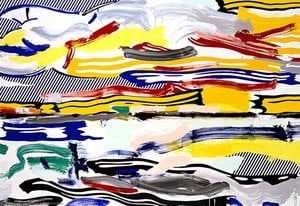
“Sunrise,” painted in 1965, is a quintessential example of Lichtenstein’s Pop Art philosophy. The painting immediately commands attention with its vibrant, almost aggressively bright yellow background – a color typically associated with advertising and commercial signage. This deliberate choice establishes an immediate connection to the consumer culture that would become central to his artistic exploration. Scattered across this luminous field are stylized clouds, rendered in varying shades of blue and gray, creating a sense of depth and atmospheric perspective, albeit achieved through simplified geometric forms.
At the heart of the composition lies a large, bold red circle – the sun itself. This isn’t a realistic depiction; rather, it's an iconic symbol, instantly recognizable as a motif borrowed from comic books and advertising. The stark contrast between the yellow background and the crimson sun creates a powerful visual impact, drawing the viewer’s eye directly to this central element. The clouds are strategically positioned, not to mimic natural forms but to serve as framing devices, further emphasizing the dominance of the radiant sun.
Lichtenstein's technique is instantly recognizable through his masterful use of Ben-Day dots – small, colored circles that simulate the halftone printing process used in commercial illustrations. This technique, borrowed directly from comic books and advertising, creates a textured surface and an illusion of depth within the painting. The dots aren’t simply applied randomly; they are meticulously arranged to suggest shading and form, contributing significantly to the overall visual impact. The careful placement of these tiny dots transforms what could have been a flat, two-dimensional image into something remarkably tactile and engaging.
This deliberate mimicry of commercial printing techniques wasn’t merely stylistic; it was a commentary on the way images were produced and consumed in mass culture. By employing this technique, Lichtenstein elevated everyday imagery to the level of fine art, prompting viewers to reconsider their relationship with advertising and popular media.
"Sunrise" is more than just a depiction of a natural phenomenon; it’s an exploration of beauty within the context of modern life. The painting evokes a sense of optimism and energy, mirroring the vibrant spirit of the 1960s. Despite its reliance on commercial imagery, there's a surprising elegance to Lichtenstein’s composition – a testament to his artistic skill and his ability to transform the mundane into something visually compelling. The bold colors, simplified forms, and iconic motifs create an image that is both instantly recognizable and deeply evocative, inviting viewers to contemplate the beauty and complexity of the world around them.

1923 - 1997 , アメリカ合衆国

 設置イメージを確認
 送る
送る シェア
シェア
 詳細情報
詳細情報 ガイドを表示

 画像をダウンロード
 似ている作品
 X線調査
X線調査 スライドショー
 Q&A
Q&A 統計情報
統計情報

 続きを読む
続きを読む