
迅速な制作と多彩な仕上げオプションを備えた、ミュージアムクオリティのジークレーまたはキャンバスプリント。 ( 手描きの絵画を購入 デジタル画像販売へ切り替え)





























作品のオリジナル比率に合わせた、当店の規定サイズからお選びください。

特定のフレームやスペースに合わせて、ご自身でサイズを指定することも可能です。選択されたサイズが元の画像の比率と一致しない場合、作品をトリミングするか、鏡面反射または単色での塗りつぶしによって画像を拡張いたします。制作を開始する前に、ご確認用のデジタルモックアップをお送りいたします。
画面上のプレビューには、実際のトリミングや拡張は反映されませんのでご注意ください。最終的な構図を正確に確認できるのは、モックアップのみとなります。
カスタムサイズも承っておりますが、元の比率を維持するためには、あらかじめ用意されたリストからサイズを選択することをお勧めいたします。

The concert party
複製画のサイズ
In the vast landscape of twentieth-century modernism, few artists possessed the ability to translate the invisible rhythms of the soul onto canvas as masterfully as Paul Klee. His 1929 masterpiece, “The Concert Party,” stands as a profound microcosm of his groundbreaking approach to visual expression. This enigmatic piece is far more than a mere illustration; it is a captivating encounter where Surrealism and Cubism converge, creating a composition that pulsates with a restless, primal energy. To gaze upon this work is to enter a realm where the boundaries between the seen and the felt begin to dissolve, inviting the viewer into a deep contemplation of the forces that govern both nature and the human psyche.
The subject matter of the painting presents a striking confrontation, a visual drama staged with unexpected intensity. At the heart of the composition, a formidable black bull looms over a vulnerable red cat, while a diminutive mouse seeks refuge within the heavy shadow cast by the larger beast. This juxtaposition immediately establishes a palpable tension—a symbolic representation of dominance versus defensiveness, or perhaps the overwhelming weight of instinct pressing upon the fragile nature of imagination. Klee skillfully employs strong diagonal lines to propel these figures across the canvas, disrupting any sense of static equilibrium and imbuing the scene with a sense of movement that feels both choreographed and chaotic.
Technically, “The Concert Party” is a triumph of texture and atmospheric depth. Klee utilized oil paints on canvas to achieve a nuanced tonal gradation that lends the work an almost tactile quality. The surface of the painting possesses a weathered, organic character, reminiscent of aged parchment or ancient paper. This effect is achieved through deliberate, layered brushstrokes that build a mottled background of muted yellows, browns, and grays. Such a technique does not merely serve a decorative purpose; it anchors the vibrant, symbolic colors of the subjects—the deep black of the bull and the striking red of the cat—within a space that feels timeless and storied.
The lighting within the piece is intentionally diffused, lacking a singular, identifiable source. This creates soft shadows and an atmospheric mood that leans toward the melancholic and the dreamlike. For the discerning collector or interior designer, this quality makes the artwork exceptionally versatile. It possesses a quiet, intellectual gravity that can anchor a sophisticated gallery space, yet its expressive lines and rich textures offer a soulful warmth capable of breathing life into a contemporary living environment. The painting does not demand attention through loud realism; instead, it commands respect through its subtle, rhythmic complexity.
To understand the emotional impact of “The Concert Party,” one must consider Klee’s unique biographical connection to music. As the son of a music teacher, Klee approached the canvas much like a composer approaches a score, treating every line as a melodic note and every patch of pigment as a sudden, bright chord. In this work, we witness a visual symphony where the "instruments" are shapes and colors. The tension between the aggressive bull and the retreating cat acts as a dissonant chord, resolved only by the textured, harmonious background that holds the entire drama in a delicate balance.
For those seeking to bring a piece of art history into their personal collections, a high-quality reproduction of this work offers an opportunity to possess a fragment of the twentieth century's most innovative mind. “The Concert Party” remains a powerful testament to Klee’s ability to find beauty in conflict and order within chaos. It is an investment in emotion, a piece that continues to provoke thought, spark conversation, and serve as a window into the profound, swirling universe of human instinct and creative imagination.

1879 - 1940 , スイス
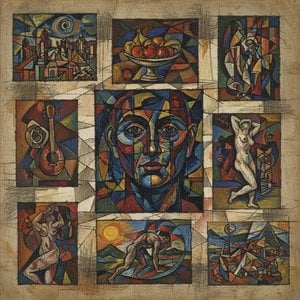
Explore 10 defining Cubist Expressionism masterpieces by Picasso, Braque & more. Discover the stories behind these bold, geometric paintings and bring museum-quality art to your home with WahooArt.com. Explore the full collection online.

Explore the captivating world of Paul Klee! Discover his innovative art, Bauhaus influence, & unique symbolic language. Expert analysis & high-quality reproductions at WahooArt.

Explore the captivating world of Angelo Chiacchio, a master of mid-century American illustration. Discover his evolution, signature style, and lasting impact on commercial art & design. Learn about his legacy at the Museum of American Illustration.

パウル・クレーの傑作25選🎨 色彩と象徴に満ちた抽象絵画の世界を旅。ドイツ表現主義からバウハウスまで、クレーの革新的な技法と感動的な作品群をWahooArtで。高品質な美術品複製やインテリアアートも豊富です。オンラインストアで全コレクションをご覧ください。

ポール・セザンヌの至高の25選。ポスト印象派を代表する画家、セザンヌの傑作と革新的な技法を紐解きます。WahooArtで高品質な複製画やインテリアアートを見つけ、芸術の世界をご自宅に。今すぐコレクションをご覧ください。


 プレビュー
プレビュー
 シェアする
シェアする シェアする
シェアする
 詳細を見る
詳細を見る ガイド
ガイド

 ダウンロード
 似ている作品
 X線調査
X線調査 スライドショー
 統計情報
統計情報

 詳細を見る
詳細を見る









 ガラスオプションは、110cm未満のサイズでのみご利用いただけます。


