
当社のアーティストが、お客様のご希望のサイズと額縁に合わせて、キャンバスに手描きで制作する油彩画です。 ( プリント版に切り替え デジタル画像販売へ切り替え)





























作品のオリジナル比率に合わせた、当店の規定サイズからお選びください。

特定のフレームやスペースに合わせて、ご希望のサイズをご入力いただけます。選択されたサイズが元の画像の比率と異なる場合、アートワークをトリミングするか、手描きで要素を追加して絵画を拡張いたします。デジタルモックアップ を制作し、制作開始前にご確認(承認)をいただきます。
画面上のプレビューは、実際のトリミングや拡張を正確に反映しているものではありません。最終的な構図は、モックアップによってのみ正確にご確認いただけます。
カスタムサイズもご利用いただけますが、元の比率を維持するためには、あらかじめ用意されたリストからサイズを選択することをお勧めいたします。

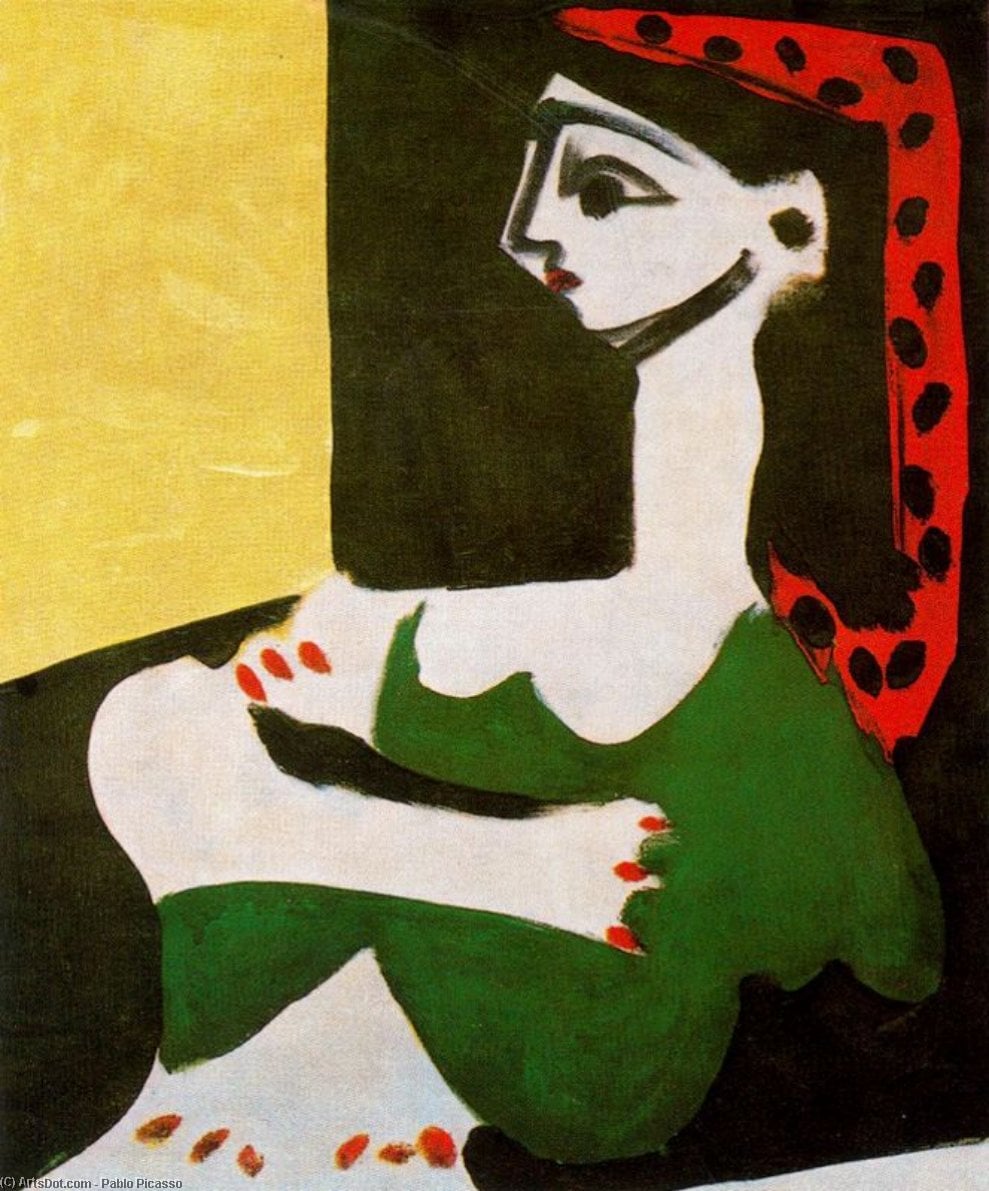
Jacqueline's portrait (profile) 3
複製画サイズ一覧
Pablo Ruiz Picasso's “Jacqueline’s Portrait (Profile) 3,” painted in 1962, isn’t merely a likeness; it’s a distilled essence of a woman—a study in understated elegance and the profound connection between artist and subject. This oil painting, housed within the Museum Quartier Des Héronnières in Fontainebleau, France, offers a glimpse into Picasso's later years, a period marked by both artistic refinement and an intimate exploration of his beloved muse, Jacqueline Roque. The work transcends simple portraiture, becoming a meditation on form, color, and the quiet power of observation.
Picasso’s masterful manipulation of Cubist principles is immediately apparent. While rooted in the fragmented forms and multiple perspectives that defined his earlier revolutionary period, here he employs them with a newfound control and restraint. The subject's features—her profile, her hands delicately crossed—are not dissolved into geometric shards but are rendered with a remarkable clarity and solidity. This shift reflects Picasso’s evolving style, moving away from the chaotic energy of his Cubist experiments towards a more considered and emotionally resonant approach. The painting is a testament to his ability to synthesize past innovations with a mature artistic vision.
Jacqueline Roque, Picasso’s second wife, played a pivotal role in shaping this portrait. Meeting her at a pottery studio in 1961, she became an enduring source of inspiration for the artist throughout their marriage. “Jacqueline’s Portrait (Profile) 3” captures her with a remarkable sense of dignity and composure. She is depicted seated, her gaze direct yet subtly enigmatic—a silent invitation to connection. The painting isn't about capturing a fleeting moment but rather conveying a deeper understanding of Jacqueline’s character: her strength, her intelligence, and the quiet grace that defined her presence.
The choice of Jacqueline herself is significant. Picasso frequently depicted women he admired – from Dora Maar to Marie-Thérèse Walter – often imbuing them with symbolic weight. In this portrait, however, there’s a sense of equality, a mutual respect between artist and subject that transcends the traditional power dynamics of the art world. The painting feels less like a conquest of beauty and more like an honest portrayal of a woman he deeply cherished.
The palette of “Jacqueline’s Portrait (Profile) 3” is both restrained and powerfully evocative. Picasso utilizes a harmonious blend of blues, greens, and yellows—shades that create a sense of depth and luminosity. The bold use of color isn't merely decorative; it serves to emphasize the subject’s features and imbue the painting with an emotional intensity. Notice how the cool blues and greens contribute to a feeling of serenity, while the warmer yellows add a touch of warmth and intimacy.
Furthermore, Picasso masterfully employs simplification and stylization. The subject's features are subtly abstracted, reducing them to their essential forms—a testament to his Cubist training. Yet, these simplifications don’t diminish the portrait’s impact; rather, they heighten its emotional resonance. The careful arrangement of shapes and lines creates a dynamic composition that draws the viewer’s eye and invites contemplation.
Beyond its technical brilliance, “Jacqueline’s Portrait (Profile) 3” is rich in symbolism. The seated posture itself suggests stability and introspection—a reflection of Jacqueline's character. The crossed hands convey a sense of quiet confidence and self-possession. The painting can be interpreted as an exploration of the female form, a celebration of beauty, and a testament to the enduring power of human connection.
Picasso’s legacy is inextricably linked to this portrait. It stands as a poignant example of his artistic evolution—a culmination of decades of experimentation and innovation. Reproductions of “Jacqueline’s Portrait (Profile) 3” offer art lovers a chance to experience the depth and complexity of Picasso's vision, bringing a touch of timeless elegance to any space.


1881 - 1973 , スペイン

Explore the profound evolution of Cubism through an expert analysis of Pablo Picasso's revolutionary works. From Analytical to Synthetic Cubism, discover the techniques that redefined modern art and learn how to curate these iconic masterpieces for your private collection.

Embark on a journey through the revolutionary world of Cubism. Discover how masters like Picasso redefined perspective through Analytical and Synthetic techniques in this expert-led guide for art enthusiasts and collectors.

Unveil the radical revolution of Cubism. Explore how masters like Picasso and Braque redefined modern art through fragmented forms and geometric abstraction, offering profound insights for discerning collectors of fine art history and masterpieces.

 設置イメージを確認
 送る
送る シェア
シェア
 詳細情報
詳細情報 ガイドを表示

 画像をダウンロード
 似ている作品
 X線調査
X線調査 スライドショー
 統計情報
統計情報

 続きを読む
続きを読む









 ガラスオプションは、110cm未満のサイズでのみご利用いただけます。


