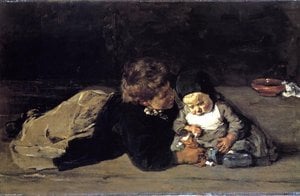
AcrylicWallArtImpressionist Painting
 1906
1906 24.0 x 19.0 cm
 クンストハレ・ブレーメン
当社のアーティストが、お客様のご希望のサイズと額縁に合わせて、キャンバスに手描きで制作する油彩画です。 ( プリント版に切り替え デジタル画像販売へ切り替え)





























作品のオリジナル比率に合わせた、当店の規定サイズからお選びください。

フレームや壁のスペースに合わせて、ご希望の幅と高さを入力してください。本作品は手描きのため、異なる比率のサイズをご希望の場合、絵画の周囲を少し広げて描くか、あるいは端を少しカットして調整することが可能です。お客様のご要望に合わせます。制作を開始する前に、仕上がりを確認するためのデジタルモックアップをお送りいたします。このページに表示されている画像は完成品の実物ではなく、あくまでモックアップによるイメージです。
Self-Portrait
複製画サイズ一覧
Max Liebermann's “Self Portrait with Hat, Brush, and Palette,” completed in 1934, stands as a quintessential example of Impressionist painting—a genre defined by capturing fleeting moments of light and color rather than striving for photographic realism. More than just a depiction of the artist himself, this artwork offers a profound glimpse into Liebermann’s artistic sensibilities and his engagement with the intellectual currents shaping early 20th-century Germany.
The painting itself is rendered in muted shades of brown, ochre, and gray—a deliberate choice that reflects Liebermann's fascination with tonal harmonies and his desire to convey a sense of quiet contemplation. The artist sits calmly before a easel, wearing a straw hat and holding a paintbrush and palette – symbols of his craft and profession. Light filters softly through the window behind him, illuminating his face and casting subtle shadows across his attire. Liebermann’s gaze is directed outwards, suggesting an awareness of the world beyond the confines of his studio.
Liebermann's stylistic approach aligns perfectly with the Impressionist movement’s rejection of academic conventions. He eschews meticulous detail in favor of loose brushstrokes and blended pigments—techniques that prioritize capturing the ephemeral qualities of light and atmosphere. This technique is particularly evident in the depiction of the windowpane, where Liebermann skillfully renders the refracted sunlight using broken color patches.
“Self Portrait with Hat, Brush, and Palette” emerged during a period of significant artistic upheaval—the burgeoning Impressionist movement challenged the dominance of Romantic idealism and paved the way for subsequent avant-garde movements. Liebermann’s work reflects this broader cultural shift toward embracing experimentation and prioritizing subjective experience.
The painting was created in Berlin, which at the time was experiencing rapid industrialization and urbanization—forces that profoundly impacted artistic sensibilities. Liebermann's engagement with these developments is palpable in his depiction of the domestic interior—a space imbued with a sense of understated elegance and intellectual curiosity. The artist’s studio serves as a microcosm of the broader modernist ethos, embodying a commitment to capturing the complexities of contemporary life.
Beyond its visual qualities, “Self Portrait with Hat, Brush, and Palette” is laden with symbolic significance. The hat represents Liebermann's identity—a marker of social status and profession—while the paintbrush and palette symbolize his creative vocation. The muted color palette contributes to a mood of introspection and serenity, inviting viewers to contemplate the artist’s inner life.
Furthermore, Liebermann’s gaze outward suggests an awareness of the world beyond the easel—a recognition that art should engage with broader social and philosophical concerns. This subtle gesture underscores the painting's enduring relevance as a meditation on the relationship between artist and subject, intellect and emotion.
"Self Portrait with Hat, Brush, and Palette" succeeds in conveying a powerful emotional resonance—a sense of quiet contemplation and understated beauty. Liebermann’s masterful handling of light and color creates an atmosphere of tranquility that draws the viewer inward, prompting reflection on themes of identity, creativity, and perception.
The painting's enduring appeal lies in its ability to capture a moment of profound stillness—a reminder that art can offer solace and inspiration amidst the turbulence of modern life. It remains a testament to Liebermann’s artistic vision and his unwavering commitment to portraying the human experience with sensitivity and insight.
マックス・リーベルマン作「Self-Portrait」はAccentに最適で、Living Roomに飾るのが特におすすめです。用途と空間の組み合わせによって、複製画を飾るのにふさわしい場所をご提案します。
マックス・リーベルマン作「Self-Portrait」のデジタルファイルをご希望の場合は、デジタル画像ページより高解像度デジタル画像のダウンロードをご注文ください。
Large サイズ、Portrait 方向:こちらは マックス・リーベルマン作「Self-Portrait」 に推奨されるプリント設定です。


1847 - 1935 , ドイツ

Explore 10 iconic paintings with captivating 'mushroom' tones! Discover Van Gogh, Monet & Rembrandt’s masterpieces—earthy palettes, rich history & artistic techniques. Find museum-quality art reproductions and curated decor ideas at

Find serenity with 10 famous paintings embracing 'driftwood' tones. Explore Monet, Renoir & Van Gogh’s masterpieces – Impressionism, landscapes & calming palettes. Museum-quality art reproductions at . Discover all masterpieces online!

Journey through 10 iconic paintings bathed in 'sand' tones – from Van Gogh to Monet. Explore the stories, techniques & warm palettes of these timeless masterpieces. Find museum-quality art reproductions at and bring classic beauty home.

Explore 10 iconic paintings dominated by rich clay tones – from Rembrandt's warmth to Van Gogh’s earthy landscapes. Discover art history, techniques & find museum-quality reproductions at . Explore the full collection online!

Explore 10 famous paintings dominated by captivating tan tones! From Renaissance portraits to Impressionist landscapes, discover art history's most serene masterpieces. Find museum-quality reproductions & elevate your home decor on .

 設置イメージを確認
 送る
送る シェア
シェア
 詳細情報
詳細情報 ガイドを表示

 画像をダウンロード
 似ている作品
 X線調査
X線調査 スライドショー
 統計情報
統計情報 続きを読む
続きを読む









 ガラスオプションは、110cm未満のサイズでのみご利用いただけます。