
迅速な制作と多彩な仕上げオプションを備えた、ミュージアムクオリティのジークレーまたはキャンバスプリント。 ( 手描きの絵画を購入 デジタル画像販売へ切り替え)
作品のオリジナル比率に合わせた、当店の規定サイズからお選びください。

特定のフレームやスペースに合わせて、ご自身でサイズを指定することも可能です。選択されたサイズが元の画像の比率と一致しない場合、作品をトリミングするか、鏡面反射または単色での塗りつぶしによって画像を拡張いたします。制作を開始する前に、ご確認用のデジタルモックアップをお送りいたします。
画面上のプレビューには、実際のトリミングや拡張は反映されませんのでご注意ください。最終的な構図を正確に確認できるのは、モックアップのみとなります。
カスタムサイズも承っておりますが、元の比率を維持するためには、あらかじめ用意されたリストからサイズを選択することをお勧めいたします。

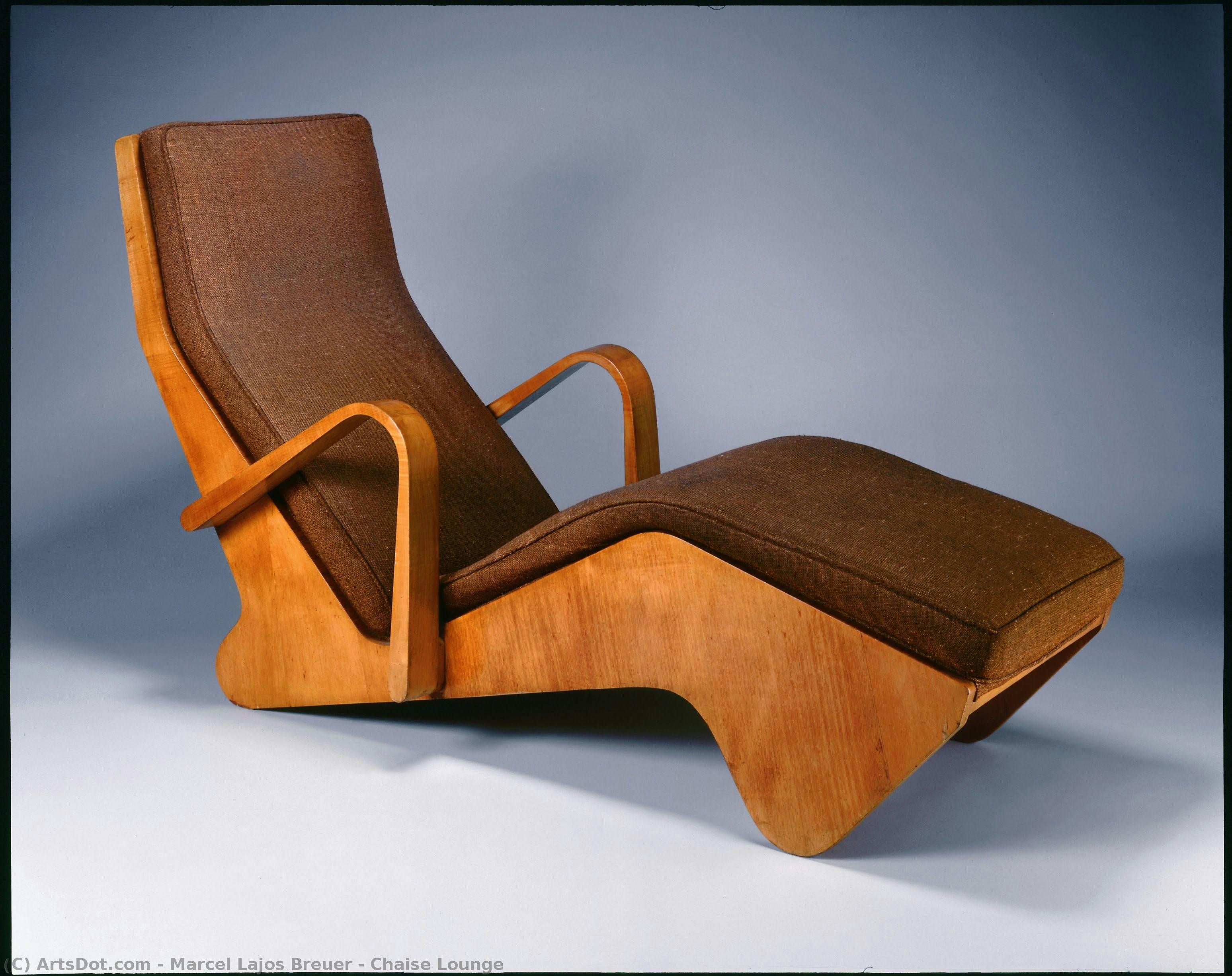
Chaise Lounge
複製画のサイズ

In the grand tapestry of twentieth-century modernism, few threads are as structurally sound or aesthetically pure as those woven by Marcel Lajos Breuer. Born in 1902 amidst the cultural richness of Pécs, Hungary, Breuer emerged from a world on the precipice of radical change. His early years, steeped in the intellectual currents of the Austro-Hungarian Empire, provided the foundation for a career that would eventually redefine the very boundaries between furniture, sculpture, and habitable space. To understand Breuer is to understand the transition from the ornate traditions of the past to the streamlined, industrial efficiency of the future—a journey that took him from the workshops of the Bauhaus to the skyline of New York City.
The true crucible of his genius was undoubtedly the Bauhaus. Enrolling in 1924, Breuer entered an environment where the boundaries between art and industry were being intentionally dissolved. Under the influence of visionaries like Walter Gropius, he embraced a philosophy where form followed function with uncompromising precision. It was within the school's carpentry workshop that Breuer began to experiment with materials that would become his signature. His fascination with the structural possibilities of tubular steel—inspired perhaps by the curved handlebars of an Adler bicycle—led to the creation of the legendary Wassily Chair. This piece was not merely a seat; it was a manifesto in metal and fabric, stripping away the bulk of traditional upholstery to reveal a skeletal, geometric elegance that remains a cornerstone of modern design.
As his career progressed, Breuer’s vision expanded from the intimate scale of furniture to the monumental scale of architecture. His work became a dialogue between the lightness of industrial materials and the heavy, tactile presence of natural elements. In his architectural practice, he mastered the art of the cantilever, creating structures that seemed to defy gravity through daring projections and suspended volumes. This period saw him exploring the textures of wood, stone, and glass, blending them into a cohesive language that spoke of both permanence and transparency.
His architectural repertoire was remarkably diverse, ranging from private residences to massive institutional landmarks. Notable achievements include:
Breuer’s migration to the United States in 1937 marked a new chapter in his evolution, as he brought the avant-garde sensibilities of Europe to the burgeoning American landscape. He became a naturalized citizen, yet he remained a bridge between two worlds, infusing American architecture with the rigorous discipline of the Bauhaus while embracing the expansive possibilities of the New World. His ability to adapt—moving from the delicate precision of bentwood and steel to the rugged, expressive power of Brutalism—demonstrates a rare versatility that few of his contemporaries could match.
Today, the legacy of Marcel Breuer is felt every time we sit in a chair that prioritizes clarity over clutter or walk through a building that celebrates its own structural truth. He did not merely design objects and buildings; he designed a way of seeing the world—one where beauty is found in the essential, and where the strength of a structure lies in its honesty. His life remains a testament to the idea that true innovation does not require excess, but rather a profound understanding of the soul of the material.

1902 - 1981 , Hungary

Explore the captivating world of Antoine Blanchard (Marcel Masson) and his nostalgic Parisian scenes. Discover his artistic influences, unique style, and the challenges of authentication. Expert insights & art appraisal information.

Explore the captivating world of Angelo Chiacchio, a master of mid-century American illustration. Discover his evolution, signature style, and lasting impact on commercial art & design. Learn about his legacy at the Museum of American Illustration.
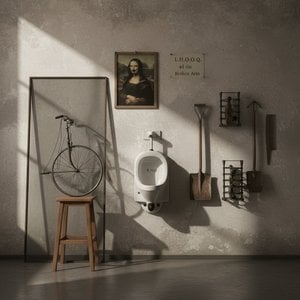
Explore the revolutionary art of Marcel Duchamp! Discover how his Dadaist readymades challenged artistic conventions & redefined modern art. A deep dive into 'Fountain', conceptual shifts, and his lasting impact.

Explore the radical origins of Dadaism. From the chaos of WWI to Marcel Duchamp's revolutionary readymades, discover how this anti-art movement dismantled tradition and birthed modern conceptual art. An essential guide for students and collectors of fine art history.

Explore the captivating landscapes of Marcel Dyf (1899-1985). Discover his Impressionist roots, subtle Surrealism, and enduring legacy. Learn about his life, art, and value with WahooArt.

 プレビュー
プレビュー
 シェアする
シェアする シェアする
シェアする
 詳細を見る
詳細を見る

 ダウンロード
 似ている作品
 X線調査
X線調査 スライドショー
 統計情報
統計情報

 詳細を見る
詳細を見る






































 ガラスオプションは、110cm未満のサイズでのみご利用いただけます。


