
オンラインプレビューをはるかに凌ぐ、高解像度で鮮明なデジタル画像をご購入いただけます。
各ファイルは、社内の専門家が高度なツールと熟練した手作業によるレタッチを用いて、細心の注意を払って準備されています。すべての画像において、卓越した鮮明度、正確な色彩再現性、そして繊細なディテールを保証いたします。
最終ファイルは、プロフェッショナルな編集・印刷環境ですぐにご利用いただけるよう最適化された状態で、72時間以内にメールにてお届けいたします。これは、一流のデザインスタジオ、出版社、ギャラリーから信頼されているものと同等の品質です。
個人での鑑賞、印刷、クリエイティブなプロジェクト用に、高解像度ファイルをダウンロードできます。 ( プリント版に切り替え 手描きの絵画を購入)
WahooArt.com を選ぶことは、単に画像を手に入れることではありません。それは、プロの手によって精密に仕上げられ、満足保証が付いた高品質なデジタルアートワークを受け取ることを意味します。ご注文いただいた際に自動的に付随する内容は、以下の通りです:

ご注文から72時間以内に、高解像度のデジタル画像ファイルがメールでお手元に届きます。すぐにそのままご利用いただけます。

お客様の作品は、高度なAIツールと専門家による手作業の編集を組み合わせてプロフェッショナルに最適化されており、細部のディテール、鮮明さ、そして正確な色再現性を最大限に引き出しています。

ファイルを誤って削除したり、紛失してしまったりしましたか?ご安心ください。いつでも無料で再送いたします。

関税や手数料、配送料を気にすることなく、お気に入りのアートワークをすぐにお楽しみいただけます。デジタルダウンロードは常に免税です。

プロ仕様のツールとカラーマネジメント技術を用いることで、デジタル画像が元の色を最大限に忠実に再現することを保証いたします。

ご購入いただいたデジタル画像にご満足いただけない場合は、100日以内であれば、理由を問わず修正または100%の返金対応をさせていただきます。

ご満足いただけない場合は、デジタルファイルを受け取ってから100日以内であれば、理由を問わず全額返金いたします。

3枚購入で10%OFF - 5枚購入で15%OFF - 10枚以上購入で20%OFF。クリエイティブなプロジェクト、ギャラリー、エージェンシーに最適です。

In the grand tapestry of twentieth-century modernism, few threads are as structurally sound or aesthetically pure as those woven by Marcel Lajos Breuer. Born in 1902 amidst the cultural richness of Pécs, Hungary, Breuer emerged from a world on the precipice of radical change. His early years, steeped in the intellectual currents of the Austro-Hungarian Empire, provided the foundation for a career that would eventually redefine the very boundaries between furniture, sculpture, and habitable space. To understand Breuer is to understand the transition from the ornate traditions of the past to the streamlined, industrial efficiency of the future—a journey that took him from the workshops of the Bauhaus to the skyline of New York City.
The true crucible of his genius was undoubtedly the Bauhaus. Enrolling in 1924, Breuer entered an environment where the boundaries between art and industry were being intentionally dissolved. Under the influence of visionaries like Walter Gropius, he embraced a philosophy where form followed function with uncompromising precision. It was within the school's carpentry workshop that Breuer began to experiment with materials that would become his signature. His fascination with the structural possibilities of tubular steel—inspired perhaps by the curved handlebars of an Adler bicycle—led to the creation of the legendary Wassily Chair. This piece was not merely a seat; it was a manifesto in metal and fabric, stripping away the bulk of traditional upholstery to reveal a skeletal, geometric elegance that remains a cornerstone of modern design.
As his career progressed, Breuer’s vision expanded from the intimate scale of furniture to the monumental scale of architecture. His work became a dialogue between the lightness of industrial materials and the heavy, tactile presence of natural elements. In his architectural practice, he mastered the art of the cantilever, creating structures that seemed to defy gravity through daring projections and suspended volumes. This period saw him exploring the textures of wood, stone, and glass, blending them into a cohesive language that spoke of both permanence and transparency.
His architectural repertoire was remarkably diverse, ranging from private residences to massive institutional landmarks. Notable achievements include:
Breuer’s migration to the United States in 1937 marked a new chapter in his evolution, as he brought the avant-garde sensibilities of Europe to the burgeoning American landscape. He became a naturalized citizen, yet he remained a bridge between two worlds, infusing American architecture with the rigorous discipline of the Bauhaus while embracing the expansive possibilities of the New World. His ability to adapt—moving from the delicate precision of bentwood and steel to the rugged, expressive power of Brutalism—demonstrates a rare versatility that few of his contemporaries could match.
Today, the legacy of Marcel Breuer is felt every time we sit in a chair that prioritizes clarity over clutter or walk through a building that celebrates its own structural truth. He did not merely design objects and buildings; he designed a way of seeing the world—one where beauty is found in the essential, and where the strength of a structure lies in its honesty. His life remains a testament to the idea that true innovation does not require excess, but rather a profound understanding of the soul of the material.

1902 - 1981 , Hungary

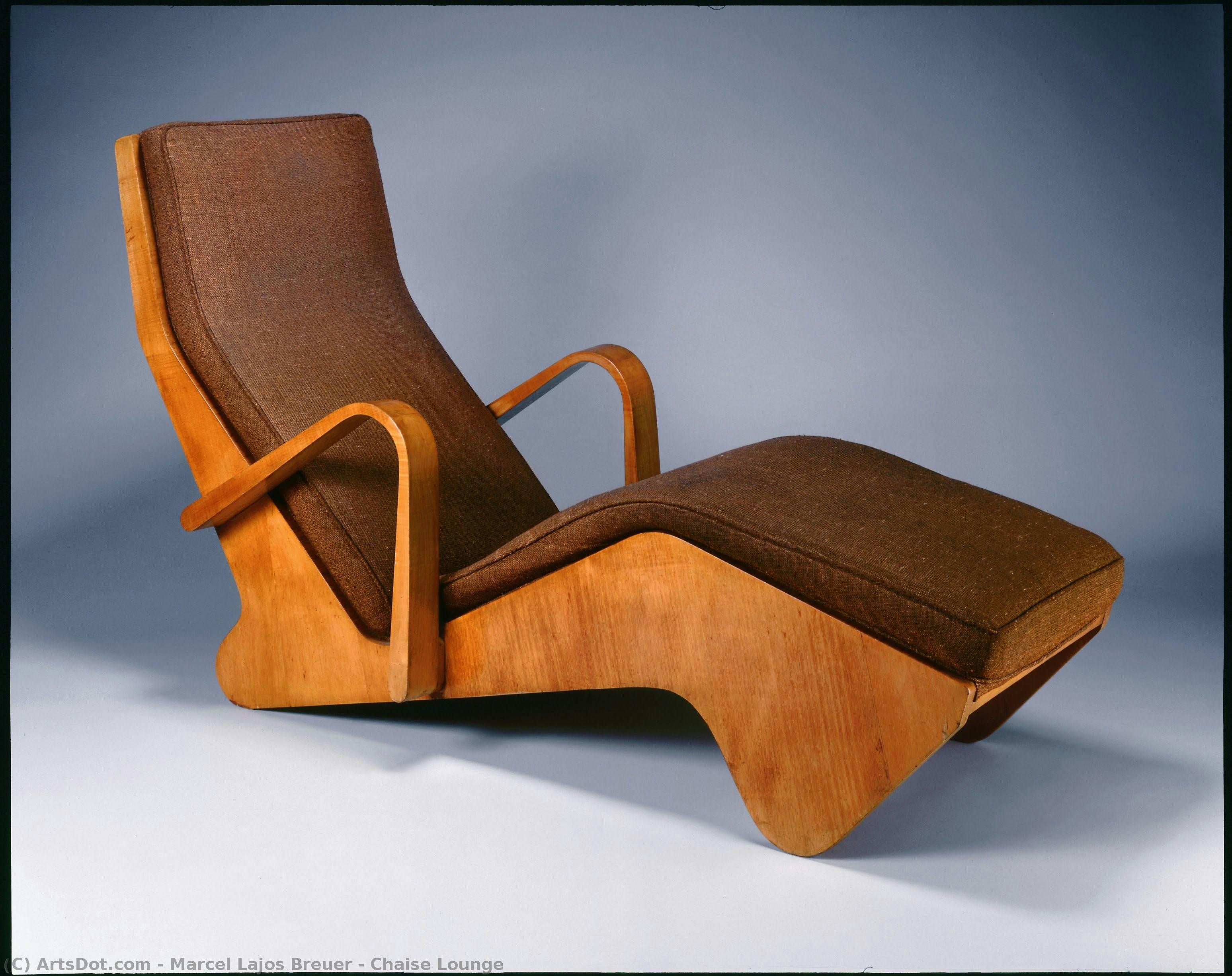
 プレビュー
プレビュー
 シェアする
シェアする シェアする
シェアする
 詳細を見る
詳細を見る

 ダウンロード
 似ている作品
 X線調査
X線調査 スライドショー
 統計情報
統計情報

 詳細を見る
詳細を見る


