

スピーディーな制作と多彩な仕上げオプションが魅力の、ミュージアムクオリティなジークレー・キャンバスプリント。 ( 手描き複製画を注文する デジタル画像販売へ切り替え)





























作品のオリジナル比率に合わせた、当店の規定サイズからお選びください。

額縁や壁のスペースに合わせて、ご希望の幅と高さを入力してください。プリントはカットすることは可能ですが、元の画像より大きくすることはできないため、異なる比率のサイズを選択された場合は、画像の一部が欠けることになります。印刷を開始する前に、内容を確認していただくためのデジタルモックアップをお送りいたします。このページに表示されている画像は、実際のカット後の状態を示すものではありません。実際の仕上がりはモックアップにてご確認ください。
The Dice
複製画サイズ一覧
In the quiet, intellectual atmosphere of 1922, Juan Gris orchestrated a visual revolution that would forever alter our perception of the mundane. His masterpiece, The Dice, is far more than a mere arrangement of tabletop objects; it is a profound meditation on the architecture of sight. At first glance, the viewer encounters a familiar collection of elements—a book, dice, a glass, and an apple—yet these items are stripped of their traditional, naturalistic weight. Instead, they are reborn through the lens of Synthetic Cubism, where the boundaries between object and space begin to dissolve. Gris invites us into a world where reality is not something to be merely observed, but something to be reconstructed from the very essence of form and geometry.
The brilliance of this composition lies in its masterful deconstruction. Eschewing the soft, fleeting light of the Impressionists, Gris employs a rigorous, analytical approach inspired by the structural legacies of Cézanne. The artwork is a complex tapestry of overlapping planes, where sharp, angular lines and intersecting rectangles create a rhythmic, almost musical, tension. Each shape—be it a circle, triangle, or cube—is presented from multiple viewpoints simultaneously, challenging the eye to navigate a flattened yet deeply layered perspective. This technique does not merely depict objects; it captures their structural soul, presenting a multidimensional experience on a two-dimensional canvas.
Beyond its technical prowess, The Dice breathes with a hidden symbolic life that resonates deeply with the contemplative viewer. The inclusion of dice introduces an element of chance and fate, suggesting the unpredictable nature of existence, while the apple serves as a timeless emblem of knowledge or temptation. These elements are woven into a muted, sophisticated color palette that emphasizes intellectual clarity over emotional excess. The interplay of light and shadow is used not to create realistic volume, but to define the edges of these geometric fragments, casting strong, directional shadows that anchor the composition within its own constructed reality.
For the discerning collector or interior designer, this piece offers an unparalleled sense of structural elegance and modern sophistication. The artwork’s restrained palette and disciplined form allow it to serve as a powerful focal point in any contemporary setting, providing a sense of historical depth and avant-garde prestige. To possess a high-quality reproduction of The Dice is to bring a piece of the Parisian avant-garde into one's personal sanctuary—a constant reminder of the beauty found in fragmentation and the enduring power of the analytical mind. It is an invitation to look closer, to find order within chaos, and to appreciate the profound artistry hidden within the simplest of arrangements.
「The Dice」は、リネンキャンバスに手描きされた油彩複製画としてお求めいただけます。ご注文は手描き油彩複製画のページにて、お好みのサイズをお選びいただけます。
フアン・グリス作「The Dice」の色彩表現:Espresso (#615b54)を基調とした、Earthyなパレット。
フアン・グリス作「The Dice」の画像は、作品のデジタルイメージをダウンロードページからダウンロードいただけます:高解像度デジタル画像のダウンロード。


1887 - 1927 , スペイン

Explore the profound evolution of Cubist still life, from Cézanne's structural foundations to the fragmented brilliance of Braque and Léger. Discover how geometric abstraction redefined reality through a sophisticated lens of form, color, and modern artistic mastery.
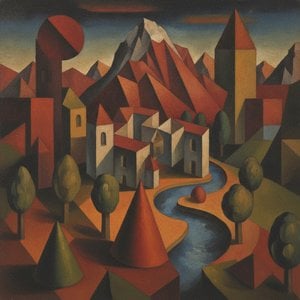
Explore the profound evolution of Cubist landscapes. Discover how masters like Braque and Picasso redefined perspective through geometric mastery, transforming nature into an intellectual mosaic of form and light for the discerning modern art collector.

Explore the profound depth of Cubist Expression. From the deconstructed forms of Picasso to Braque’s geometric mastery, discover how shattering reality through abstraction redefined modern art and continues to inspire sophisticated collectors worldwide.
 設置イメージを表示
 シェアする
シェアする シェアする
シェアする
 詳細を見る
詳細を見る ガイドを表示

 ダウンロード
 似ている作品
 X線調査
X線調査 スライドショーを表示
 Q&A
Q&A
 統計情報
統計情報


 詳細を表示
詳細を表示









 ガラスオプションは、110cm未満のサイズでのみご利用いただけます。


