
x































作品のオリジナル比率に合わせた、当店の規定サイズからお選びください。

特定のフレームやスペースに合わせて、ご希望のサイズをご入力いただけます。選択されたサイズが元の画像の比率と異なる場合、アートワークをトリミングするか、手描きで要素を追加して絵画を拡張いたします。デジタルモックアップ を制作し、制作開始前にご確認(承認)をいただきます。
画面上のプレビューは、実際のトリミングや拡張を正確に反映しているものではありません。最終的な構図は、モックアップによってのみ正確にご確認いただけます。
カスタムサイズもご利用いただけますが、元の比率を維持するためには、あらかじめ用意されたリストからサイズを選択することをお勧めいたします。

The Checkerboard
複製画のサイズ
Juan Gris’s “The Checkerboard,” painted in 1915, isn’t merely a depiction of a familiar domestic scene; it’s a radical declaration of artistic intent. Created during the nascent years of Synthetic Cubism, this work embodies the movement's core tenets – a deliberate dismantling of traditional perspective and representation to reveal an underlying geometric structure. The painting’s power lies not in its subject matter—a checkerboard adorned with everyday objects like a bottle, a cup, a knife, and scissors—but in Gris’s masterful manipulation of form and color to evoke a sense of fragmented space and heightened visual complexity.
Juan Gris (1887-1927), born José Victoriano González-Pérez in Madrid, Spain, was a pivotal figure in the development of Cubism. His early life, marked by studies in engineering before embracing art, reflects a mind accustomed to analytical thinking – a quality that profoundly shaped his artistic approach. Gris’s connection to Pablo Picasso and Georges Braque cemented his place at the forefront of this revolutionary movement. He wasn't simply copying what others were doing; he was developing a distinct visual language characterized by its precise geometric forms and bold color combinations.
Gris’s work is deeply rooted in the intellectual currents of the time, reflecting a fascination with modern technology and urban life. The inclusion of objects like the bottle and knife suggests a concern with industrialization and the changing role of man within society. His dedication to Cubism earned him recognition as one of the movement's most distinctive artists, alongside Picasso and Braque.
The checkerboard motif itself carries significant symbolic weight. Historically, it has represented order, logic, and control – concepts that are deliberately disrupted within Gris’s composition. The juxtaposition of these ordered squares with seemingly random objects creates a tension between structure and chaos, reflecting the anxieties and uncertainties of the early 20th century. The specific arrangement of the bottle, cup, knife, and scissors adds to this complexity, inviting viewers to contemplate their individual meanings and their collective relationship within the overall design.
Beyond its immediate visual impact, “The Checkerboard” invites us to consider the nature of perception itself. Gris challenges our traditional ways of seeing, forcing us to confront a world where objects are no longer presented in a fixed or unified manner.
"The Checkerboard" stands as a testament to Juan Gris’s artistic genius and his pivotal role in shaping the course of modern art. Its influence can be seen in countless subsequent works, and its enduring appeal lies in its ability to provoke thought and inspire wonder. A hand-painted reproduction offers an unparalleled opportunity to experience this iconic masterpiece firsthand, bringing its fractured beauty into your home or studio.

1887 - 1927 , スペイン

Unveil the radical revolution of Cubism. Explore how masters like Picasso and Braque redefined modern art through fragmented forms and geometric abstraction, offering profound insights for discerning collectors of fine art history and masterpieces.
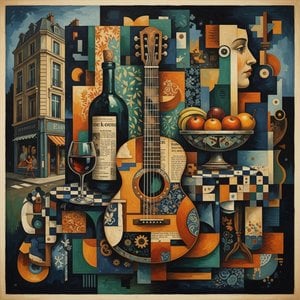
Master the vibrant world of Synthetic Cubism with our expert guide. Explore the revolutionary techniques of Picasso and Braque, from collage to color, and discover how this movement redefined modern art for collectors and connoisseurs alike.

Embark on a journey through the revolutionary world of Cubism. Discover how masters like Picasso redefined perspective through Analytical and Synthetic techniques in this expert-led guide for art enthusiasts and collectors.

Explore the profound impact of Cubism on modern art. Our expert guide delves into the revolutionary techniques of Picasso and Braque, offering collectors deep insights into deconstructing form, perspective, and the enduring legacy of the Cubist movement.


最新の美術ニュース、限定オファー、そしてインテリアのアイデアをいち早くお届けします。
お客様のプロジェクトについてお聞かせください。当社の美術専門家が、お客様に合わせた3つのパーソナライズされた芸術提案をご提供いたします。
あなたにぴったりの3作品を無料で厳選いたします


 プレビュー
プレビュー
 プリントを購入
 シェアする
シェアする シェアする
シェアする
 詳細を見る
詳細を見る

 ダウンロード
 似ている作品
 X線調査
X線調査 スライドショー


 詳細を見る
詳細を見る









 ガラスオプションは、110cm未満のサイズでのみご利用いただけます。


