
 Oil On CanvasWallArtCubism
 1915Modern
 73.0 x 92.0 cm
 クローラー・ミュラー美術館
迅速な制作と多彩な仕上げオプションを備えた、ミュージアムクオリティのジークレーまたはキャンバスプリント。 ( 手描きの絵画を購入 デジタル画像販売へ切り替え)





























作品のオリジナル比率に合わせた、当店の規定サイズからお選びください。

特定のフレームやスペースに合わせて、ご自身でサイズを指定することも可能です。選択されたサイズが元の画像の比率と一致しない場合、作品をトリミングするか、鏡面反射または単色での塗りつぶしによって画像を拡張いたします。制作を開始する前に、ご確認用のデジタルモックアップをお送りいたします。
画面上のプレビューには、実際のトリミングや拡張は反映されませんのでご注意ください。最終的な構図を正確に確認できるのは、モックアップのみとなります。
カスタムサイズも承っておりますが、元の比率を維持するためには、あらかじめ用意されたリストからサイズを選択することをお勧めいたします。

Guitar on a Table
複製画のサイズ
Juan Gris's "Guitar on a Table," painted in 1915, stands as a quintessential example of Synthetic Cubism. This captivating artwork, measuring 73 x 92 cm and housed at the Kröller-Müller Museum in Otterlo, Netherlands, transcends a simple depiction of an object; it's an exploration of form, perspective, and the interplay between reality and abstraction. Gris masterfully deconstructs and reassembles familiar elements—a guitar, books, and table surfaces—into a harmonious composition characterized by geometric shapes and a carefully considered color palette.
José Victoriano González-Pérez, known as Juan Gris, was a pivotal figure in the development of Cubism. After studying engineering and demonstrating early artistic talent through drawings for periodicals, he moved to Paris in 1906, immersing himself in the vibrant art scene. There, he befriended Pablo Picasso and Georges Braque, becoming an integral part of the Cubist movement. Gris’s style evolved over time, but his dedication to Cubism remained constant, marked by a unique approach that emphasized composition and color.
"Guitar on a Table" exemplifies Synthetic Cubism, a phase characterized by simplified forms, overlapping planes, and a focus on overall composition rather than deconstruction. The central motif is a guitar, rendered with five strings instead of the usual six—a deliberate choice by Gris to move away from realistic representation and emphasize the abstract nature of his artistic vision. This intentional alteration extends to the musical staff, depicted with fewer lines than typical. The surrounding elements – books and other objects – create a sense of cluttered harmony. The color palette is rich and nuanced, featuring shades of blue, brown, green, and speckled patterns that add texture and depth. Gris skillfully interweaves delineations reminiscent of guitar strings and the instrument’s curves with elements of the table surface, showcasing his mastery in fragmenting reality while maintaining a sense of visual coherence.
Gris's work, including "Guitar on a Table," significantly contributed to the evolution of Cubism. His approach to Synthetic Cubism, with its emphasis on composition and color, enriched the movement’s diversity. The recurring motif of the Spanish guitar reflects Gris's cultural heritage and his artistic fascination with the shapes of musical instruments. Beyond being a representation of an object, this painting is an exploration of form and perspective, inviting viewers to interpret the fragmented reality portrayed. The deliberate simplification and abstraction challenge conventional notions of representation, prompting contemplation on the nature of perception and the artist’s role in shaping our understanding of the world.


1887 - 1927 , スペイン

Explore the profound evolution of Cubism through an expert analysis of Pablo Picasso's revolutionary works. From Analytical to Synthetic Cubism, discover the techniques that redefined modern art and learn how to curate these iconic masterpieces for your private collection.

Unveil the radical revolution of Cubism. Explore how masters like Picasso and Braque redefined modern art through fragmented forms and geometric abstraction, offering profound insights for discerning collectors of fine art history and masterpieces.

Embark on a journey through the revolutionary world of Cubism. Discover how masters like Picasso redefined perspective through Analytical and Synthetic techniques in this expert-led guide for art enthusiasts and collectors.
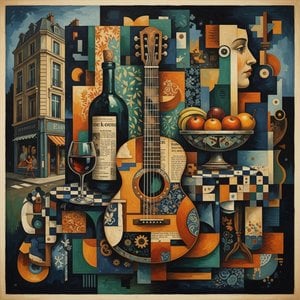
Master the vibrant world of Synthetic Cubism with our expert guide. Explore the revolutionary techniques of Picasso and Braque, from collage to color, and discover how this movement redefined modern art for collectors and connoisseurs alike.


 プレビュー
プレビュー
 シェアする
シェアする シェアする
シェアする
 詳細を見る
詳細を見る

 ダウンロード
 似ている作品
 X線調査
X線調査 スライドショー
 統計情報
統計情報 詳細を見る
詳細を見る









 ガラスオプションは、110cm未満のサイズでのみご利用いただけます。


