


このページに掲載されている作品は著作権法によって保護されており、当社の許可なく同一の複製物を制作または販売することは法律で禁じられています。この保護は、以下のような国際条約に基づき執行されます。 ベルヌ条約 および、以下の条項に定められたものを含む各国の法律により、 米国著作権法 第17編。
この手法は、著作権で保護された作品の複製や複写を伴わないため、著作権法に完全に準拠しています。これは単なる模倣ではなく、創造的な再解釈です。元の作品からインスピレーションを受けつつも、それとは異なる、全く新しい絵画を生み出すものです。
スピーディーな制作と多彩な仕上げオプションが魅力の、ミュージアムクオリティなジークレー・キャンバスプリント。 ( 手描き複製画を注文する デジタル画像販売へ切り替え)
作品のオリジナル比率に合わせた、当店の規定サイズからお選びください。

額縁や壁のスペースに合わせて、ご希望の幅と高さを入力してください。プリントはカットすることは可能ですが、元の画像より大きくすることはできないため、異なる比率のサイズを選択された場合は、画像の一部が欠けることになります。印刷を開始する前に、内容を確認していただくためのデジタルモックアップをお送りいたします。このページに表示されている画像は、実際のカット後の状態を示すものではありません。実際の仕上がりはモックアップにてご確認ください。
Grain Elevators II
複製画サイズ一覧

John Szarkowski was born in Brooklyn, New York, in 1925, though his formative years were shaped by the landscape of the American north. He grew up in Ashland, a small city in northern Wisconsin, where he first discovered an interest in photography at the age of eleven. This early curiosity remained a quiet constant as he navigated the challenges of adulthood. During World War II, he served in the U.S. Army, an experience that preceded his return to academic life and his deepening connection to the visual world.
His intellectual path was marked by a rigorous pursuit of history and literature. In 1947, he graduated from the University of Wisconsin–Madison with a degree in art history. This foundation provided the structural understanding that would later inform his perspective on the photographic medium. He did not stop at his undergraduate studies; he eventually moved toward the study of language and narrative, earning a doctorate in English Literature from Harvard University.
This combination of art history and literary study created a unique perspective. He approached the camera with the eye of a scholar and the precision of a historian. His background allowed him to see beyond the surface of an image, looking instead for the underlying structures and stories that define how we perceive our surroundings.
Szarkowski’s connection to the Museum of Modern Art began in 1957, a period that would define much of his professional life. He eventually stepped into a significant leadership role when he was chosen by his predecessor to lead the department. From 1962 to 1991, he served as the director of photography at the museum, a position that allowed him to shape how the public understood the medium. During his time there, he also held the title of Curator of Photography from 1964 to 1983.
His work at the museum was characterized by a commitment to pushing the boundaries of what photography could achieve. He championed artists who challenged conventional ideas, helping to bring new voices into the critical conversation. His influence was not limited to the museum walls; in 1973, he also contributed his expertise to the National Endowment for the Arts, serving as one of three photography panelists. This role allowed him to help guide the direction of the medium on a broader scale.
Szarkowski’s approach to the lens was rooted in a desire to find the essence of a subject, a concept he called the "photographer’s eye." Rather than chasing grand narratives or theatrical gestures, he sought to capture the world with a quiet, steady precision. His early work often turned toward the American landscape, finding a specific kind of beauty in the starkness of rural Pennsylvania and the quiet stretches of New England. He looked at these places with a sensitivity that favored the understated over the dramatic, focusing on how light and form could reveal a deeper truth about a scene.
This preference for clarity became a central part of his photographic theory. In his 1964 book, The Photographer's Eye, he argued for a deliberate simplification of form. He believed that by rejecting excessive detail, a photographer could better reveal the underlying structure of an image. To him, the power of a photograph lay in its ability to strip away the unnecessary, leaving behind a composition that was both clear and intellectually honest. He wanted the viewer to see the bones of a subject, whether it was a landscape or a simple domestic moment.
The influence of John Szarkowski reached far beyond the walls of the museum. His ideas helped shape the paths of photographers like Diane Arbus and William Eggleston, who found their own ways of seeing through the principles he championed. He had a particular talent for spotting artists who pushed against the edges of what photography could be, bringing figures such as Lee Friedlander and Garry Simmons into the light of critical discussion. His eye for talent helped define the direction of the medium for decades.
Beyond his work with living artists, he was a dedicated scholar of the history of the craft. He worked alongside Maria Morris Hamburg to produce a definitive four-volume study on the photography of Atget, a project that required immense care and precision. In 1973, he published Looking at Photographs, a book that remains a fundamental text for anyone trying to understand how to truly see and interpret a photographic image. He believed that looking required intelligence and a deep, careful attention to detail.
When he passed away in 2007, he left behind a landscape of visual culture that had been fundamentally altered by his presence. He did not merely curate exhibitions; he changed how people understood the relationship between the lens and the subject. His work ensured that photography would be treated with the same intellectual rigor as any other fine art.

1925 - 2007
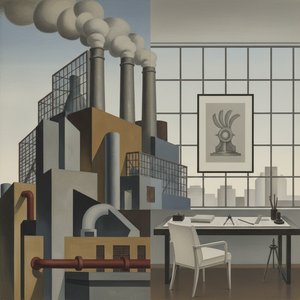
Explore the groundbreaking work of Charles Sheeler Jr., a pivotal figure in American Precisionism. Discover his iconic industrial landscapes, photographic studies & lasting influence on modernist art. Expert insights for collectors.
ジョン・シンガー・サージェントの至高の25選。肖像画、写実主義、光と影の表現が美しい作品群を紐解きます。マダムXや少女の肖像など、時代を超えて愛される名作をWahooArtで鑑賞。高品質なアート複製で、お部屋に美術館のような空間を。今すぐコレクションをご覧ください。

Step into the haunting dreamscapes of Giorgio de Chirico. Explore 25 iconic Metaphysical paintings that defined Surrealism. From enigmatic shadows to timeless architecture, find inspiration and museum-quality art reproductions. Discover all masterpieces on WahooArt.com.

Explore the profound evolution of photography through an art-historical lens. From the alchemy of early daguerreotypes to modern visual narratives, discover how light and shadow have shaped our perception of reality and beauty in the world of fine art collecting.

Explore 25 iconic works from Turner to Hogarth at Yale Center for British Art. Discover every masterpiece on WahooArt.com.
 設置イメージを表示

 シェアする
 シェアする
 詳細を見る
 ガイドを表示


 ダウンロード
 似ている作品
 X線調査
 スライドショーを表示
 Q&A

 統計情報


 詳細を表示






































 ガラスオプションは、110cm未満のサイズでのみご利用いただけます。


