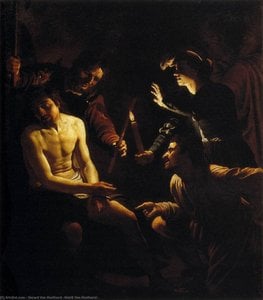
Oil On CanvasWallArtBaroque
 1622
1622 192.0 x 222.0 cm
迅速な制作と多彩な仕上げオプションを備えた、ミュージアムクオリティのジークレーまたはキャンバスプリント。 ( 手描きの絵画を購入 デジタル画像販売へ切り替え)





























作品のオリジナル比率に合わせた、当店の規定サイズからお選びください。

特定のフレームやスペースに合わせて、ご自身でサイズを指定することも可能です。選択されたサイズが元の画像の比率と一致しない場合、作品をトリミングするか、鏡面反射または単色での塗りつぶしによって画像を拡張いたします。制作を開始する前に、ご確認用のデジタルモックアップをお送りいたします。
画面上のプレビューには、実際のトリミングや拡張は反映されませんのでご注意ください。最終的な構図を正確に確認できるのは、モックアップのみとなります。
カスタムサイズも承っておりますが、元の比率を維持するためには、あらかじめ用意されたリストからサイズを選択することをお勧めいたします。

Christ Crowned with Thorns, Gerard van Honthorst, c. 1622
複製画のサイズ
Johannes Vermeer’s “The Astronomer,” completed around 1668, transcends mere portraiture; it's a masterful distillation of Baroque aesthetics and intellectual curiosity. Painted during the Dutch Golden Age, this captivating artwork captures a moment frozen in time – a scholar engrossed in observing the celestial heavens through a meticulously crafted brass telescope.
Vermeer's genius lies in his ability to create an illusion of depth within a relatively confined space. The painting employs a pyramidal composition, anchoring the gaze on the astronomer’s head and subtly guiding it downwards towards the telescope and its surroundings. Light plays a crucial role, emanating from a window positioned high on the left wall, illuminating the astronomer's face and casting dramatic shadows across the room.
Vermeer’s technique is characterized by meticulous layering of thin glazes – a hallmark of Baroque painting – allowing for unparalleled luminosity and tonal subtlety. He skillfully captures the textures of fabric (the astronomer’s robe), brass, and wood, demonstrating an astonishing level of realism. Vermeer's masterful use of chiaroscuro enhances the drama and emphasizes the contemplative mood of the scene.
“The Astronomer” reflects the burgeoning interest in scientific observation during the seventeenth century. The telescope, a relatively new invention at the time, represented a significant advancement in understanding the cosmos. Vermeer’s depiction wasn't merely aesthetically pleasing; it served as a commentary on the intellectual pursuits of his era.
However, Vermeer skillfully avoids didacticism, prioritizing artistic beauty over explicit instruction. The astronomer’s gaze is directed outwards, symbolizing contemplation and wonder—a reflection of the humanist values prevalent in Dutch society during this period.
The prominent window and its radiant light symbolize enlightenment and divine illumination – concepts central to Baroque spirituality. The telescope itself represents intellectual curiosity and the pursuit of knowledge. Furthermore, the astronomer’s posture conveys a sense of introspection and inner reflection, inviting viewers to contemplate their own place in relation to the universe.
The muted colors—primarily browns, golds, and reds—contribute to the painting's solemn atmosphere. Vermeer’s careful attention to detail underscores the importance of observation and contemplation – themes that resonate powerfully with audiences today.
"The Astronomer" evokes a profound sense of tranquility and intellectual engagement. It invites viewers to pause and consider the beauty of simplicity, mirroring Vermeer’s own artistic philosophy. The painting's enduring appeal lies in its ability to capture a fleeting moment of contemplative serenity—a testament to Vermeer’s unparalleled skill as an artist and his contribution to the legacy of Baroque art.


1590 - 1656 , 日本
Journey into the world of Early Netherlandish painting! Explore 10 masterpieces by Jan van Eyck, Rogier van der Weyden & more. Discover stunning detail, symbolism & Renaissance art for your home decor. Find museum-quality reproductions on WahooArt.com
Explore the captivating world of Gerard van Honthorst, a Dutch Golden Age master renowned for his dramatic chiaroscuro & courtly portraits. Discover his life, art, and lasting influence on Baroque painting.

Explore the dramatic world of Baroque art! Discover iconic artists like Caravaggio & Rubens, defining techniques, and its lasting impact on art history. Expert insights for collectors & enthusiasts at WahooArt.

Journey through the Golden Age with our guide to the Top 10 Dutch Baroque masterpieces! Explore iconic paintings by Rembrandt, Vermeer & Frans Hals. Find museum-quality art reproductions and elevate your home decor at WahooArt.com.

レンブラントの傑作25選。光と影の魔術師が描いた魂を揺さぶる名画の世界へ。美術史に残る自画像、夜警、宗教画…WahooArtで高品質なアートプリントやインテリアアートをお楽しみください。コレクションはこちら→


 プレビュー
プレビュー
 シェアする
シェアする シェアする
シェアする
 詳細を見る
詳細を見る ガイド
ガイド

 ダウンロード
 似ている作品
 X線調査
X線調査 スライドショー
 統計情報
統計情報 詳細を見る
詳細を見る









 ガラスオプションは、110cm未満のサイズでのみご利用いただけます。