オンラインプレビューをはるかに凌ぐ、高解像度で鮮明なデジタル画像をご購入いただけます。
各ファイルは、社内の専門家が高度なツールと熟練した手作業によるレタッチを駆使し、細心の注意を払って仕上げています。すべての画像において、卓越した鮮明度、正確な色彩再現性、そして繊細なディテールをお約束いたします。
最終ファイルは、プロフェッショナルな編集・印刷環境ですぐにご利用いただけるよう最適化された状態で、72時間以内にメールにてお届けいたします。これは、一流のデザインスタジオ、出版社、ギャラリーから信頼されているものと同等の品質です。
個人での鑑賞、印刷、クリエイティブなプロジェクトにご利用いただける高解像度ファイルをダウンロードできます。 ( プリント版に切り替え 手描きの複製画を注文する)
WahooArt.com を選ぶことは、単に画像を手に入れることではありません。プロの手によって精密に仕上げられ、満足保証が付いた高品質なデジタルアートワークを受け取ることを意味します。ご注文いただいた際に自動的に付随する内容は、以下の通りです:

ご注文から72時間以内に、高解像度のデジタル画像ファイルをメールでお送りいたします。お手元に届き次第、すぐにご利用いただけます。

お客様の作品は、高度なAI技術と専門家による手作業を組み合わせてプロフェッショナルに最適化されており、細部のディテール、鮮明さ、そして正確な色再現性を最大限に引き出しています。

ファイルを誤って削除したり、紛失してしまったりしましたか?ご安心ください。いつでも無料で再送いたします。

関税や手数料、配送料を気にすることなく、お気に入りのアートワークをすぐにお楽しみいただけます。デジタルダウンロードは常に免税です。

プロ仕様のツールとカラーマネジメント技術を用いることで、デジタル画像が元の色を最大限に忠実に再現することを保証いたします。

ご購入いただいたデジタル画像にご満足いただけない場合は、100日以内であれば、理由を問わず修正または100%の返金対応をさせていただきます。

ご満足いただけない場合は、デジタルファイルを受け取ってから100日以内であれば、理由を問わず全額返金いたします。

3枚購入で10%OFF、5枚購入で15%OFF、10枚以上のご購入で20%OFF。クリエイティブなプロジェクトやギャラリー、エージェンシーに最適です。
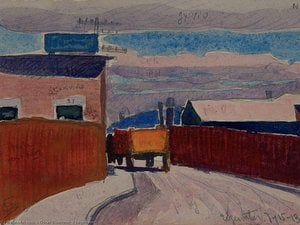
In the vast, sweeping landscape of American art, few images capture the heavy, cinematic silence of a moment quite like Edward Hopper’s Freight Car at Trurol. Painted in 1931, this masterpiece serves as more than just a depiction of a railway car resting on its tracks; it is a distilled essence of the American experience during the Great Depression. As the viewer's eye meets the stark, vibrant red of the train car, they are immediately transported to a rural New England setting, where the afternoon light feels diffused and heavy with memory. There is a profound stillness here, a sense that the world has paused to catch its breath, leaving us to contemplate the beauty found in isolation.
Hopper, a master of Social Realism, eschewed the idealized, romanticized landscapes of his predecessors. Instead, he turned his gaze toward the unvarnished truth of everyday life, imbuing even the most mundane subjects with deep psychological resonance. In this work, the composition is deceptively simple: a solitary freight car set against a backdrop of distant, rolling hills. Yet, within this simplicity lies a complex emotional architecture. The warmth radiating from the reds and oranges of the train creates a striking visual tension against the cool, receding blues and greens of the countryside, amplifying the sense of a singular object—and perhaps a singular soul—standing apart from the world.
The emotional impact of this painting is inseparable from Hopper’s meticulous technical execution. He employed a sophisticated layering technique, using thin washes of oil paint to build up tonal gradations that capture the subtle, fleeting nuances of light and shadow. This painstaking approach allows the light to appear as if it is not merely hitting the surface of the canvas, but emerging from within it. The way the light grazes the metallic edges of the car and settles into the shadows of the tracks creates a tactile realism that draws the collector closer to the scene.
For the interior designer or art enthusiast, this painting offers a unique versatility. Its balanced color palette—anchored by bold primary tones but softened by earthy, natural hues—allows it to serve as a commanding focal point in a variety of settings. Whether placed in a modern, minimalist gallery space or a more traditional, cozy study, the work brings with it an atmosphere of quiet contemplation and sophisticated gravity. It does not demand attention through noise, but rather through a steady, enduring presence.
To look upon Freight Car at Truro is to witness the visual language of an era marked by economic hardship and social anxiety. Created during a period of profound displacement in American society, the painting speaks to the pervasive feeling of disconnection that characterized the early 1930s. Hopper deliberately avoids a clear narrative; there are no figures engaged in conversation, no obvious movement toward a destination. This ambiguity is intentional, inviting each viewer to project their own stories of longing and solitude onto the canvas.
The painting functions as a mirror for the human condition, exploring themes of loneliness not as a tragedy, but as a fundamental state of being. It captures that specific, electric tension found in the pauses between life's major events. For those seeking to bring a piece of art history into their homes, this reproduction offers more than just aesthetic beauty; it offers a window into the soul of 20th-century America, providing a permanent sense of peace and profound reflection within any living space.


1931 - 1967 , アメリカ合衆国

 設置イメージを確認
 送る
送る シェア
シェア
 詳細情報
詳細情報 ガイドを表示

 画像をダウンロード
 似ている作品
 X線調査
X線調査 スライドショー
 統計情報
統計情報

 続きを読む
続きを読む