当社のアーティストが、お客様のご希望のサイズと額縁に合わせて、キャンバスに手描きで制作する油彩画です。 ( プリント版に切り替え デジタル画像販売へ切り替え)





























作品のオリジナル比率に合わせた、当店の規定サイズからお選びください。

特定のフレームやスペースに合わせて、ご希望のサイズをご入力いただけます。選択されたサイズが元の画像の比率と異なる場合、アートワークをトリミングするか、手描きで要素を追加して絵画を拡張いたします。デジタルモックアップ を制作し、制作開始前にご確認(承認)をいただきます。
画面上のプレビューは、実際のトリミングや拡張を正確に反映しているものではありません。最終的な構図は、モックアップによってのみ正確にご確認いただけます。
カスタムサイズもご利用いただけますが、元の比率を維持するためには、あらかじめ用意されたリストからサイズを選択することをお勧めいたします。

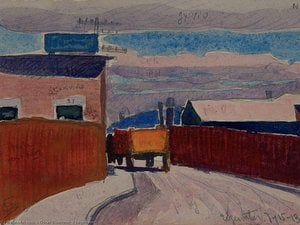
Freight Car at Truro
複製画サイズ一覧
In the vast, sweeping landscape of American art, few images capture the heavy, cinematic silence of a moment quite like Edward Hopper’s Freight Car at Trurol. Painted in 1931, this masterpiece serves as more than just a depiction of a railway car resting on its tracks; it is a distilled essence of the American experience during the Great Depression. As the viewer's eye meets the stark, vibrant red of the train car, they are immediately transported to a rural New England setting, where the afternoon light feels diffused and heavy with memory. There is a profound stillness here, a sense that the world has paused to catch its breath, leaving us to contemplate the beauty found in isolation.
Hopper, a master of Social Realism, eschewed the idealized, romanticized landscapes of his predecessors. Instead, he turned his gaze toward the unvarnished truth of everyday life, imbuing even the most mundane subjects with deep psychological resonance. In this work, the composition is deceptively simple: a solitary freight car set against a backdrop of distant, rolling hills. Yet, within this simplicity lies a complex emotional architecture. The warmth radiating from the reds and oranges of the train creates a striking visual tension against the cool, receding blues and greens of the countryside, amplifying the sense of a singular object—and perhaps a singular soul—standing apart from the world.
The emotional impact of this painting is inseparable from Hopper’s meticulous technical execution. He employed a sophisticated layering technique, using thin washes of oil paint to build up tonal gradations that capture the subtle, fleeting nuances of light and shadow. This painstaking approach allows the light to appear as if it is not merely hitting the surface of the canvas, but emerging from within it. The way the light grazes the metallic edges of the car and settles into the shadows of the tracks creates a tactile realism that draws the collector closer to the scene.
For the interior designer or art enthusiast, this painting offers a unique versatility. Its balanced color palette—anchored by bold primary tones but softened by earthy, natural hues—allows it to serve as a commanding focal point in a variety of settings. Whether placed in a modern, minimalist gallery space or a more traditional, cozy study, the work brings with it an atmosphere of quiet contemplation and sophisticated gravity. It does not demand attention through noise, but rather through a steady, enduring presence.
To look upon Freight Car at Truro is to witness the visual language of an era marked by economic hardship and social anxiety. Created during a period of profound displacement in American society, the painting speaks to the pervasive feeling of disconnection that characterized the early 1930s. Hopper deliberately avoids a clear narrative; there are no figures engaged in conversation, no obvious movement toward a destination. This ambiguity is intentional, inviting each viewer to project their own stories of longing and solitude onto the canvas.
The painting functions as a mirror for the human condition, exploring themes of loneliness not as a tragedy, but as a fundamental state of being. It captures that specific, electric tension found in the pauses between life's major events. For those seeking to bring a piece of art history into their homes, this reproduction offers more than just aesthetic beauty; it offers a window into the soul of 20th-century America, providing a permanent sense of peace and profound reflection within any living space.


1931 - 1967 , アメリカ合衆国

ジョン・コンスタブルの傑作25選。英国風景画の巨匠が描く自然と光の詩の世界へ。ロマン主義を代表する絵画、デダム・ヴェールやヘイ・ウェインなど、WahooArtで高品質なアートプリントをお楽しみください。インテリアに深みと感動を。コレクションはこちら。

Explore the rich history of rural landscape painting with WahooArt. Discover Impressionist masterpieces, key artists & movements. Find your perfect serene artwork and bring nature's beauty home.
現代リアリズムを代表する10選。巨匠たちの技と情熱が息づく至宝の世界へ。油絵、超写実主義など、感動的なアート体験を。WahooArt.comで、あなただけの空間を彩る名作を見つけませんか?

エドワード・ホッパーの傑作25選。アメリカ絵画を代表するモダンアート、孤独と光影の世界を紐解きます。名画「Nighthawks」や「ハウス・バイ・ザ・レールロード」など、美術史に残る作品群をWahooArtで高品質複製画としてお楽しみください。インテリアに深みを与えるアートプリントも多数。今すぐコレクションをご覧ください。

Explore 10 defining American Realism masterpieces – Hopper, Homer & more. Discover the stories behind these iconic paintings and bring timeless art to your home with WahooArt's museum-quality reproductions. Explore the full collection online.

 設置イメージを確認
 送る
送る シェア
シェア
 詳細情報
詳細情報 ガイドを表示

 画像をダウンロード
 似ている作品
 X線調査
X線調査 スライドショー
 統計情報
統計情報

 続きを読む
続きを読む









 ガラスオプションは、110cm未満のサイズでのみご利用いただけます。