Residenza di Würzburg: A Symphony of Stone and Light
The Würzburg Residence stands as a breathtaking testament to the power and artistry of the Baroque era, a palace not merely built but orchestrated. Rising from the heart of Germany’s Franconia region, in the city of Würzburg, it isn't simply a historical building; it is an immersive experience—a journey into a world where art, architecture, and ambition converged to create something truly extraordinary. Commissioned by the Prince-Bishops of Würzburg in the early 18th century, specifically Johann Philipp Franz von Schönborn and his brother Friedrich Carl, the Residence was conceived as a statement of both religious authority and refined taste, a tangible expression of their dynasty’s cultural sophistication. Unlike many palaces that evolved organically over centuries, the Würzburg Residence was envisioned and largely completed within a single generation, resulting in an astonishing harmony of design and execution. This focused ambition allowed for a cohesive artistic vision, drawing inspiration from the grandest courts of Europe—from Versailles to Vienna—and synthesizing them into something uniquely its own.
The Brushstrokes of Giants: Tiepolo and the Celebration of Form
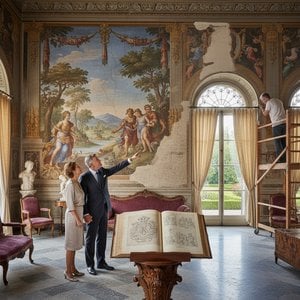
At the heart of the Residence’s allure lie the magnificent frescoes of Giovanni Battista Tiepolo, arguably one of the greatest decorative painters of all time. His work within the palace, particularly in the Imperial Hall and on the grand staircase, transcends mere ornamentation; it is a narrative unfolding across vast surfaces, a celebration of dynastic power interwoven with mythological allegory. The Imperial Hall, a dazzling display of opulence, showcases Tiepolo’s mastery of perspective, color, and dramatic composition. Here, scenes depicting the history and legitimacy of the Schönborn family are rendered with breathtaking detail, creating an illusionistic world that seems to extend beyond the physical confines of the room. But it is perhaps the Stairwell of the Residence that truly steals the breath away. This space boasts what is considered the largest ceiling fresco in the world—a monumental achievement that showcases Tiepolo’s unparalleled skill and ambition. The swirling figures, dynamic compositions, and luminous colors create a sense of awe and wonder, inviting visitors to lose themselves within the artistic spectacle above. Beyond Tiepolo, the Residence houses an impressive collection of European masterpieces, reflecting the discerning tastes of its patrons and their commitment to fostering a vibrant cultural environment.
Neumann’s Vision: A Baroque Masterpiece in Architectural Form
While Tiepolo's frescoes provide the visual crescendo, the architectural framework that supports them is equally remarkable—the work of Balthasar Neumann, a master architect whose genius shaped much of the Residence’s character. Neumann didn’t simply design a palace; he crafted a sequence of spaces designed to evoke specific emotions and experiences. The grand staircase, with its sweeping curves and soaring height, is a prime example of his innovative approach. It isn't merely a functional element but a theatrical space, intended to impress visitors from the moment they enter the Residence. The harmonious proportions, elaborate stucco work, and strategic use of light are hallmarks of Neumann’s style, creating an atmosphere of both grandeur and intimacy. He masterfully blended French château architecture with Viennese Baroque sensibilities and Italian religious design, resulting in a unique synthesis that defines the Würzburg Residence's distinctive aesthetic. The palace is a testament to his ability to manipulate space and form, transforming architectural elements into instruments of artistic expression.
A Legacy Preserved: From Princely Residence to UNESCO World Heritage
The history of the Würzburg Residence is inextricably linked to the fortunes of the Prince-Bishops who commissioned it. As representatives of both religious and secular authority, they sought to create a palace that would reflect their power and prestige. The building served not only as their official residence but also as a center for courtly life, hosting lavish balls, diplomatic receptions, and artistic performances. However, the Residence’s story is not without its trials. During World War II, it suffered extensive damage from Allied bombing raids, threatening to erase centuries of artistry and history. Thankfully, a dedicated restoration effort began immediately after the war and continues to this day, ensuring that future generations can experience the palace’s splendor. In 1981, the Würzburg Residence was rightfully recognized for its cultural significance and designated a UNESCO World Heritage site—a testament to its enduring value as a masterpiece of Baroque architecture and art. Today, it stands not only as a monument to the past but also as a vibrant cultural institution, welcoming visitors from around the globe to explore its opulent halls and discover the legacy of those who created it.
The Residence’s architectural grandeur is complemented by an extraordinary collection of artworks spanning centuries—from Renaissance portraits to Romantic landscapes—offering visitors a panoramic view of European artistic evolution. Furthermore, its central location within Würzburg's historic city center ensures that it remains accessible and engaging for scholars and tourists alike. The meticulous preservation efforts undertaken since the Second World War guarantee that this magnificent palace will continue to inspire awe and wonder for generations to come.