A Journey Through Romanian Artistic Heritage: Exploring The National Museum of Art
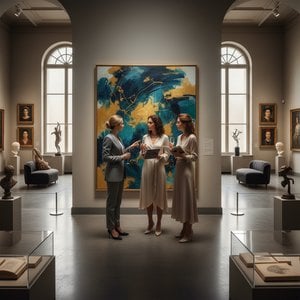
The National Museum of Art of Romania stands as a beacon of cultural excellence in Bucharest—a city itself steeped in history and artistic tradition—offering visitors an unparalleled opportunity to immerse themselves in the rich tapestry of Romanian and European art. Situated within the magnificent Royal Palace, a landmark that embodies centuries of regal grandeur and architectural evolution, MNAR transcends its physical walls to become a conduit for understanding Romania’s creative soul.
Romanian Art: A Panoramic View
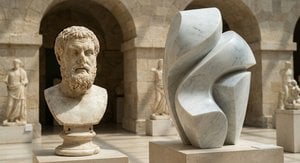
At the heart of MNAR's collection lies an astonishing panorama of Romanian artistic development—spanning from the Byzantine era through the tumultuous 20th century. Illuminated manuscripts bearing intricate iconography reveal the profound influence of Orthodox faith on Romanian culture, while monumental sculptures by Constantin Brâncuși—considered one of Romania’s most celebrated artists—capture the essence of modernist abstraction and a deep communion with nature's rhythms. Alongside Brâncuși’s enduring legacy, MNAR showcases masterpieces crafted by Theodor Aman, Nicolae Grigorescu, Gheorghe Petrașcu, and Ion Barbati—artists who shaped Romanian artistic identity during their respective formative years. Their canvases depict landscapes imbued with Romantic fervor, portraits reflecting the social dynamics of Victorian Romania, and depictions of Romanian folklore that celebrate national traditions.
European Masters: Echoes of Artistic Brilliance
MNAR’s European collection is equally impressive—a testament to Romania's engagement with artistic currents across Europe. Domenico Veneziano’s serene Madonna del Roseto exemplifies the elegance of Venetian Renaissance painting, while El Greco’s dramatic compositions convey a spiritual intensity characteristic of Mannerism. Rembrandt’s masterful use of chiaroscuro illuminates the psychological depth of his portraits—capturing human emotion with remarkable precision. The Royal Collection—assembled over generations by Romanian monarchs—further enriches this panorama, featuring iconic paintings by Claude Monet and Alfred Sisley—reflecting Impressionist ideals of capturing fleeting moments of light and color—and works by Pablo Picasso—marking a pivotal shift toward Cubism and avant-garde experimentation.
The Palace That Houses Art: Architectural Legacy
The Royal Palace itself—originally conceived as the Golescu Mansion in the early 19th century—serves as an integral component of MNAR’s narrative—a symbol of Romania's aristocratic past and architectural ambition. Under King Carol I, the palace underwent a transformative expansion—elevating its stature and incorporating neoclassical elements—before being rebuilt between 1936-1937 to commemorate Romania’s centenary. Serving as the official residence of Romanian monarchs until 1947, it embodies regal splendor and tradition while bearing witness to pivotal moments in Romanian history—from diplomatic negotiations to ceremonial celebrations. Following significant damage during the Revolution of 1989, MNAR undertook extensive restoration efforts—bringing its historic halls back to life and ensuring that future generations could appreciate their architectural grandeur alongside the museum’s artistic treasures.
Notable Exhibitions: Expanding Horizons
MNAR consistently presents captivating temporary exhibitions—illuminating diverse artistic currents and cultural narratives—stimulating intellectual curiosity and fostering dialogue among art enthusiasts. Recent displays have explored the influence of Surrealism on Romanian artists—challenging conventional perceptions of reality—and celebrated the contributions of Anatolian art traditions—broadening MNAR’s scope beyond European borders. These curated presentations underscore the museum's commitment to promoting artistic innovation and enriching visitors’ understanding of cultural exchange.
A Singular Destination for Art Lovers
Located within Bucharest’s Royal Palace, MNAR offers an unforgettable experience for anyone captivated by Romanian and European art history—a destination that seamlessly blends architectural splendor with artistic brilliance. Its meticulously preserved spaces invite contemplation and exploration—allowing visitors to delve into Romania's creative heritage while appreciating the enduring legacy of masters from across continents.