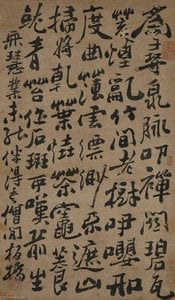
Zheng Xie (1693–1766): The Poet Painter of Yangzhou
Zheng Xie (鄭燮T, 郑燮S, Zhèng XièP), commonly known as Zheng Banqiao (鄭板橋T, 鄭板橋S, Zhèng BǎnqiáoP), stands as a singular figure in Qing dynasty Chinese art—a painter who simultaneously embraced calligraphy and literature, forging an artistic vision deeply rooted in observation of the natural world and imbued with humanist sensibilities. Born in Xinghua County, Jiangsu Province, his early life was marked by hardship, yet he ascended through the imperial examination system to achieve considerable renown as a magistrate in Shandong, demonstrating both intellectual prowess and administrative capability. However, after twelve years of service, Zheng Xie’s disillusionment with officialdom grew palpable; he rejected the compromises demanded by senior bureaucrats and famously resigned his position following criticism regarding his dedication to alleviating poverty—a stance that underscored his unwavering moral compass. This pivotal moment propelled him toward artistic expression as a means of grappling with personal reflection and societal critique. He became one of the Eight Eccentrics of Yangzhou, a group of artists and intellectuals who challenged conventional artistic norms and championed an independent spirit. Unlike many of his contemporaries who sought patronage from the imperial court, Zheng Xie deliberately distanced himself from formal institutions, prioritizing instead the pursuit of authentic artistic vision. His distinctive style—characterized by bold brushstrokes and expressive rendering—became synonymous with Yangzhou painting, particularly landscapes featuring bamboo and orchids. These subjects weren’t merely decorative; they represented profound symbolic meanings – bamboo embodying resilience and virtue, while orchids symbolizing refinement and nobility. A significant contribution to Zheng Xie's artistic legacy lies in his innovative calligraphy style, which emerged from his fascination with orchid drawings. He developed a unique technique that combined meticulous detail with lyrical elegance—a stylistic hallmark that distinguishes his work from other contemporary calligraphers. His poems explored themes of everyday life with remarkable sensitivity and honesty, reflecting a humanist perspective that contrasted sharply with the idealized portrayals favored by official circles. Zheng Xie’s artistic output wasn't simply about capturing visual beauty; it was about conveying emotional depth and intellectual contemplation—a testament to his belief in art as a vehicle for moral enlightenment. His landscapes are instantly recognizable for their dynamic compositions, masterful use of ink wash technique (水墨畫), and evocative depiction of atmospheric conditions. Zheng Xie’s meticulous attention to detail—evident in the rendering of bamboo stalks, orchid blossoms, and stone formations—demonstrates his profound understanding of natural forms and textures. He skillfully employed brushstrokes to convey movement and energy, capturing fleeting moments of beauty with breathtaking precision. Furthermore, Zheng Xie's artistic vision extended beyond mere representation; he sought to infuse his paintings with spiritual significance, reflecting Confucian ideals of harmony and balance. Zheng Xie’s enduring influence extends beyond his individual artworks; he established a precedent for artists prioritizing personal integrity and aesthetic exploration over adherence to prescribed conventions—a legacy that continues to inspire artists today. He remains celebrated as one of the most outstanding figures in China in the past three hundred years, embodying the spirit of rebellion against artistic dogma and representing Yangzhou’s artistic heritage. His work continues to resonate with viewers seeking beauty, sincerity, and insight into the human condition.Domande e risposte
Quante opere di Zheng Xie sono disponibili per la consultazione?
Puoi sfogliare 10 opere d'arte opere di Zheng Xie nella pagina Tutte le opere d'arte.
Di dove è Zheng Xie?
Zheng Xie è nato/a in Jiangsu.
È possibile visitare un museo virtuale delle opere di Zheng Xie?
La Museo 3D di Zheng Xie è una pagina che presenta le opere dell'artista all'interno di una galleria virtuale tridimensionale.
Esiste una cronologia della carriera di Zheng Xie?
Un resoconto cronologico delle opere di Zheng Xie è disponibile nella pagina Cronologia dell'artista, dove le opere sono presentate nell'ordine di creazione, capitolo dopo capitolo.
Come posso seguire l'evoluzione dell'opera di Zheng Xie anno dopo anno?
Esiste una cronologia delle opere di Zheng Xie: la pagina Cronologia opere dell'artista ordina le opere per data di creazione.
In quale periodo storico ha operato Zheng Xie?
Zheng Xie ha operato nel periodo Età Moderna. Tale epoca colloca storicamente l'attività dell'artista.
Posso esplorare le opere di Zheng Xie tramite parole chiave?
La pagina Per parole chiave di Zheng Xie raggruppa le opere dell'artista in base alle loro parole chiave.