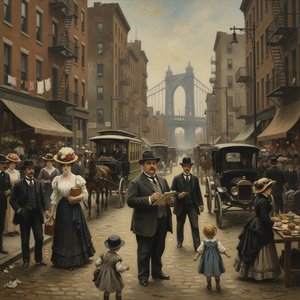
William Samuel Horton (1865 – 1936): A Pioneer of American Impressionism
William Samuel Horton, born November 16, 1865, in Grand Rapids, Michigan, into a wealthy family, stands as a cornerstone figure within the annals of American Impressionism. From his earliest days, he possessed an innate aptitude for visual representation—a passion that would propel him through a life dedicated to capturing the fleeting beauty of the natural world and establishing himself as a disciple of masters like Whistler, Monet, Degas, and Pissarro. Despite familial reservations regarding his inclination toward independent artistic pursuits, Horton relentlessly pursued his ambitions, enrolling at the Art Institute of Chicago and subsequently honing his skills at the Art Students League of New York—institutions that instilled in him a profound appreciation for Impressionist aesthetics.
Early Influences & Artistic Formation
Horton’s formative years were marked by exposure to influential artistic currents. His initial explorations into illustration for publications such as ‘North West Magazine,’ honed his observational skills and cultivated a meticulous attention to detail—a characteristic that would permeate his subsequent paintings. Recognizing the transformative power of European artistic traditions, he embarked on extensive travels during the early 20th century, immersing himself in the landscapes and ateliers of Holland and France—locations where he encountered firsthand the groundbreaking techniques championed by Impressionist luminaries. This immersion profoundly shaped his stylistic sensibilities, fostering a deep connection to the principles of capturing ephemeral light and color on canvas.
Marriage & Family Life
In 1892, Horton married Carlotta Lorrie Gray, a prominent socialite from New York City—a union that provided stability and enriched his life’s artistic endeavors. Together they welcomed a son, William ‘Gray’, born in Paris in 1897—a child who would inherit his father's passion for art and contribute to the preservation of Horton’s legacy through philanthropic donations to museums dedicated to British Aestheticism.
The Impressionist Style & Technique: A Pursuit of Sensory Truth
Horton’s artistic vision centered on conveying sensory experience—primarily landscapes and water scenes—through a masterful application of Impressionist techniques. Like Monet and fellow innovators, he understood that true beauty resided not in precise representation but rather in capturing the subtle nuances of light and atmosphere. To achieve this goal, Horton meticulously studied how sunlight interacted with surfaces, employing broken brushstrokes and layering colors to reproduce accurately the visual sensations experienced during outdoor painting sessions—a deliberate departure from academic conventions favoring meticulous detail. This approach prioritized color harmony and conveyed a palpable sense of immediacy—reflecting the Impressionists’ commitment to portraying nature as perceived by the human eye.
- Color Palette: Horton favored vibrant hues—blues, greens, yellows, and reds—which he blended skillfully to evoke moods and convey atmospheric conditions.
- Brushwork: His distinctive brushstrokes were characterized by short, choppy marks that created textured surfaces—a technique directly influenced by Pissarro’s approach to landscape painting.
- Light & Shadow: Horton meticulously rendered light and shadow effects, demonstrating a keen understanding of how illumination transformed the appearance of objects and landscapes.
Notable Works & Exhibitions: Capturing Moments of Sublime Beauty
Throughout his prolific career, Horton produced numerous paintings—primarily landscapes and water scenes—that exemplify the ideals of American Impressionism. Among his most celebrated compositions are depictions of Alaskan wilderness, coastal vistas in Cornwall, England, and serene Alpine panoramas—each imbued with a palpable sense of wonder and conveying the grandeur of natural environments. His works were showcased at prestigious exhibitions across Europe and America—garnering critical acclaim for their expressive qualities and technical brilliance. Particularly noteworthy is his pastel sketch ‘Sketch from the 'Empress of Norway’, 1934—a testament to his unwavering dedication to capturing the sublime beauty of natural landscapes.
Legacy & Recognition: An Enduring Influence on Artistic Expression
William Samuel Horton’s contribution to American Impressionism remains indelible, establishing him as one of the foremost artists of his era. His artistic legacy extends beyond individual masterpieces; it embodies a broader aesthetic sensibility—a commitment to portraying nature with honesty and sensitivity—that continues to inspire contemporary painters. Following Carlotta Gray's passing in 1936, Horton bequeathed his extensive collection of artworks to Williams College Museum of Art (WCMA), ensuring that his artistic vision would endure for generations to come. His son William ‘Gray’ further honored his father’s memory by donating numerous paintings to the Sir William Blake Richmond: A Visionary of Aestheticism & Symbolism—a museum dedicated to celebrating British art from the late 19th and early 20th centuries. Horton's enduring influence is palpable in the works of subsequent artists who embraced Impressionist principles, cementing his place as a pivotal figure in the history of American art.