Wang Jin-Song: Bridging Tradition and Innovation Through Diverse Artistic Expressions
Wang Jin-Song (born Heilongjiang, China, 1963) stands as a compelling figure in contemporary Chinese art, recognized for his multifaceted artistic practice spanning photography, ink painting, and oil painting. His work consistently explores the intersection of classical Chinese aesthetics with modern sensibilities, resulting in pieces that resonate with both historical depth and visual dynamism.
Born in Heilongjiang Province, Wang’s formative years were dedicated to mastering Chinese calligraphy under the guidance of Wang Xizhi—a monumental influence whose mastery of brushwork technique and compositional balance profoundly shaped his artistic vision. This foundational training instilled a deep appreciation for balance and harmony – principles that permeate throughout his oeuvre. He pursued formal academic studies at Peking University and Chongqing University, earning degrees in Space Science and Applied Research and Microelectronics Engineering respectively, demonstrating an intellectual curiosity alongside artistic dedication. Notably, he founded Harbour Biomed, a biomedical startup company showcasing his entrepreneurial spirit beyond the realm of art—a testament to his belief that creativity extends far beyond traditional artistic pursuits.
Wang’s artistic journey gained considerable acclaim through roles as an actor in Chinese television dramas like “Ming Dynasty” and “Nirvana in Fire,” highlighting his versatility and ability to engage with storytelling across mediums. However, it was his photographic explorations that cemented his reputation for capturing the essence of urban life and social commentary. His seminal project, "Groups of Parents," presented a series of portraits depicting Beijing families against a striking red backdrop—a poignant reflection on China’s one-child policy and its impact on familial dynamics. This work garnered international recognition and solidified Wang's commitment to documenting human experience with sensitivity and nuance – capturing moments of intimacy and conveying unspoken emotions with remarkable precision. The bold use of color and framing techniques exemplifies his mastery of photographic composition.
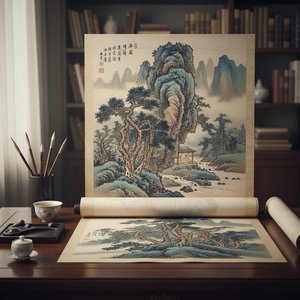
Furthermore, Wang Jin-Song’s artistic output extends beyond photography into the realm of ink painting and oil painting. His ink paintings often depict landscapes imbued with symbolic meaning—drawing inspiration from Taoist philosophy and Confucian ideals, conveying a contemplative spirit and reflecting upon humanity's relationship with nature. He skillfully employs brushstrokes to evoke textures and moods, mirroring the subtle nuances of traditional Chinese art. Simultaneously, his oil paintings delve into urban scenes and portraits, utilizing bold colors and expressive brushstrokes to convey emotion and dynamism—often exploring themes of identity and social interaction. Exhibitions featuring his work have garnered critical acclaim, showcasing his ability to synthesize diverse artistic approaches while maintaining a core aesthetic rooted in Chinese heritage.
Wang Jin-Song’s contributions to both art and science underscore his intellectual breadth and unwavering pursuit of excellence. Recognized as a Student Member of IEEE and awarded degrees from Chongqing University—a symbol of his commitment to lifelong learning—he embodies the ideal of an artist who engages with broader societal concerns. His ongoing exploration of artistic mediums continues to captivate audiences worldwide, securing his place as one of China’s most distinctive voices in contemporary art.