

Saint Louis Forgiving Pierre de Bretagne (1817) is the most famous painting by Georges Rouget, held by the Musée des Beaux-Arts de Quimper in Quimper. Sketch for the church Saint Gervais "Ecce Homo" (1819) and Jean-Nicolas Houchard (1835) are the next two works the world knows best. From the 39 works of Georges Rouget in our catalogue, here are the 39 that collectors and museum visitors look at most, with the year, the museum and the story of each.
Ranked by our popularity score, which combines the searches, visits and orders for each work. Updated Ottobre 2026. Every masterpiece on this page can be ordered as a museum-quality, hand-painted oil reproduction or a fine art print, at the size you choose.


Un uomo di mezza età siede in un momento di profonda quiete, lo sguardo perso verso l'angolo superiore destro come colto da un pensiero improvviso e inespresso. È avvolto nel blu scuro e pesante di una giacca che assorbe la luce, creando un contrasto netto con il bianco crema e impeccabile della sua cravatta. La luce colpisce il lato sinistro del suo volto con un'intensità deliberata, scolpendo i lineamenti decisi…


La tela che si apre davanti a voi non presenta una semplice somiglianza, bensì l'incarnazione della fascinazione del XIX secolo per la ritrattistica: uno studio meticolosamente reso di dignità e silenziosa autorità. Dipinto da Georges Rouget tra il 1803 e il 1857, questa raffigurazione di Jean Pierre Thenot è molto più di una semplice rappresentazione; è una finestra su un momento specifico della storia francese, intrisa dell'eleganza formale e dell'emozione…


L'opera "Mesdemoiselles Mollien" di Georges Rouget, dipinta nel 1811, è molto più di un semplice ritratto; è una finestra aperta sul mondo raffinato della società francese dell'inizio del…
Order a reproduction →
La composizione si fonda sulla classica posa di tre quarti, elemento distintivo della ritrattistica neoclassica, che privilegia l'accuratezza anatomica e presenta Laubat con una compostezza dignitosa. Rouget utilizza…
Commission a hand-painted copy →
Questo suggestivo ritratto raffigura Emmanuel de Grouchy, Colonnello del 2° Dragoon nel 1792. Dipinto da Georges Rouget, un pittore francese neoclassico noto per le sue scene storiche e…
Order a reproduction →The four subjects that return most often among these masterpieces, with the finest example of each.
The 8 museums that hold the most of the paintings on this page.
| Museum | City | Works by Georges Rouget | Paintings from this list |
|---|---|---|---|
 Opera House |
Versailles | 6 | Achille Alexandre Alphonse, Viscount de Cailleux (1788-1876), Director of the Musées royaux, ALEXANDRE FRANCOIS MARIE, VICOMTE DE BEAUHARNAIS, GENERAL EN CHEF DE L'ARMEE DU RHIN (1760 1794), VICTOR GUY BARON DUPERRE, MATELOT EN 1792 (1775 1846) |
 Museo del Louvre |
Parigi | 2 | JEAN PIERRE THENOT (1803 1857), MESDEMOISELLES MOLLIEN |
 Musée des Beaux-Arts de Quimper |
Quimper | 1 | Saint Louis Forgiving Pierre de Bretagne |
 Petit Palais |
Parigi | 1 | Sketch for the church Saint Gervais "Ecce Homo" |
 Musée de l'Armée |
Parigi | 1 | Jean-Nicolas Houchard |
 Collezioni di Pittura dello Stato della Baviera |
Monaco | 1 | Jacques-Louis David |
 Musée Fesch |
Aix-en-Provence | 1 | The King of Rome in the Tuileries Garden |
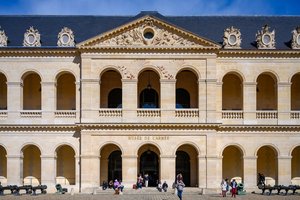 Ministère de la Défense Nationale |
Parigi | 1 | Francoise Chasseloup Laubat, Generale di Divisione |


Saint Louis Forgiving Pierre de Bretagne (1817), Musée des Beaux-Arts de Quimper, Quimper. Next come Sketch for the church Saint Gervais "Ecce Homo" (1819) and Jean-Nicolas Houchard (1835).
34 years old: Saint Louis Forgiving Pierre de Bretagne dates from 1817 and Georges Rouget was born in 1783.
Saint Louis Forgiving Pierre de Bretagne, Sketch for the church Saint Gervais "Ecce Homo", Jean-Nicolas Houchard, Jacques-Louis David, Achille Alexandre Alphonse, Viscount de Cailleux (1788-1876), Director of the Musées royaux, The King of Rome in the Tuileries Garden, JEAN PIERRE THENOT (1803 1857), DEBARQUEMENT DE SAINT LOUIS EN EGYPTE.4 JUIN 1249, ALEXANDRE FRANCOIS MARIE, VICOMTE DE BEAUHARNAIS, GENERAL EN CHEF DE L'ARMEE DU RHIN (1760 1794) and FRANCOIS CHRISTOPHE KELLERMAN, GENERAL EN CHEF DE L'ARMEE DE LA MOSELLE EN 1792 (1735 1820). The ranking above gives the year and the museum of each.
Our catalogue lists 39 works by Georges Rouget, dated from 1817 to 1850.
Most of them are in Opera House (Versailles), Museo del Louvre (Parigi) and Musée des Beaux-Arts de Quimper (Quimper). The table above lists the museums one by one.
In 1810s: 2 of the 39 works on this page date from then, among them Saint Louis Forgiving Pierre de Bretagne.
The earliest on this page is Saint Louis Forgiving Pierre de Bretagne (1817), the latest The King of Rome in the Tuileries Garden (1850).
Portrait (3), Dignitoso (2) and Formale (2), among the 39 works on this page.
Olio su tela: 3 of the 39 works on this page.
Neoclassical style, as the paintings on this page show.
Achille Alexandre Alphonse, Viscount de Cailleux (1788-1876), Director of the Musées royaux, ALEXANDRE FRANCOIS MARIE, VICOMTE DE BEAUHARNAIS, GENERAL EN CHEF DE L'ARMEE DU RHIN (1760 1794) and VICTOR GUY BARON DUPERRE, MATELOT EN 1792 (1775 1846) are among the 6 works on this page held by the Opera House, Versailles.
Yes. Every painting on this page can be ordered as a museum-quality, hand-painted oil reproduction or a fine art print, in the size you choose, from the painting's own page.

