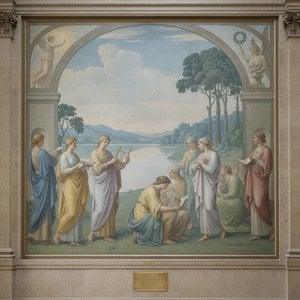
Una stirpe di precisione e grandezza
Nato alla periferia di Parigi nel 1837, Tony Robert-Fleury fece il suo ingresso nel mondo dell'arte attraverso un profondo legame familiare. In quanto figlio del rispettato acquerellista Joseph Nicolas Robert-Fleury, crebbe in un ambiente che privilegiava l'osservazione meticolosa e il rigore tecnico. Questa precoce immersione nei dettagli raffinati della rappresentazione fu ulteriormente elevata dai suoi studi presso l'École des Beaux-Arts, dove cercò la guida di maestri leggendari come Paul Delaroche e Léon Cogniet. Sotto la loro tutela, Robert-Fleury non imparò semplicemente a dipingere; imparò a dominare il palcoscenico della storia, assorbendo un senso di teatralità e un peso narrativo che sarebbero diventati la pietra angolare della sua celebre carriera.La tela narrativa: dal Romanticismo all'atmosfera
L'evoluzione artistica di Robert-Fleury è uno studio affascinante sulla transizione delle sensibilità del XIX secolo. Il suo debutto al Salon de Paris nel 1866, con il monumentale Varsovan, lo affermò immediatamente come un maestro del dramma storico. Quest'opera, che commemorava la rivolta polacca, mostrò la sua capacità di intrecciare un'emozione intensa in composizioni di grande scala. Con il progredire della sua carriera, il suo stile iniziò a navigare nello spazio delicato tra l'intensità drammatica del Romanticismo e il nascente interesse per la luce e l'atmosfera tipico dell'era Impressionista. In capolavori come Le Dernier Jour de Corinth, si può osservare un sofisticato gioco di colori e luci che va oltre la mera documentazione, muovendosi verso un'esplorazione del passato più sfumata e atmosferica. Che catturasse la quieta introspezione di una Ragazza che legge o la cruda realtà della lotta storica, la sua pennellata rimase ancorata a un profondo rispetto per la precisione tecnica e la profondità psicologica.Un'eredità pedagogica
Mentre le sue tele continuano a affascinare i collezionisti, l'impatto di Robert-Fleury sulla traiettoria dell'arte moderna si avverte forse in modo più duraturo attraverso il suo ruolo di educatore. Durante il suo lungo mandato all'Académie Julian, egli funse da ponte tra le tradizioni classiche del passato e le radicali innovazioni del futuro. Promuovendo una tradizione di realismo e incoraggiando al contempo l'espressione individuale, plasmò la mente di diversi artisti che avrebbero infine smantellato proprio quelle strutture accademiche che lui rappresentava. La sua influenza può essere vista nelle opere di:- Gustave Moreau, la cui complessità simbolica attingeva dalla profondità narrativa di Robert-Fleury;
- Henri Matisse, uno studente che avrebbe successivamente rivoluzionato il colore e la forma;
- Édouard Vuillard, che portò avanti le sensibilità intime e materiche dell'epoca.
Domande e risposte
È possibile visitare un museo virtuale delle opere di Tony Robert-Fleury?
Le opere di Tony Robert-Fleury sono visibili in una galleria 3D nella pagina Galleria 3D dell'artista.
Quante opere di Tony Robert-Fleury sono disponibili nel catalogo?
Puoi sfogliare 30 opere d'arte opere di Tony Robert-Fleury nella pagina Tutte le opere.
Dove posso vedere le opere di Tony Robert-Fleury in ordine cronologico?
È disponibile una cronologia delle opere di Tony Robert-Fleury: la pagina Cronologia delle opere dell'artista presenta le opere in ordine cronologico.