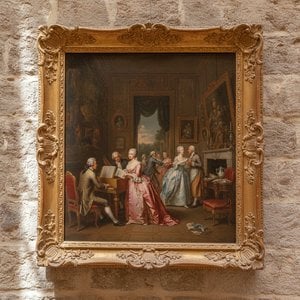
Theodor Leopold Weller: Un Maestro della Vita Quotidiana
Theodor Leopold Weller (29 maggio 1802 – 10 dicembre 1880), nato a Mannheim, in Germania, si erge come una figura cardine all'interno della Scuola di Monaco di pittura, un movimento dedito alla rappresentazione di scene di vita ordinaria con straordinaria precisiono e profondità psicologica. Sebbene il padre avesse inizialmente immaginato per lui una carriera legale, la passione di Weller per l'arte prese rapidamente il sopravvento, portandolo ad intraprendere studi formali presso l'Accademia di Belle Arti di Monaco sotto la guida di Johann Peter von Langer. In questo contesto, ebbe l'opportunità di incontrare l'influente Peter von Cornelius, portato a Monaco da Ludovico II per supervisionare la Glyptothek. A differenza di molti suoi contemporanei, che perseguivano grandi narrazioni storiche o soggetti mitologici, Weller scelse deliberatamente di gravitare verso le raffigurazioni dell'esistenza quotidiana e del mondo naturale, una decisione che avrebbe plasmato profondamente la sua traiettoria artistica.- Prime Influenze e Formazione: La guida di Langer instillò in Weller una comprensione fondamentale dei principi della pittura accademica, mentre la presenza di Cornelius lo espose al nascente spirito romantico prevalente a Monaco.
- La Ricerca del Dettaglio: Weller perfezionò la sua tecnica sotto la direzione di Peter von Hess, padroneggiando un'osservazione e una resa meticolosa, caratteristiche che sarebbero diventate sinonimo della sua intera opera.
- L'Esplorazione Romana e la Crescita Artistica: Il viaggio di Weller a Roma nel 1825, insieme a Ernst Fries, segnò un periodo cruciale di maturazione artistica, favorendo un apprezzamento per gli ideali classici e ampliando il suo vocabolario visivo. Egli documentò con dedizione i suoi viaggi attraverso l'Italia, inclusa Napoli, catturando l'essenza dei paesaggi e della cultura italiana.
Traguardi della Carriera e Produzione Artistica
Tornato a Mannheim nel 1833, Weller si affermò come un artista e educatore rispettato, assumendo il ruolo di Direttore del Mannheim Kunstverein (Associazione d'Arte) dal 1839 al 1848. Durante questo mandato, prestò servizio nel consiglio per ventitré anni e curò con dedizione la collezione della Verein, dando vita a un catalogo completo che documenta ben 124 delle sue opere personali. Questo catalogo funge da prova inestimabile della prolifica produzione di Weller e dimostra il suo incrollabile impegno nel catturare le sottigliezze dell'esperienza umana attraverso soggetti accessibili.- Direzione e Eredità Artistica: La leadership di Weller presso il Kunstverein consolidò la sua reputazione di sostenitore del Romanticismo tedesco, favorendo un ambiente propizio all'innovazione artistica.
- Dipinti Notevoli: Il suo vasto corpus di opere include scene di genere affascinanti — come "Studi su un suonatore di cornamusa" (1851) e "Donna in piedi con il costume di Cervara" — che mostrano la sua maestria nell'acquerello e la capacità di catturare sfumature emotive complesse.
La Scuola di Monaco e il Contributo di Weller
La dedizione di Weller nel ritrarre la vita quotidiana, unita alla sua tecnica meticolosa, lo ha stabilito come una pietra miliare della Scuola di Monaco, al fianco di artisti come Cornelius e Hess. Egli fu un fautore del realismo all'interno del Romanticismo, dando priorità alla profondità psicologica rispetto al mero spettacolo visivo. I suoi dipinti offrono spaccati toccanti delle vite delle persone comuni, riflettendo la coscienza sociale della sua epoca e, allo stesso tempo, elevando la pittura di genere a nuove vette di realizzazione artistica. L'eredità di Weller continua a ispirare gli artisti di oggi che ricercano l'autenticità e la risonanza emotiva nelle loro rappresentazioni dell'esperienza umana.Considerazioni Conclusive
Theodor Leopold Weller scomparve serenamente a Mannheim il 10 dicembre 1880, vittima di un ictus — una fine tragica per un artista la cui opera di una vita incarnava lo spirito dell'osservazione, dell'empatia e dell'eccellenza artistica. La sua influenza duratura può essere vista nelle generazioni successive di pittori tedeschi che hanno abbracciato il suo impegno nel ritrarre la condizione umana con sensibilità e incrollabile dettaglio.