Stanley Ernest Dollimore: A Quiet Observer of Rural France
Stanley Ernest Dollimore (1915 – 2001) was a British painter whose artistic vision centered on capturing the tranquil beauty of rural landscapes and historical scenes, primarily focusing on depictions of French countryside during the early to mid-20th century. Born in Knaresborough, North Yorkshire, Dollimore pursued his passion for art with unwavering dedication, honing his skills through formal training at Leeds School of Art before embarking on a prolific career as an independent artist—a path marked by consistent artistic exploration and refined craftsmanship.
Early Influences & Artistic Style: The Echoes of Impressionism and Academic Tradition
Dollimore’s artistic sensibilities were profoundly shaped by the Impressionist movement and Academic Painting traditions, representing a deliberate dialogue between expressive brushwork and meticulous observation. He embraced the disciplined approach to technique characteristic of Academic art, prioritizing accurate representation alongside tonal harmony—a conscious decision that deliberately contrasted with the vibrant spontaneity favored by Impressionists. This stylistic choice resulted in paintings imbued with a sense of calm contemplation and idealized beauty; Dollimore sought to elevate the visual experience through careful consideration of light and color, mirroring the principles championed by artists like John Constable and William Holman Hunt. The influence of Academic Painting is palpable in his meticulous detailing and harmonious compositions—a testament to his commitment to classical artistic ideals.
Leeds School of Art: Foundations for a Lifelong Pursuit
His formative years at Leeds School of Art instilled in him a disciplined approach to technique and composition, equipping him with the foundational skills necessary for his subsequent artistic endeavors. The school’s emphasis on classical principles undoubtedly influenced Dollimore's aesthetic sensibilities—particularly concerning perspective and anatomical accuracy—laying the groundwork for his distinctive visual language. This rigorous training fostered not only technical proficiency but also an appreciation for artistic history and tradition, shaping his lifelong dedication to mastering the craft of painting.
A Landscape Painter’s Vision: Themes and Techniques
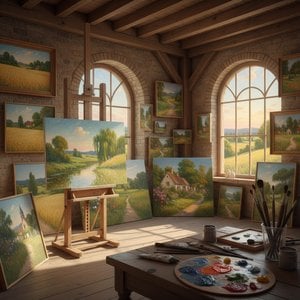
Dollimore's oeuvre comprises numerous landscapes rendered in watercolor and oil paints—often featuring idyllic meadows bathed in sunlight or evocative depictions of French villages nestled amongst rolling hills. Recurring motifs included churches, farms, and meticulously detailed rural vistas, reflecting a fascination with the pastoral idyll prevalent during his time and mirroring the artistic preoccupations of artists like Claude Lorrain. His paintings are notable for their subtle color palettes—often dominated by muted greens and blues—and textured brushstrokes that convey an atmosphere of serenity and nostalgia; Dollimore skillfully utilized glazing techniques to achieve luminous effects, capturing the ephemeral qualities of natural light with remarkable precision. The resulting images resonate with a timeless elegance, transporting viewers back to a bygone era of rural tranquility.
Notable Works: Reflections of Light and Harmony
Among his most celebrated pieces is “The Flooded Meadow,” a watercolor masterpiece showcasing the shimmering reflections on water surfaces against a backdrop of lush vegetation—a testament to Dollimore’s masterful command of tonal harmony and color blending. Similarly, ‘Farmstead on a Winter’s Day,’ exemplifies his ability to convey emotion through understated visual elements—the muted hues and carefully positioned figures conveying a profound sense of stillness and contemplation. These paintings exemplify Dollimore's unwavering commitment to capturing the essence of rural life with sensitivity and artistic integrity. His work resides in prestigious museum collections, including The Stanley - Audrey Burton Gallery at Leeds University where it continues to inspire viewers and solidify his place as a significant contributor to British art history.
### Legacy & Recognition: An Artist Rooted in Tradition
Dollimore’s legacy extends beyond individual artworks; he represents a steadfast commitment to portraying the grandeur of nature with precision and grace—a stylistic approach that aligns seamlessly with the enduring appeal of Academic Painting. His paintings serve as poignant reminders of a bygone era, capturing the spirit of rural France during the 1970s and cementing his place as a respected figure within British art history. He remains an exemplar of artistic dedication and unwavering adherence to classical principles—a testament to the transformative power of observation and skillful execution.
A cura del team editoriale di WahooArt.com
Quiz d'arte
Per ogni domanda è presente una sola risposta corretta.
Domanda 1:
Quale movimento artistico ha influenzato profondamente lo stile di Stanley Ernest Dollimore?
Domanda 2:
Dove è nato Stanley Ernest Dollimore?
Domanda 3:
Quale tecnica pittorica caratterizza principalmente le opere di Dollimore?
Domanda 4:
Qual è un tema ricorrente nelle opere di Stanley Ernest Dollimore?
Domanda 5:
Dove sono conservate alcune delle opere di Dollimore?
Discover the profound tranquility of rural art through an expert exploration of Impressionist landscapes. From pastoral scenes to textured oil masterpieces, learn how timeless nature-inspired artworks bring enduring elegance and serenity to sophisticated collectors.