Biography of uam, song siyeol
uam, song siyeol (尤庵 宋時烈, 1607-1689) stands as a pivotal figure in Korean intellectual history—a philosopher and statesman whose unwavering commitment to Confucian ideals shaped the trajectory of Joseon Dynasty politics. Born in Okcheon, Chungcheongbukdo, he ascended to prominence through decades of dedicated service within the royal court, earning recognition for his profound understanding of ethical principles and social responsibility. His name reverberates throughout Joseon annals, appearing over 3,000 times—a testament to his influence on governmental decisions and shaping the cultural landscape of his era. Tragically, his life ended abruptly in 1689 following a politically motivated execution, marking a poignant conclusion to a brilliant yet turbulent career.- Early Life & Education: Song Siyeol’s formative years were marked by rigorous Confucian scholarship under the guidance of Kim Jangsaeng, arguably Yi I's most esteemed disciple. This intellectual foundation instilled in him a lifelong devotion to Chu Hsi’s philosophy—a cornerstone of Neo-Confucian thought that championed virtue and moral governance. He excelled in his studies at Saengwon-si, demonstrating exceptional aptitude for mastering the complexities of Confucian texts and formulating reasoned arguments based on ethical considerations.
- Political Career: From 1635 onwards, Song Siyeol embarked on an illustrious political journey, serving as tutor to King Injo's second son and steadily climbing the ranks of bureaucratic administration. Despite facing periods of exile due to factional disputes within the court—fueled by disagreements over mourning rituals following Hyojong’s death—he consistently demonstrated resilience and intellectual integrity. His unwavering dedication to upholding Confucian values amidst political maneuvering solidified his reputation as a statesman of considerable stature.
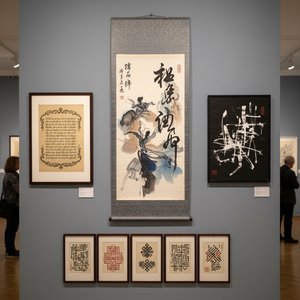
- Notable Achievements: Perhaps Song Siyeol’s most enduring legacy resides in his masterful calligraphy, notably his inscription commemorating Admiral Yi Sunsin's epitaph at Chungnyeolsa Shrine (historical site no. 236). This poignant gesture solidified his reputation as a humanist artist deeply attuned to the moral values of his time and cemented his place within Korean cultural heritage. The scroll embodies the spirit of Neo-Confucian aesthetics—characterized by simplicity, serenity, and profound contemplation—reflecting Song Siyeol’s belief in the importance of honoring ancestral virtues and upholding ethical conduct.
Artistic Style & Technique
Song Siyeol’s artistic endeavors extended beyond calligraphy, demonstrating exceptional skill in painting—specifically in album paintings (君子存心). His works exemplify the stylistic conventions of Ming Dynasty art, characterized by meticulous brushwork and aged textures. These scrolls convey a sense of solemn contemplation and reflect his philosophical convictions through evocative imagery and subtle tonal variations. The deliberate use of muted colors contributes to an atmosphere of understated grandeur—a hallmark of Neo-Confucian aesthetics that prioritized harmony and spiritual depth. He meticulously studied the techniques of renowned Ming painters, absorbing their mastery of color palettes and compositional strategies. His paintings are distinguished by a remarkable sensitivity to natural landscapes—particularly mountainous vistas—capturing the essence of Confucian ideals through serene depictions of pine trees, rocks, and flowing water. Album of Calligraphy (君子存心): This masterpiece showcases Song Siyeol’s mastery of brushstroke technique, capturing the essence of Confucian ideals through serene landscapes and carefully rendered calligraphy. The scroll embodies the spirit of Neo-Confucian aesthetics—characterized by simplicity, serenity, and profound contemplation—reflecting Song Siyeol’s belief in the importance of honoring ancestral virtues and upholding ethical conduct.Historical Significance & Legacy
Song Siyeol’s execution underscored the volatile political climate of his era, highlighting the dangers inherent in challenging established authority. However, his unwavering commitment to Confucian ethics and his profound contribution to Korean intellectual discourse ensured that he would endure as a symbol of moral integrity—a figure revered for upholding virtue amidst turbulent times. His name continues to appear prominently in Joseon annals—a testament to his enduring influence on Korean history and culture. Furthermore, the Song Art Museum in Beijing celebrates his artistic achievements and honors his legacy as a champion of humanist values within the broader context of Chinese art history. He remains an inspiration for scholars and artists alike—a reminder that intellectual pursuits should be guided by ethical principles and pursued with unwavering dedication. Further Exploration: To delve deeper into Song Siyeol’s life and work, consider visiting the Song Art Museum in Beijing—a repository of Chinese contemporary art and international masterpieces that offers insights into his artistic milieu. Also, explore Heritage Search for detailed information on his portrait – a national treasure reflecting the profound spirit of Korean Confucianism.Domande e risposte
Dove e quando è nato Song Siyeol?
Song Siyeol è nato a Okcheon nel 1607.
Come si è evoluta l'arte di Song Siyeol nel tempo?
La carriera di Song Siyeol si svela periodo dopo periodo nella pagina Cronologia artistica: una linea temporale orizzontale delle opere, raggruppate in capitoli relativi ai vari periodi della sua carriera.
Con quali pseudonimi o nomi alternativi è conosciuto Song Siyeol?
Song Siyeol è noto anche con il nome di 尤庵 宋時烈.