Early Life and Artistic Beginnings
Samir Rafi, born in Cairo, Egypt in 1926, embarked on his artistic journey at the remarkably young age of seventeen when he participated in his inaugural exhibition alongside fellow watercolour painter Shafiq Rizq. This formative experience immediately established a trajectory toward blending modern stylistic innovations with profound resonances from ancient Egyptian heritage – a duality that would characterize his entire oeuvre.Artistic Influences and Education
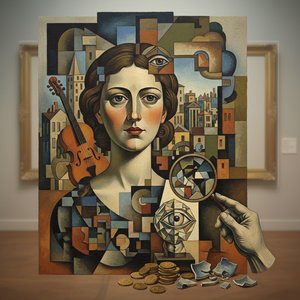
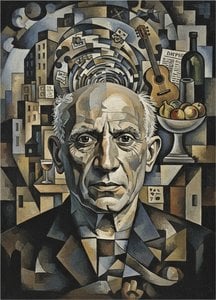
Rafi’s artistic vision was decisively shaped by the groundbreaking movements of Cubism and Surrealism, propelling him to create both meticulously rendered figurative artworks and boldly imaginative abstract compositions. Recognizing the importance of formal grounding, he pursued his education at the College of Fine Arts in Cairo, graduating with a specialization in decorative arts in 1948. This period wasn’t merely academic; it cemented his involvement within the vibrant Contemporary Art Group movement – an environment fostering experimentation and critical engagement with artistic trends. Further enriching his intellectual pursuits, Rafi traveled to Paris where he studied under André Lhote at Sorbonne University, absorbing influential perspectives on artistic technique and conceptual exploration.Teaching and Exhibitions
Following graduation, Rafi continued his dedication to artistic mentorship by lecturing at both the College of Fine Arts in Cairo and Algiers, nurturing the creative aspirations of aspiring artists while simultaneously showcasing his own captivating works through numerous exhibitions across Egypt. Notably, a painting achieved an impressive price tag of £87,500 during a Christie’s auction in 2019 – a testament to Rafi's artistic reputation and the enduring value placed upon his creations within the international art market.Artistic Legacy
Samir Rafi stands as a pivotal figure in Egyptian Modernism, embodying the spirit of blending traditional symbolism with avant-garde stylistic approaches. His unwavering commitment to exploring these intersections cemented his place among the most influential artists of his time. He is remembered not only for his distinctive visual language but also for his role in shaping artistic discourse and inspiring generations of creatives.Notable Achievements
Rafi’s contribution to the art world extends beyond individual artworks; he fostered a dialogue between past and present, demonstrating how artistic traditions could inform contemporary expression. His enduring legacy resides in his ability to capture the essence of Egyptian identity while simultaneously embracing the transformative power of modern artistic movements – a remarkable feat achieved through a prolific career marked by both teaching excellence and critical acclaim.Domande e risposte
Dove si possono esplorare le opere di Samir Rafi organizzate per colore?
La pagina Indice dei colori di Samir Rafi organizza le opere dell'artista in base al colore.
Dove si possono trovare le opere di Samir Rafi raggruppate per parole chiave?
La pagina Per parole chiave di Samir Rafi raggruppa le opere dell'artista per parole chiave.
Dove e quando è nato Samir Rafi?
Samir Rafi è nato a Cairo nel 1926.