A Life Immersed in Culture: The Journey of Romare Bearden
Romare Howard Bearden, born September 2nd, 1911, in Charlotte, North Carolina, wasn’t merely an artist; he was a cultural architect, a visual storyteller whose work resonated with the rhythms and realities of African-American life. His early years were marked by constant movement, a childhood spent between the burgeoning artistic hub of Harlem, New York, and the quieter landscapes of Pittsburgh, Pennsylvania. This geographic fluidity instilled in him a unique perspective, an ability to observe and absorb the diverse experiences that would later fuel his creative vision. The Bearden home wasn’t simply a residence; it was a salon, a gathering place for luminaries of the Harlem Renaissance—writers, musicians, intellectuals—who shaped young Romare's understanding of art as a vehicle for social commentary and cultural preservation. His mother, Bessye Bearden, a prominent figure in New York City’s civic life and a journalist for the Chicago Defender, further nurtured this environment, instilling in him a sense of responsibility to his community and a deep appreciation for storytelling.From Social Realism to Abstract Exploration
Bearden's formal education was equally diverse, encompassing studies at Lincoln University, Boston University, and ultimately New York University, where he earned a degree in science and education in 1935. However, his true calling lay in the realm of art, and he continued his training under the tutelage of German artist George Grosz. His early artistic endeavors were rooted in social realism, depicting scenes from the American South with a keen eye for detail and a commitment to portraying the lives of ordinary people. These works often reflected the influence of Mexican muralists like Diego Rivera and José Clemente Orozco, whose powerful narratives and bold compositions resonated with Bearden’s own desire to address issues of social justice and human dignity. He believed that art had a moral obligation to confront uncomfortable truths and champion the voices of marginalized communities—a conviction that would permeate his entire artistic practice.The Power of Collage: A Defining Aesthetic
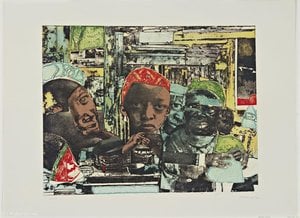
It was in the late 1950s and early 1960s that Romare Bearden truly found his signature style—collage. He didn’t simply adopt collage as a technique; he elevated it to an art form, transforming humble materials like magazine clippings, fabric scraps, and photographs into vibrant, emotionally resonant compositions. This choice wasn't accidental. Collage allowed him to fragment and reassemble reality, mirroring the complexities of memory, identity, and experience—themes that preoccupied Bearden throughout his life. He saw parallels between the artist’s process and the musician’s performance, both relying on intuition, spontaneity, and a deep understanding of their respective mediums. His collages weren't merely representations of scenes; they were evocations of moods, atmospheres, and cultural narratives—often infused with references to jazz music and its improvisational spirit. The resulting images possessed an arresting immediacy, capturing fleeting moments of emotion and conveying profound ideas with remarkable subtlety.Influences & Artistic Development
Bearden’s artistic influences spanned a wide range of disciplines, from Byzantine mosaics to African art traditions—sources that informed his visual vocabulary and deepened his engagement with universal themes. He was particularly drawn to the expressive power of Surrealism, recognizing its ability to explore subconscious desires and challenge conventional perceptions of reality. However, he rejected the rigid formalism of Cubism, preferring instead a more fluid approach that prioritized emotional resonance over intellectual precision. His formative years in Harlem exposed him to the vibrant cultural landscape of New York City—a crucible for artistic innovation and social activism—and instilled in him a lifelong commitment to confronting injustice and celebrating diversity. He honed his skills at the Art Students League alongside fellow artists who shared his passion for experimentation and his belief in art’s transformative potential.Legacy & Enduring Influence
Throughout his prolific career, Bearden received numerous accolades, including honorary doctorates from several prestigious universities and, in 1987, the National Medal of Arts—a testament to his groundbreaking contributions to American art history. He was also a gifted writer and songwriter, co-writing the jazz standard "Sea Breeze" with childhood friend Dizzy Gillespie—a collaboration that exemplifies his artistic versatility and his unwavering dedication to musical expression. Bearden’s work continues to inspire artists and audiences alike today, reminding us of the enduring power of art to illuminate the human condition, celebrate cultural heritage, and advocate for a more just and equitable world. His ability to synthesize diverse influences—from African art and Byzantine mosaics to jazz music and personal memory—created a unique visual language that remains instantly recognizable and profoundly moving. He died March 12th, 1988 in New York City.Domande e risposte
Posso sfogliare le opere di Romare Bearden in base all'umore?
La pagina Spazi d'atmosfera dell'artista presenta le opere di Romare Bearden suddivise per atmosfera.
Posso esplorare le opere di Romare Bearden per soggetto?
L'Catalogo per soggetti di Romare Bearden è una pagina che organizza le opere dell'artista in base ai loro soggetti.
Come si è evoluta l'arte di Romare Bearden nel tempo?
La carriera di Romare Bearden si svela periodo dopo periodo nella pagina Cronologia artistica: una linea temporale orizzontale delle opere, raggruppate in capitoli relativi ai vari periodi della sua carriera.