Richard Wright: Architect of Light and Transient Beauty
Richard Wright is an English artist recognized for his distinctive approach to architectural painting—a practice characterized by bold geometric patterns overlaid with shimmering gold leaf, creating luminous surfaces that capture the fleeting essence of an exhibition. While he may not be a household name in mainstream art circles, Wright’s work has garnered critical acclaim and secured its place within prestigious collections worldwide.
Early Life & Artistic Beginnings
Born sometime around 1960 in London, Wright's formative years unfolded amidst the landscapes of Scotland alongside his family. This early immersion into Scottish scenery undoubtedly nurtured a sensitivity to form and texture—a quality that would become central to his artistic vocation. He pursued formal education at Edinburgh College of Art from 1978 to 1982, diligently honing foundational skills before embarking on postgraduate studies at Glasgow School of Art between 1993 and 1995, earning a Master of Fine Art degree. These academic pursuits solidified his grasp of artistic principles and established him as a serious contender within the British art scene.
A Singular Artistic Vision: Geometric Abstraction & Gold Leaf Technique
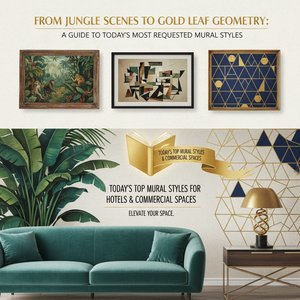
Wright’s artistic style defies easy categorization. He deliberately rejects traditional canvas painting, favoring instead meticulously crafted geometric designs—often repeating patterns—that dominate his canvases. These forms are then imbued with gold leaf, a technique that elevates the artwork beyond mere visual representation; it's a conscious decision rooted in Wright’s fascination with illusion and perception. As Jonathan Jones of The Guardian eloquently stated, he is “a modern fresco painter,” referencing the ancient art form of applying pigment onto wet plaster—a method that ensures the painting remains vulnerable to time and circumstance – acknowledging its inherent fragility as part of its artistic power. This deliberate choice isn’t merely decorative; it speaks volumes about Wright's conceptual framework.
The Turner Prize Recognition & Expanding Horizons
Wright achieved international recognition in 2009 when he was awarded the prestigious Turner Prize for his monumental piece, “No Title,” which graced Tate Britain’s second room. This accolade solidified his reputation as a visionary artist pushing boundaries within contemporary art and establishing him as one of the most influential figures of his generation. His work has been exhibited extensively across Europe and North America, securing its presence in collections at institutions like MoMA (New York); Middlesbrough Institute of Modern Art; Carnegie Museum of Art (Pittsburgh), and Tate Gallery (London). Furthermore, Wright’s collaborative endeavors extend beyond solo exhibitions; he partnered with fellow artist Sarah Lowndes, forging a creative alliance united by shared artistic sensibilities.
Influence & Legacy
Wright's influence transcends his own creations. His uncompromising commitment to experimentation—particularly the rejection of conventional canvas painting—has resonated deeply with critics and fellow artists alike. Andrea Schlieker, a judge for the Turner Prize, remarked that Wright “rejects the canvas,” highlighting the radical departure from established artistic conventions. This stance aligns him powerfully with movements like Minimalism and Conceptual Art, demonstrating his willingness to challenge accepted norms and explore new avenues of expression. His enduring contribution serves as a poignant reminder that beauty can reside in impermanence—that art’s significance is amplified by its vulnerability to time, prompting viewers to contemplate its essence within the context of its existence.
Notable Exhibitions
* Permanent Works: MoMA (New York); Middlesbrough Institute of Modern Art; Carnegie Museum of Art (Pittsburgh)
* Solo Exhibitions: Transmission Gallery, Glasgow (1994); Numerous international venues since 1994.