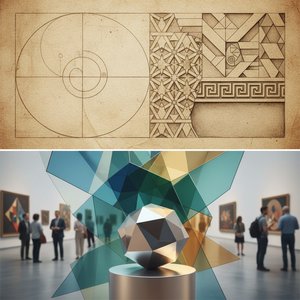
Radoslav Kratina: Sculptor of Kinetic Geometry
Radoslav Kratina (1946-2018) was a Czech sculptor and painter whose distinctive approach to concrete art—characterized by geometric forms infused with movement—established him as a pivotal figure in the Czechoslovakian avant-garde. Born in Prague, Kratina’s artistic journey began amidst a rich cultural landscape shaped by the Bauhaus influence and the burgeoning explorations of abstraction during the postwar era. His formative years instilled within him a deep appreciation for rational thought and a conviction that art should actively engage with its audience.Early Life and Artistic Education
Kratina's exposure to art commenced early, nurtured by his family’s artistic inclinations. He pursued formal training at the Prague Academy of Fine Arts, honing his skills in sculpture and painting under the tutelage of Josef Novák and Alois Fišárek—teachers who championed a modernist aesthetic rooted in geometric abstraction. This academic grounding profoundly impacted Kratina's stylistic trajectory, shaping his unwavering commitment to exploring the interplay between form and motion. He believed that art should transcend passive contemplation, inviting viewers into an active dialogue with the artwork itself – a principle he would carry throughout his entire artistic career.The Concretists’ Club and Kinetic Sculpture
A defining moment arrived with Kratina’s founding membership of the Concretists’ Club alongside Arsen Pohribny, Jiří Hilmar, Tomás Rajlich and Miroslav Vystrčil in 1963. This collective represented a radical departure from prevailing artistic conventions, prioritizing simplicity and precision—principles that would become central to Kratina's oeuvre. The club’s ethos mirrored Kratina’s own belief that sculpture should transcend passive contemplation, inviting viewers into an active dialogue with the artwork itself. He achieved this ambition by crafting sculptures incorporating moving parts – a technique he termed “variables”—that responded dynamically to external stimuli and transformed throughout time. These kinetic pieces weren't merely aesthetically pleasing; they embodied Kratina’s philosophical conviction that art should stimulate intellectual curiosity and challenge conventional perceptions of form.Material Exploration: From Wood to Metal
Kratina’s artistic experimentation spanned diverse materials, beginning with wood—a medium he initially favored for its tactile qualities and suitability for achieving precise geometric constructions. Recognizing the limitations of wood in conveying kinetic energy, Kratina transitioned to metal—specifically iron, brass and aluminum alloy—allowing him to realize more ambitious sculptural visions. He meticulously sourced prefabricated components from ironmongers and collaborated with skilled craftsmen to fabricate bespoke elements that adhered to exacting technical specifications. This dedication to precision reflected Kratina’s intellectual rigor and underscored his desire for sculptures to embody a harmonious balance between form and function.Notable Works and Legacy
Among Kratina's most celebrated creations are “Squares and Rectangles of Various Sizes” (2016), a monumental aluminum sculpture reflecting the artist’s fascination with geometric abstraction and spatial dynamism, and "Colour Relief" (1967), which exemplifies his early exploration of monotype printing techniques. His sculptures were exhibited internationally, garnering critical acclaim for their innovative approach to concrete art and their profound engagement with the viewer's experience. Kratina’s influence extended beyond his own artistic output; he mentored younger sculptors and fostered a spirit of experimentation within the Czechoslovakian art community. He remains an enduring symbol of Czech modernist sculpture—a testament to the transformative power of geometric abstraction combined with kinetic movement.- Museum Kampa Collection: Featuring works like “Colour Relief”.
- International Exhibitions: Demonstrating Kratina’s recognition on the global stage.