Pietro Paolini: The Quiet Genius of Lucca
Pietro Paolini (1603 – 1681), affectionately known as ‘il Lucchese,’ stands as a pivotal figure in Baroque Italian painting, yet his legacy often resides beneath the shadow of Caravaggio’s monumental influence. Unlike many artists of his era who sought to emulate Caravaggio's dramatic intensity, Paolini cultivated a distinctive artistic voice rooted in meticulous observation and profound psychological insight—a testament to his unwavering dedication to capturing the essence of human experience. Born in Lucca, Italy, the youngest son of Tommaso Paolini and Ginevra Raffaelli, Pietro’s upbringing instilled within him an appreciation for familial stability and cultural refinement, characteristics that would permeate his artistic endeavors throughout his life.
His formative years were spent under the tutelage of Angelo Caroselli, a Caravaggio disciple who championed a more nuanced approach to Baroque aesthetics. While scholarly debate continues regarding the precise nature of their relationship—recent discoveries suggest a collaborative partnership rather than mere master-pupil instruction—Caroselli undeniably exposed Paolini to the diverse artistic currents circulating in Rome during his formative years. This exposure fostered a stylistic flexibility that would characterize Paolini’s oeuvre, allowing him to synthesize influences from various schools and techniques into a cohesive visual language. Notably, Paolini engaged with the burgeoning naturalist movement championed by artists like Bartolomeo Manfredi and Cecchino Caravaggio—a trend reflecting the broader artistic landscape of Rome at the time. He absorbed the lessons of Caravaggio’s dramatic chiaroscuro, but tempered it with a sensitivity to tonal gradations and subtle color harmonies – a distinction that would become central to his artistic identity.
A brief sojourn in Venice around 1629-1631 provided Paolini with invaluable exposure to the grandeur of Venetian painting, particularly the canvases of Paolo Veronese and Tintoretto. These encounters broadened his artistic horizons and solidified his understanding of compositional innovation and theatrical lighting—elements he would skillfully incorporate into his own works. He was captivated by Veronese’s opulent frescoes and Tintoretto's dynamic perspectives, recognizing their ability to convey emotion and grandeur with remarkable effectiveness. Returning to Lucca after this period of artistic exploration, Paolini established a thriving studio and devoted himself to nurturing the talents of aspiring painters within his hometown. His Academy of Painting in Lucca became instrumental in shaping the artistic sensibilities of an entire generation of Lucchese artists—a legacy that continues to resonate today.
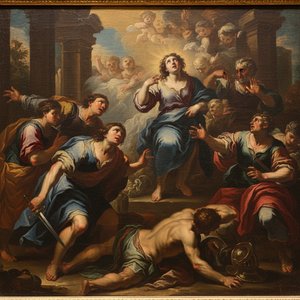
Paolini’s artistic output primarily consisted of cabinet pictures – intimate portraits and genre scenes rendered with exceptional detail and psychological depth. He excelled at capturing fleeting expressions of emotion and conveying subtle nuances of character, demonstrating a remarkable sensitivity to human psychology. His still lifes were equally distinguished by their meticulous realism and symbolic resonance—often imbued with references to classical mythology and humanist philosophy. Among his most celebrated paintings are “A Bagpiper,” “Portrait Of A Young Man Wearing A Wide-Brimmed Red Hat With A Badge, And Holding A Mask,” and "The Concert," each demonstrating Paolini’s mastery of technique and his profound understanding of human emotion. These works stand apart for their quiet beauty and contemplative spirit—a testament to Paolini's belief that art should illuminate the inner life as much as it captures the external world.
His enduring contribution to Lucchese art history lies not merely in his prolific output but also in his role as a mentor and educator—a figure who championed humanist ideals and fostered the development of a vibrant artistic community. Pietro Paolini’s legacy serves as an inspiring reminder that true artistry resides in observation, empathy, and a steadfast devotion to capturing the complexities of human existence—qualities that cemented his place among the luminaries of Baroque Italy.