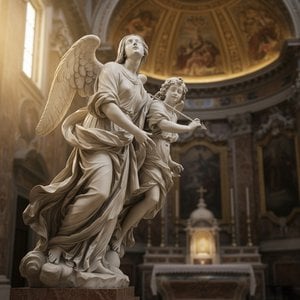
Pietro Gagliardi (1809-1890): A Roman Painter's Contribution to Baroque Decoration
Pietro Gagliardi was an italian painter and architect, who decorated many churches and palaces in rome and throughout italy. He was born in
rome, italy in 1809 and died in 1890. His artistic journey unfolded during the vibrant nineteenth century, marked by a profound engagement with the stylistic currents of neoclassicism and romanticism—movements that shaped the visual landscape of his time.
Early Life and Artistic Training
Detailed biographical information about Gagliardi’s formative years remains scarce, yet it is understood that he cultivated his artistic talent in rome during the early decades of the century. Influenced by luminaries like Tommaso Minardi and Francesco Lanci—who instilled in him foundational principles of architectural design and painting technique—Gagliardi embarked on a path dedicated to mastering the expressive capabilities of color and form. His exposure to the prevailing artistic sensibilities fostered an appreciation for both grandeur and subtlety, characteristics that would permeate his subsequent oeuvre.
Notable Works and Commissions
Gagliardi’s reputation rests primarily upon his prolific contributions to ecclesiastical decoration—particularly frescoes adorning churches across rome and italy. He possessed a remarkable aptitude for conveying complex narratives and evoking powerful emotions through visual imagery, as evidenced by his masterful depictions of biblical scenes and allegorical compositions. Among his most celebrated commissions were those undertaken for the Palumbo-Fossati Collection in Venice, where he collaborated on ambitious projects showcasing the splendor of Venetian baroque art alongside esteemed artists such as Thomas Moran, William James Glackens, and Jean-François Raffaelli. His frescoes skillfully employed illusionistic techniques—particularly trompe-l’oeil—to create immersive environments that transported viewers into the heart of religious devotion.
Influences and Artistic Style
Gagliardi's artistic style can be characterized as a harmonious blend of neoclassicism and romanticism, reflecting the intellectual debates of his era. Like many artists of his generation, he drew inspiration from classical ideals of beauty and proportion—manifested in meticulous attention to detail and compositional balance—yet simultaneously embraced expressive dynamism and emotional intensity. His palette favored rich hues and dramatic contrasts, mirroring the fervor of the Romantic movement’s preoccupation with sublime landscapes and psychological depth.
Legacy and Historical Significance
Pietro Gagliardi's enduring legacy resides in his indelible mark upon italian artistic heritage. Recognized by art historians for his distinctive visual language and unwavering commitment to conveying profound spiritual themes, he stands as a testament to the transformative power of artistic creativity. His work continues to inspire admiration and scholarly inquiry, securing his place among the most prominent figures of nineteenth-century roman painting—a period defined by monumental architectural undertakings and an unparalleled flourishing of artistic expression. The Museo Banca Nazionale del Lavoro in rome houses important artworks from this era.