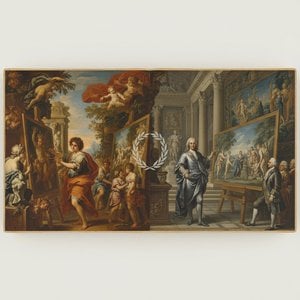
Pere Garcia: A Synthesis of Flemish and Italian Artistic Traditions
Pere Garcia stands as a pivotal figure in the artistic landscape of Catalonia during the mid-15th century, embodying a fascinating confluence of Flemish and Italian artistic sensibilities that profoundly shaped religious art in Spain. While biographical details remain scarce – largely due to the limitations of surviving documentation from the period – his contribution to Catalan Renaissance is undeniable, evidenced by a remarkable corpus of paintings primarily focused on depictions of the Virgin Mary and angelic choirs.
Pere Garcia’s artistic journey began around 1460 in Barcelona, Catalonia, likely descended from a family engaged in commerce and craftsmanship. His formative years were marked by exposure to Flemish masters who established workshops in Catalonia capitalizing on the burgeoning trade routes connecting Europe with the Mediterranean. This early influence profoundly shaped his stylistic approach, establishing him as one of the foremost representatives of Late Gothic Painting in Aragon and Catalonia.
The stylistic hallmarks of Garcia’s oeuvre bear unmistakable traces of Flemish painting techniques – particularly those championed by Jan van Eyck and Rogier van der Weyden. These masters emphasized meticulous detail, luminous glazing, and a profound understanding of perspective—principles that Garcia skillfully adopted to imbue his canvases with an unparalleled sense of realism and spiritual depth. The use of oil paint, a relatively new medium at the time, allowed for subtle gradations of color and texture elevating the visual impact of his artworks. This dedication to technique reflects the broader artistic currents circulating throughout Europe during this era—a period characterized by experimentation and innovation.
Despite the dominant influence of Flemish art Garcia’s paintings also resonate with elements characteristic of the Italian Renaissance primarily stemming from his exposure to artistic developments emanating from Florence and Rome. The incorporation of pyramidal compositions—a hallmark of Florentine painting—and a heightened emphasis on idealized beauty reflect the humanist ideals that were reshaping European intellectual life during this period. This fusion of stylistic traditions underscores Garcia’s erudition and demonstrates his ability to synthesize disparate influences into a cohesive artistic vision.
Garcia's most celebrated paintings include “Madonna with Music-Making Angels,” housed in the Museu Nacional Picasso Barcelona, and several altarpieces adorning churches throughout Catalonia. These artworks exemplify his mastery of technique and artistic vision showcasing a harmonious blend of Flemish realism and Italian elegance. The Madonna with Music-Making Angels is particularly noteworthy for its innovative depiction of angelic musicians—a bold departure from conventional iconography—demonstrating Garcia’s willingness to experiment with stylistic conventions and explore new expressive possibilities. His legacy extends beyond his individual creations cementing him as one of Catalonia's most distinguished artists. Pere Garcia’s work continues to inspire admiration for its technical brilliance and spiritual resonance reflecting the cultural dynamism of the fifteenth century.