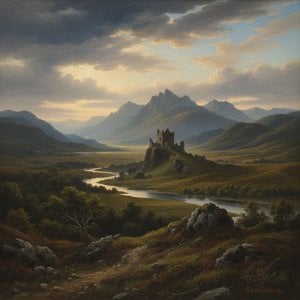
Patrick Allan Fraser: Un Pittore Visionario e un'Influenza Architettonica
Patrick Allan Fraser (1813 – 1890) si staglia come una figura di spicco nella storia dell'arte scozzese, celebrato per i suoi paesaggi evocativi e per il ruolo pionieristico nella fondazione del primo college d'arte della Scozia. Nato ad Arbroath da Robert Allan, un mercante di tessuti, Fraser intraprese inizialmente studi giuridici, ma fu reindirizzato verso le arti dalle attività di tinteggiatura del nonno e dagli incoraggiamenti ricevuti presso la Trustees’ Academy. Questa esperienza formativa cementò la sua passione per le arti visive e lo portò a stringere un'indissolubile partnership con Robert Scott Lauder, intraprendendo un viaggio trasformativo verso Roma nel 1835, dove assorbì la grandezza dell'arte e dell'architettura classica.- Influenze Primordiali: La sensibilità artistica di Fraser fu profondamente plasmata dal Romanticismo, in particolare dai paesaggi drammaticulo di Caspar David Friedrich, che gli instillarono una fascinazione per la cattura della bellezza sublime e la trasmissione della profondità emotiva.
- Il Periodo Parigino (1839-1842): Un breve soggiorno a Parigi permise a Fraser di immergersi nel vibrante milieu artistico dell'epoca, affinando le sue abilità ed sperimentando tecniche impressioniste, sebbene alla fine scelse di tornare nella serena campagna scozzese.
Contributi Architettonici e Hospitalfield House
La visione artistica di Fraser si estese ben oltre la pittura; egli divenne un architetto rispettato, dedicandosi al rinnovamento di edifici storici e alla progettazione di spazi innovativi che privilegiavano la funzionalità insieme all'estetica. Il suo progetto più ambizioso fu la ricostruzione della tenuta del Castello di Blackcraig a Strathardle, dove fuse con maestria l'artigianato tradizionale con i moderni principi del design. In particolare, Fraser supervisionò la trasformazione di un fienile del XVIII secolo in Hospitalfield House – un capolavoro mozzafiato dello stile Arts and Crafts – a testimonianza del suo impegno nel promuovere la creatività artistica e nel preservare l'eredità architettonica della Scozia. La dimora stessa incarna un armonioso connubio di materiali locali e dettagli meticolosi, riflettendo la convinzione di Fraser nel celebrare l'identità regionale pur abbracciando idee progettuali progressive.- Hospitalfield House: Progettata con l'intento di creare un ambiente favorevole allo sviluppo artistico, Hospitalfield House si erge come un punto di riferimento dell'architettura Arts and Crafts scozzese.
- Critica Architettonica: Gli scritti e le conferenze di Fraser mostrarono il suo occhio attento all'eccellenza architettonica, sostenendo un design ponderato che considerasse sia la bellezza che la praticità.
L'Eredità Illustrativa e "The Antiquary" di Walter Scott
Fraser ottenne notevole fama come illustratore, catturando magistralmente lo spirito de “The Antiquary” di Walter Scott attraverso una serie di acquerelli meticolosamente resi. Questo progetto esemplifica la sua maestria nella sottigliezza tonale e nell'equilibrio compositivo, abilità che lo avrebbero accompagnato con successo durante tutta la sua carriera artistica. Le illustrazioni risultanti sono considerate tra i più eccellenti esempi di arte acquerellistica vittoriana, dimostrando la capacità di Fraser di trasmettere emozione narrativa attraverso uno storytelling visivo sfumato e delicato.Ultimi Anni ed Eredità Artistica
Dopo la morte di Elizabeth Allan Fraser nel 1873, Fraser proseguì le sue ricerche architettoniche e istituì il Patrick Allan-Fraser Trust per trasformare Hospitalfield House in un college d'arte “a sostegno e incoraggiamento di giovani uomini privi di mezzi propri che desiderino intraprendere una o più professioni tra pittura, scultura, intaglio del legno, architettura e incisione”. Progettò inoltre un mausoleo per la moglie — la Fraser Mortuary Chapel — una riflessione toccante della sua vita personale e delle sue sensibilità artistiche. Eletto Presidente della British Academy di Roma nel 1873, Fraser rimase attivo nelle sue ricerche accademiche fino alla morte, avvenuta nel 1890, lasciando un'eredità duratura come pittore e architetto che difese l'eccellenza artistica e contribuì significativamente al panorama culturale della Scozia. La sua opera continua a ispirare ammirazione per la sua bellezza, la perizia tecnica e l'incrollabile dedizione alla preservazione della tradizione artistica.Domande e risposte
Posso esplorare le opere di Patrick Allan Fraser in base allo spettro dei colori?
Le opere di Patrick Allan Fraser possono essere esplorate per colore nella pagina Indice Spettrale dell'artista.
Quali sono il luogo e l'anno di nascita di Patrick Allan Fraser?
Patrick Allan Fraser è nato a Arbroath nel 1813.
Posso esplorare le opere di Patrick Allan Fraser per soggetto?
La pagina Atlante dei soggetti mappa le opere di Patrick Allan Fraser per soggetto.
Posso sfogliare le opere di Patrick Allan Fraser in base alla palette di colori?
Le opere di Patrick Allan Fraser possono essere consultate per palette cromatica nella pagina Per palette dell'artista.
Quanto sono popolari le opere di Patrick Allan Fraser?
Esiste una pagina Statistiche dedicata a Patrick Allan Fraser, che presenta le statistiche relative alle opere dell'artista su questo sito.
Posso sfogliare le opere di Patrick Allan Fraser in base all'umore?
Le opere di Patrick Allan Fraser possono essere esplorate per emozione nella pagina Stanze d'atmosfera dell'artista, che organizza le opere d'arte in base alle emozioni che trasmettono.
Quante opere di Patrick Allan Fraser sono disponibili per la consultazione?
Puoi sfogliare 58 opere d'arte opere di Patrick Allan Fraser nella pagina Tutte le opere d'arte.
Come posso seguire l'evoluzione dell'opera di Patrick Allan Fraser anno dopo anno?
Le opere di Patrick Allan Fraser possono essere visualizzate in ordine cronologico nella pagina Cronologia opere dell'artista.