Byoung-Choon Park: Embracing Transparency and Color in Korean Landscape Painting
Byoung-Choon Park (Park Byung-hoon), born in Dongdaemun-gu, Seoul, South Korea in 1966, represents a distinctive voice within contemporary Korean art. His artistic vision centers around the profound exploration of color and transparency—concepts that permeate his entire oeuvre and draw heavily from the traditional Chinese landscape painting style known as Jingyung Shan Shui. This approach distinguishes him from many other artists of his time, prioritizing atmospheric representation and emotional resonance above mere visual accuracy.
Early Influences: Park’s formative years were marked by exposure to Korean art history, particularly the serene beauty of Shan Shui paintings. These works, characterized by misty mountains, flowing rivers, and subtle tonal variations—often achieved through meticulous blending—instilled in him a deep appreciation for capturing atmospheric conditions and conveying emotion through nuanced color palettes. The mastery of tonal gradation, central to Shan Shui aesthetics, profoundly impacted Park’s artistic sensibilities and became a cornerstone of his technique. He saw in these paintings not just depictions of scenery but expressions of philosophical contemplation.
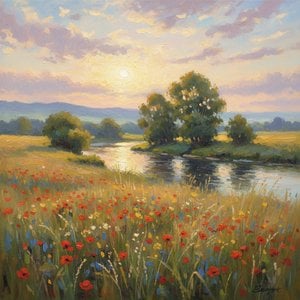
Technique: Park’s artistic process is meticulously crafted to achieve maximum transparency. He employs layering techniques—often utilizing multiple thin washes of pigment—to build up complex compositions that reveal underlying hues as the paint dries. This method allows for an ethereal quality, mirroring the misty landscapes he seeks to portray and reflecting his deep understanding of Shan Shui principles. Each subsequent layer subtly alters the tonal balance of the preceding one, creating a dynamic interplay of color and light that captures the essence of natural phenomena. He considers this process akin to unveiling hidden beauty—a deliberate effort to honor the spirit of Jingyung Shan Shui.
Notable Exhibitions: Demonstrating his commitment to artistic dialogue and expanding his reach beyond Korea’s borders, Park has participated in solo exhibitions in Seoul and Germany, alongside group shows in France. These presentations have garnered critical acclaim and solidified his reputation as a talented artist dedicated to pushing the boundaries of landscape painting. His work has been recognized for its understated elegance and its ability to evoke profound feelings of serenity—qualities that resonate deeply with audiences interested in contemplative art forms. The recognition from prestigious institutions like Google Arts & Culture underscores Park’s dedication to sharing his artistic vision globally.
Google Arts & Culture Presence: Recognizing the importance of digital platforms for disseminating art appreciation, Park’s artwork has been featured prominently on Google Arts & Culture. This collaboration underscores his desire to connect with audiences globally and share his artistic vision with a wider community. The platform allows viewers to explore detailed images of his paintings and learn about his artistic journey—a testament to Park's belief in the power of art to transcend geographical boundaries.
His paintings are not merely representations of scenery; they are meditations on the interplay between light, air, and pigment—a deliberate effort to evoke feelings of tranquility and contemplation. Park’s dedication to mastering Shan Shui techniques while forging his own stylistic path ensures that his work remains relevant and inspiring within the context of modern art. He strives to capture not just what is seen but also what is felt—a profound connection with the natural world expressed through a masterful command of color and form.
Major Achievements: Park’s consistent pursuit of artistic excellence has resulted in numerous exhibitions showcasing his distinctive style, establishing him as a respected figure in Korean contemporary art. His work has been praised for its subtlety, its emotional depth, and its unwavering adherence to the principles of Jingyung Shan Shui—a testament to his dedication to preserving and innovating upon traditional artistic traditions.
Biography: Park Byung-hoon was born in Korea in 1967. He is currently based in Paris, France, where he continues to refine his artistic practice and explore new avenues for creative expression. His education included studies at Inchon City University of South Korea and Versailles Art School, equipping him with a comprehensive understanding of both Korean art history and Western artistic methodologies. Throughout his career, Park has garnered international recognition for his contributions to landscape painting—a field he approaches with unwavering passion and intellectual rigor. He remains committed to furthering the legacy of Jingyung Shan Shui while simultaneously forging his own unique artistic identity.