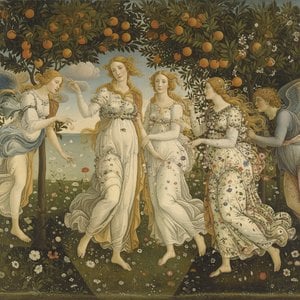
Niccolò di Tommaso: A Florentine Renaissance Painter
Niccolò di Tommaso (c. 1346 – 1376), also known as Niccolo di Tommaso, stands as a pivotal figure in the burgeoning artistic landscape of Florence during the Early Renaissance. Born into a family rooted in Florentine commerce and craftsmanship, his formative years coincided with the flourishing intellectual fervor that propelled the city to prominence as a center for humanist scholarship and artistic innovation. While biographical details remain scarce—a common predicament for artists of his era—scholarly research confirms his membership within the Arte dei Medici e Speziali around 1346, marking him firmly within the influential guild system that governed Florentine art production.
- Early Influences: Niccolò’s artistic trajectory was undeniably shaped by Maso di Banco, a master sculptor whose monumental works championed naturalism and anatomical precision—principles that would permeate Niccolò's own oeuvre. However, his collaboration with Nardo di Cione on the Strozzi Chapel in Santa Maria Novella represents perhaps his most significant formative experience. This ambitious project demanded meticulous observation of human anatomy and perspective, cementing Nardo’s stylistic dominance as a guiding force for Niccolò’s artistic development.
- Notable Commissions & Projects: By 1370, Niccolò was actively engaged in the Strozzi Chapel undertaking, demonstrating his commitment to mastering advanced artistic techniques. Simultaneously, he undertook the fresco commission for San Giovanni Fuorcivitas in Pistoia, showcasing his ability to convey religious narratives with palpable emotion and dramatic visual impact. His journey to Naples in 1371 culminated in the creation of a magnificent polyptych destined for Sant’Antonio Abate—a testament to his artistic versatility and ambition.
Major Artistic Achievements & Style
Niccolò di Tommaso's artistic style embodies the hallmarks of Early Renaissance Florentine painting: a harmonious blend of classical ideals with humanist observation. He skillfully employed chiaroscuro—the dramatic interplay between light and shadow—to sculpt figures with remarkable realism, capturing subtle nuances of expression and musculature. His frescoes are characterized by meticulous detail and vibrant color palettes, reflecting an unwavering dedication to portraying biblical scenes and religious iconography with profound psychological depth.
- Iconic Paintings: Among his most celebrated works are the Coronation of the Virgin (Accademia, Venice), a masterpiece showcasing Nardo di Cione’s influence on Niccolò's compositional choices; and The Massacre of Innocents (Uffizi, Florence), which exemplifies his masterful manipulation of light and shadow to convey narrative urgency and emotional intensity. Furthermore, he adorned San Lorenzo with Madonna del Parto, capturing the poignant beauty of motherhood with exquisite sensitivity.
Legacy & Historical Significance
Niccolò di Tommaso’s contribution to Florentine art is undeniable—though overshadowed by contemporaries like Piero della Francesca and Filippo Brunelleschi. His work stands as a crucial link between Maso di Banco's sculptural realism and the burgeoning artistic dynamism of Nardo di Cione, establishing him as a cornerstone of Early Renaissance stylistic evolution. Despite the paucity of biographical information, his enduring legacy resides in the profound impact of his paintings—particularly The Massacre of Innocents—which continue to captivate audiences with their evocative imagery and masterful execution. His art serves as an invaluable window into the artistic sensibilities of Florence during its golden age, cementing his place within the annals of Renaissance history.
Further Exploration
You can delve deeper into Niccolò di Tommaso’s artistic world by examining related artworks:
Tommaso che Dubita (Caravaggio)Lo Scetticismo di San Tommaso (Rembrandt)Portrait del Cardinale Niccolò Albergati (Jan van Eyck)Masaccio