Early Life and Career
Nakabayashi Gochiku I (中林梧竹), born in Osaka, Japan, in 1861, was a pivotal figure in the Nihonga art movement—a transformative effort to revitalize traditional Japanese painting while absorbing elements of Western artistic sensibilities. From his formative years, he demonstrated an unwavering commitment to mastering calligraphy and drawing techniques, initially mentored by Ichikawa Beian, a celebrated poet-calligrapher who profoundly shaped his artistic vision. Recognizing the importance of broadening his horizons, Gochiku embarked on a journey to Qing China in 1882, where he studied under Pan Cun—a renowned Chinese calligrapher—further honing his skills and absorbing stylistic influences from the ancient art forms of the Han and Six Dynasties periods. Upon returning to Japan in 1884, he diligently recreated rubbings from these monumental relics, solidifying his understanding of artistic heritage and establishing a foundation for his future endeavors.
Artistic Style and Contributions
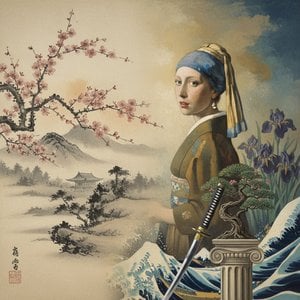
Gochiku I’s oeuvre is characterized by its masterful blend of traditional Japanese aesthetics with subtle Western influences—a hallmark of Nihonga itself. His paintings frequently depicted captivating narratives drawn from Japanese folklore and mythology, alongside serene landscapes imbued with evocative symbolism. Unlike many artists of his time who adhered strictly to established conventions, Gochiku embraced experimentation while retaining a deep respect for the foundational principles of Japanese art. He skillfully employed techniques rooted in centuries-old traditions—such as *sumi-e* (ink wash painting)—combined with innovative approaches gleaned from observation and artistic exploration. This duality resulted in artworks that resonated with both spiritual depth and visual beauty, cementing his place among Japan’s most influential painters.
Notable Works and Exhibitions
Nakabayashi Gochiku I's artistic legacy is enshrined in numerous museums across Japan, notably the Osaka City Museum of Fine Arts, which proudly showcases a selection of his masterpieces—demonstrating his unparalleled command of Nihonga technique. His paintings have graced prestigious exhibitions both domestically and internationally, profoundly impacting subsequent generations of artists and establishing him as a cornerstone of 20th-century Japanese art history. Among his most celebrated creations is “Copy of the Inscription on the Chugong Bell,” a meticulously rendered depiction that exemplifies Gochiku’s dedication to capturing the essence of Chinese calligraphy—a testament to his intellectual curiosity and artistic ambition.
Teaching and Mentorship
Beyond his prolific output as an artist, Nakabayashi Gochiku I served as a devoted teacher and mentor—inspiring countless young talents to pursue their own artistic paths. Recognizing the importance of preserving and advancing Nihonga’s traditions, he imparted invaluable knowledge and guidance to aspiring painters, ensuring that his stylistic innovations would continue to inspire creativity for years to come. His influence extended far beyond the immediate circle of his students, shaping the broader landscape of Japanese art education and fostering a spirit of artistic inquiry.
Legacy and Impact
Nakabayashi Gochiku I’s enduring legacy transcends mere artistic achievement—he fundamentally reshaped Japan's visual culture by championing a harmonious fusion of Eastern and Western artistic traditions. His pioneering approach to Nihonga established him as an icon of innovation within the art world, influencing artists who followed in his footsteps and contributing significantly to the evolution of Japanese aesthetics. As a symbol of cultural pride and artistic excellence, Gochiku I remains revered as one of Japan’s most significant figures—a testament to his unwavering dedication to preserving and advancing the nation's artistic heritage.