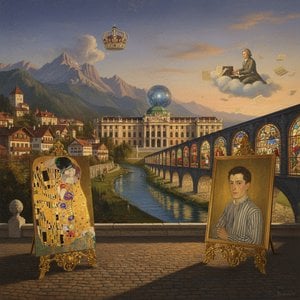
L'Obiettivo di un'Epoca d'Oro: La Vita e l'Eredità di Moritz Nähr
Al crepuscolo del XIX secolo, mentre le rigide strutture della tradizione accademica iniziavano a incrinarsi sotto il peso della modernità, un nuovo modo di vedere emerse dal cuore di Vienna. Al centro di questa rivoluzione visiva si stagliava Moritz Nähr, un artista la cui macchina fotografica non si limitava a registrare volti, ma catturava l'anima stessa della Secessione Viennese. Nato nel 1859 da un mercante di mobili viennese, Nähr possedeva una duplice prospettiva unica: una comprensione pratica della forma e una grazia estetica ereditata da suo padre, Johann Georg Nähr, fuse con un legame intimo con l'avanguardia bohémien. La sua vita era indissolubilmente legata al fermento culturale della sua epoca, collocandolo nel santuario più intimo delle menti più influenti del XX secolo.
Il percorso artistico di Nähr fu plasmato dai corridoi condivisi della sua giovinezza, in particolare durante gli anni trascorsi alla Bernhard Speneder Private School. Fu proprio qui che strinse un legame indissolubile con Gustav Klimt, un'amicizia che si sarebbe evoluta in una delle collaborazioni più significative della storia della fotografia. Mentre Klimt guidava la lotta contro la stagnazione artistica attraverso il movimento della Secessione, Nähr ne divenne il cronista non ufficiale. Il suo obiettivo fornì un contrappunto vitale e spontaneo alle grandi tele spesso dorate dell'epoca, offrendo invece un'intimità monocromatica e essenziale che umanizzava le icone del modernismo.
Catturare lo Spirito della Secessione
L'opera di Moritz Nähr trascende i confini del ritratto tradizionale, agendo come un profondo documento storico di un'epoca intellettuale. Attraverso la sua maestria nella fotografia in bianco e nero, catturò le figure luminose di Vienna: dal genio musicale di Gustav Mahler alla profondità filosofica di Ludwig Wittgenstein. La sua capacità di manipolare luci e ombre gli permise di andare oltre la semplice somiglianza, tendendo verso una verità psicologica che rispecchiava lo spirito sperimentale dei suoi contemporanei. Nelle sue mani, la fotocamera divenne uno strumento d'avanguardia, documentando non solo le persone, ma il mutevole zeitgeist di una città in transizione.
Alcune delle sue opere più evocative fungono da finestre su momenti privati di grandezza:
- La Documentazione del Fregio di Beethoven: Il suo straordinario registro fotografico della 14ª mostra della Secessione Viennese, in particolare la sala laterale sinistra che ospitava il monumentale fregio di Klimt, rimane un archivio essenziale di trionfo architettonico e artistico.
- Ritratti Intimi di Klimt: Che ritraesse il pittore in un momento di quieta dignità sulle rive del lago Attersee o la tenera e inaspettata vulnerabilità di Gustav Klimt con un gatto, Nähr spogliava la figura pubblica per rivelare l'uomo dietro il mito.
Un'Eredità Visiva Duratura
Il significato storico di Moritz Nähr risiede nel suo ruolo di ponte tra il tangibile e l'effimero. Mentre le pitture del movimento secessionista cercavano spesso di immortalare i soggetti attraverso la foglia d'oro e trame intricate, la fotografia di Nähr catturava ciò che è fugace, crudo e autentico. Egli documentò gli stessi spazi in cui l'arte veniva ridefinita, assicurando che l'atmosfera delle esposizioni secessioniste non andasse mai perduta nel tempo. La sua opera funge da compagno vitale alle belle arti dell'epoca, fornendo il contesto necessario per comprendere i volti e gli ambienti che hanno dato vita al modernismo.
Sebbene sia scomparso nel 1945, segnando la fine di un'era molto simile a quella che aveva documentato, l'eredità di Nähr rimane intatta. Egli si pone come una figura cruciale il cui lavoro ci permette di rivisitare una Vienna definita da un'intensa creatività e da un coraggio intellettuale. Attraverso il suo approccio meticoloso e il suo occhio acuto, le ombre del passato vengono portate in un fuoco nitido e duraturo, ricordandoci che la vera essenza dell'arte risiede spesso nei momenti silenziosi e non posati, catturati tra uno scatto e l'altro.
Domande e risposte
Quali opere di Moritz Nähr sono le più visualizzate?
È disponibile una pagina Statistiche dedicata a Moritz Nähr, che presenta le statistiche relative alle sue opere su questo sito web.
Dove posso vedere tutte le opere di Moritz Nähr?
Tutte le opere di Moritz Nähr presenti su questo sito web sono consultabili nella pagina Tutte le opere dell'artista.
Dove si possono trovare le opere di Moritz Nähr raggruppate per palette?
Per trovare le opere di Moritz Nähr raggruppate per una specifica palette, consulta la pagina Per palette di colori dell'artista.