Early Life and Training
Mori Tetsuzan (森徹山), born Yoshino in Japan around 1775, emerged from a family steeped in artistic tradition. His lineage traced back to Mori Sosen (森宗山), a celebrated landscape painter who established the Maruyama School—a pivotal force shaping Japanese art during the late Edo period. From a young age, Tetsuzan received intensive training under the tutelage of Mori Tetsuzan II (森徹山二), furthering his mastery of Maruyama Ōkyo’s distinctive style. This formative influence instilled in him an unwavering commitment to capturing the essence of nature with bold colors and decisive brushstrokes—a hallmark of Kyoto art at that time.Artistic Style and Contributions
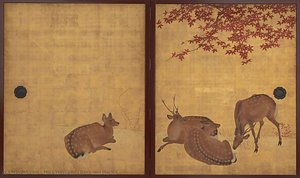
Tetsuzan's artistic vision was firmly rooted in Chinese painting principles, reflecting the pervasive cultural exchange between Japan and China throughout his lifetime. However, he skillfully adapted these traditions to forge a uniquely Japanese aesthetic. His canvases pulsated with vibrant hues—particularly crimson and emerald—contrasted against serene backgrounds of misty mountains and tranquil lakes. The artist’s technique involved meticulous layering of pigments, creating textures that conveyed depth and luminosity. He excelled in depicting animals—deer, cranes, and foxes—often imbued with symbolic significance representing longevity, nobility, and cunning respectively. His works stand as testament to the enduring beauty of Japanese landscape painting and animal art.Notable Artwork
Although precise documentation regarding Tetsuzan’s oeuvre remains scarce, his contribution to Maruyama School's legacy is undeniable. Among the few surviving pieces—particularly “Deer and Maples”—are masterpieces that exemplify the school’s core tenets: harmonious composition, expressive brushwork, and masterful color orchestration. These paintings capture not merely visual representations but also profound emotional resonance, conveying a sense of tranquility and contemplation.Influences and Connections
Tetsuzan's artistic journey intersected with prominent figures in Japanese art history. Ōkyo’s teachings solidified his understanding of landscape painting techniques and philosophical considerations—a cornerstone of Maruyama School’s aesthetic ideals. Furthermore, he benefited from the patronage of influential families who recognized the value of supporting artists dedicated to preserving cultural heritage.Historical Significance
Mori Tetsuzan's work represents a crucial link between Kyoto’s artistic traditions and Edo’s burgeoning urban landscape. He embodies the spirit of his era—a period marked by both intellectual ferment and artistic refinement. His enduring legacy continues to inspire contemporary artists, demonstrating the timeless appeal of Japanese art and its ability to convey profound beauty and contemplation.Domande e risposte
Dove si possono trovare le opere di Mori Tetsuzan raggruppate per parole chiave?
Le opere di Mori Tetsuzan possono essere esplorate tramite parole chiave nella pagina Per parole chiave dell'artista. Ogni parola chiave raggruppa le opere correlate.
Dove posso vedere le opere di Mori Tetsuzan in ordine cronologico?
È disponibile una cronologia delle opere di Mori Tetsuzan: la pagina Cronologia delle opere dell'artista presenta le opere in ordine cronologico.
Dove si possono trovare le opere di Mori Tetsuzan raggruppate per movimento artistico?
I movimenti di Mori Tetsuzan sono consultabili nella pagina Tutti i movimenti, che raggruppa le opere per movimento.