The Legacy of Bentwood: Exploring the Genius of Michael Thonet
Michael Thonet (1796-1871) stands as a monumental figure in the annals of furniture design, irrevocably altering the aesthetic landscape of the Victorian era and establishing a tradition that continues to resonate within contemporary interiors. Born in Boppard am Rhein, Germany, his life was marked by an unwavering dedication to innovation—a pursuit that culminated in the revolutionary technique of bentwood furniture, transforming mass production and elevating craftsmanship to new heights.
Early Life & Apprenticeship: Thonet’s formative years were spent honing his skills as a cabinet maker under the tutelage of Johann Georg Wolffenbüttel, absorbing the principles of traditional woodworking while simultaneously cultivating an inquisitive spirit. This grounding in established methods proved crucial for his subsequent breakthroughs. He wasn't merely replicating existing styles; he possessed a deep understanding of material properties and construction techniques—a foundation that would underpin his groundbreaking experiments later in life.
Vienna & The Birth of Bentwood: Recognizing the limitations of solid wood construction—particularly its weight and cost—Thonet embarked on a period of experimentation fueled by a desire to push beyond conventional boundaries. Driven by an acute awareness of evolving tastes and technological possibilities, he tirelessly investigated methods for achieving curved shapes without resorting to complex joinery. This quest for efficiency wasn’t driven solely by economic considerations; it stemmed from a genuine fascination with exploring new creative avenues—a characteristic that would define his artistic vision throughout his career.
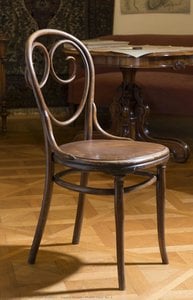
The Patent & Methodical Innovation: In 1859, Thonet secured a patent for a groundbreaking process involving steam-bending solid timber—a technique that dramatically reduced production time and material usage. This methodical approach wasn’t merely about efficiency; it was underpinned by meticulous observation of wood grain and structural integrity. He approached innovation with scientific rigor, meticulously documenting his findings and refining his methods based on empirical evidence—a testament to his intellectual curiosity and commitment to advancing the art of furniture making. The resulting bentwood chairs represented a radical departure from prevailing designs, prioritizing lightness, comfort, and elegance while simultaneously streamlining manufacturing processes.
Thonet's Designs & Influence: His iconic creations – notably the Rocking Chair No. 7500 and the Number 2 chair – exemplify this ethos, embodying a harmonious balance between form and function. These pieces are celebrated for their graceful curves, achieved through the ingenious manipulation of bentwood, creating comfortable seating that remains timelessly stylish. Rejecting ornate embellishments, he prioritized functionality alongside aesthetic beauty—a philosophy that profoundly influenced the burgeoning Art Nouveau movement and anticipated the streamlined forms of mid-century modernism. His designs resonated deeply with artists and intellectuals alike, establishing him as a pivotal figure in shaping the visual culture of his time.
The Thonet Company Legacy: Following Michael Thonet's death in 1871, his sons continued to operate the family business, ensuring that his pioneering techniques persisted. Today’s Thonet company remains one of the oldest furniture manufacturers globally, upholding a tradition of excellence and innovation—a testament to the enduring impact of a single visionary craftsman. The firm’s commitment to preserving Thonet's original methods has resulted in furniture designs that are instantly recognizable for their simplicity and elegance, cementing his place as an icon of German industrial design history.