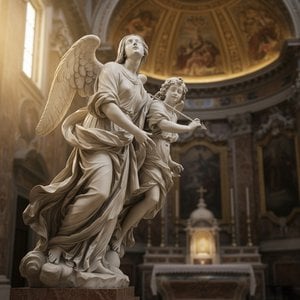
Matthias Bernard Braun (1684–1738): The Bohemian Baroque Titan
Matthias Bernard Braun, an Austrian sculptor born in Sankt Andrä-Wörth bei Innsbruck, Austria (1684), stands as one of the most prominent figures of the Baroque period in Bohemia. His artistic legacy continues to inspire awe and admiration for its masterful blend of technical skill and expressive vision—a testament to his unwavering dedication to capturing the grandeur and fervor of his era.
Early Life and Artistic Formation
Braun’s formative years were steeped in the traditions of Tyrolean sculpture, nurtured by his apprenticeship under Andreas Tamash, a respected sculptor of the early Baroque residing in Stams near Innsbruck. This initial training instilled within him a profound understanding of stone carving techniques and established a foundational aesthetic sensibility deeply rooted in Italian influences—a stylistic hallmark that would define his entire oeuvre. The patronage of Count František Antonín Špork proved decisive, propelling Braun’s ascent to prominence and securing commissions for monumental sculptures that would reshape the artistic landscape of Bohemia. He began his artistic journey under Tamash's guidance, absorbing the essence of Tyrolean sculptural tradition—a heritage characterized by meticulous craftsmanship and a reverence for classical forms. This formative experience profoundly shaped Braun’s subsequent stylistic choices, establishing him as a sculptor deeply attuned to the aesthetic ideals prevalent in Italy during his time.
The Venetian Influence and Artistic Style
Braun's artistic maturation culminated in a transformative apprenticeship in Venice, Bologna, and Rome—cities pulsating with the dynamism of the Baroque movement. Exposure to Michelangelo Buonarroti’s sculptural grandeur and Gian Lorenzo Bernini’s theatrical flair profoundly impacted his stylistic sensibilities. Recognizing the unparalleled expressive potential of sculpture, Braun embraced the Baroque ethos – dramatic lighting, intense emotion, and dynamic compositions – channeling these influences into works characterized by meticulous detail and a palpable sense of movement. His sculptures are imbued with an unmistakable Venetian spirit, reflecting the artistic fervor of the time and establishing him as a key propagator of Italian sculpture within Central Europe. He meticulously studied Buonarroti’s monumental sculptures—particularly those housed in St Peter's Basilica—absorbing his mastery of form and technique. Similarly, Bernini’s theatrical stagecraft captivated Braun’s imagination, inspiring him to infuse his own creations with dynamism and grandeur.
Notable Works: A Symphony in Stone
Braun’s artistic output yielded masterpieces that continue to captivate audiences worldwide. The Statuary of Saint Ludmila on Charles Bridge in Prague—a monumental achievement embodying the spirit of Bohemian Baroque—stands as an enduring symbol of civic pride and artistic innovation. This imposing sculpture, executed with unparalleled precision and imbued with a palpable sense of solemnity, exemplifies Braun’s ability to convey religious devotion through sculpted form. Equally impressive is his contribution to St Jude Thaddeus, housed in the National Gallery Prague, showcasing Braun’s unparalleled ability to convey religious devotion through sculpted form. The intricate drapery and expressive pose of Saint Ludmila—a testament to Braun's technical prowess—remain a source of fascination for art historians and visitors alike. Furthermore, his work graced the interiors of Prague palaces and churches, cementing his reputation as a sculptor of unparalleled distinction.
Legacy and Historical Significance
Matthias Bernard Braun’s influence extended far beyond his lifetime, shaping the artistic sensibilities of subsequent generations in Bohemia and establishing him as an icon of Baroque sculpture. His workshop fostered a vibrant tradition of sculptural craftsmanship, nurturing talent and perpetuating stylistic innovations that resonate to this day. Braun's sculptures serve as tangible reminders of a pivotal moment in Bohemian history—a period marked by cultural flourishing and aristocratic patronage—and continue to inspire artists and scholars alike. He remains an undisputed champion of Baroque style and technique, securing his place among the greatest sculptors of his era and ensuring that his artistic legacy endures for centuries to come. His enduring fame testifies to the transformative power of art and its ability to transcend temporal boundaries—a testament to Braun’s unwavering commitment to excellence and his indelible contribution to the cultural heritage of Bohemia.