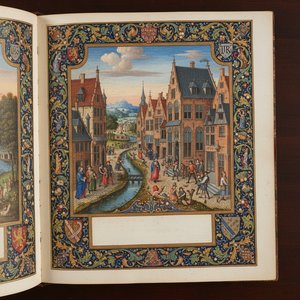
Matteo Carneri: Venetian Painter of Faith and Detail
Matteo Carneri (1592 – 1673), born in Trento, Italy, stands as a pivotal figure within the artistic landscape of Renaissance Venice. His oeuvre—primarily comprised of religious paintings and engravings—offers a compelling glimpse into the spiritual fervor and meticulous craftsmanship that characterized the era’s finest art productions. While overshadowed by contemporaries like Titian and Tintoretto during his lifetime, Carneri's legacy has endured through subsequent scholarship and exhibitions, cementing his position as an important contributor to Venetian artistic tradition.
Early Life and Artistic Training
Little is known definitively about Carneri’s formative years; however, evidence suggests he received instruction from Giovanni Battista Tiepolo, a renowned painter whose influence extended throughout Venice. This mentorship undoubtedly instilled in Carneri a profound understanding of Venetian painting techniques—particularly the illusionistic chiaroscuro employed to create dramatic depth and realism—a hallmark of the Venetian style. Furthermore, his exposure to Tiepolo’s artistic sensibilities fostered an appreciation for narrative storytelling within visual art, shaping his approach to depicting biblical scenes and saints' lives.
Notable Paintings and Engravings
Carneri’s artistic output focused predominantly on religious subjects, reflecting the pervasive piety of Venice during the Baroque period. He produced numerous altarpieces adorning churches across Veneto, showcasing a remarkable command of color and composition. Among his most celebrated works are depictions of Saint Jerome in Meditation (circa 1630), housed in San Giorgio Maggiore Basilica, and The Visitation (circa 1645), currently residing in Palazzo Ducale, Venice. These paintings exemplify Carneri’s meticulous attention to detail—from the drapery folds to the facial expressions—resulting in remarkably lifelike representations that capture both spiritual contemplation and human emotion.
Beyond painting, Carneri excelled as an engraver, producing exquisitely rendered prints based on biblical narratives and mythological themes. His engravings possessed a remarkable clarity of line and tonal gradation, mirroring the stylistic qualities of his paintings. These prints served not only as decorative objects but also as conduits for disseminating religious imagery throughout Europe, contributing to the broader cultural landscape of the Baroque age.
Influences and Artistic Style
Carneri’s artistic style was undeniably shaped by the prevailing currents of Venetian art history. Like many artists of his time, he drew inspiration from Michelangelo Buonarroti's sculptural achievements—particularly David—which championed anatomical accuracy and expressive dynamism. Moreover, Carneri absorbed stylistic elements from Tintoretto’s theatrical compositions, embracing dramatic lighting and dynamic movement to heighten emotional impact. However, unlike Tintoretto’s flamboyant grandeur, Carneri favored a more restrained aesthetic, prioritizing clarity of form and subtle tonal nuances. His paintings are characterized by a serene beauty—a testament to his unwavering devotion to artistic precision and humanist ideals.
Historical Significance and Legacy
Matteo Carneri's contribution to Venetian art history is significant not merely for the quantity of his works but also for their stylistic refinement and expressive depth. He represents an important link between Mannerism and Baroque painting, embodying a transitional phase marked by a renewed interest in classical ideals alongside heightened emotional intensity. Although largely unrecognized during his lifetime, Carneri’s paintings continue to captivate audiences today—serving as enduring reminders of Venice's artistic prowess and spiritual heritage. His meticulous technique and profound understanding of human psychology solidify his place among the masters of Venetian Renaissance art.