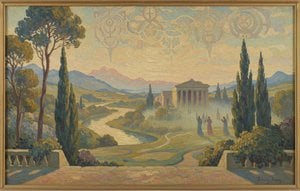
Museums on APS: Museo Nazionale di Storia Naturale del Canada
Top 3 works: Bison & Wolf Diorama
Martin Lipman: Bridging Philosophy and Artistic Vision
Martin Lipman (August 24, 1923 in Leiden, Netherlands) stands as a singular figure at the intersection of philosophy and artistic expression—a testament to the belief that profound thought can inspire breathtaking creativity. Born into Dutch intellectual heritage, Lipman’s journey has been marked by academic rigor, pedagogical innovation, and a distinctive approach to representing the natural world through meticulously crafted dioramas and sculptures. This biography delves into his formative years, groundbreaking contributions to philosophy for children, artistic endeavors, and enduring legacy as an influential thinker and artist.
Early Life & Academic Foundations
Lipman’s upbringing instilled in him a deep appreciation for intellectual curiosity and critical thinking—qualities that would shape his lifelong pursuits. He pursued undergraduate studies at Leiden University, focusing on mathematics and philosophy, establishing a bedrock of analytical reasoning that would underpin his future endeavors. Notably, he served in the United States Army during World War II, gaining invaluable experience navigating complex challenges while fostering international understanding. His Fulbright Scholarship at Sorbonne University in Paris solidified his connection to European intellectual traditions and nurtured collaborations with fellow scholars—a formative period that cultivated his passion for exploring fundamental questions about existence and knowledge. This early exposure to diverse perspectives profoundly influenced his worldview and fueled his dedication to promoting critical thinking skills throughout his career.
The Lipman Approach: Philosophy for Children
Lipman’s most enduring legacy resides in the “Lipman Approach,” a revolutionary method of fostering philosophical inquiry among young learners. Recognizing children's innate capacity for abstract thought, he championed an educational paradigm that prioritizes dialogue, questioning, and imaginative exploration—challenging conventional didactic techniques. This approach emphasizes collaborative problem-solving and encourages students to grapple with ethical dilemmas and conceptual complexities, mirroring the core tenets of Lipman’s philosophical worldview. His conviction that children possess untapped potential for intellectual engagement led him to develop innovative pedagogical strategies designed to stimulate curiosity and cultivate reasoned argumentation. He tirelessly advocated for incorporating philosophical discussions into curricula—inspiring educators across Europe and beyond to embrace a more holistic approach to child development.
Sculptural Exploration: Dioramas as Conceptual Manifestations
Beyond his pedagogical contributions, Lipman is celebrated for his captivating dioramas—elaborate miniature landscapes that transcend mere representation and embody profound philosophical concepts. These sculptures are not simply recreations of natural environments; they serve as visual metaphors for exploring themes such as relativity, perception, and the interconnectedness of existence. Utilizing meticulous craftsmanship and a keen eye for detail, Lipman transforms raw materials into evocative artworks—demonstrating his conviction that artistic expression can illuminate intellectual insights. His dioramas, notably “Bison & Wolf,” exemplify this fusion of philosophy and art, inviting viewers to contemplate complex ideas within aesthetically compelling frameworks. The careful selection of materials and the deliberate arrangement of elements reflect Lipman’s philosophical perspective—creating immersive experiences that stimulate contemplation and provoke thought.
Notable Achievements & Artistic Recognition
Lipman’s scholarly work has garnered considerable acclaim, culminating in positions at Leiden University where he continues to inspire students with his passion for philosophical inquiry. He authored “On the Fragmentalist Interpretation of Special Relativity,” a seminal contribution to physics and philosophy—highlighting the importance of conceptual frameworks in shaping scientific understanding. Furthermore, Lipman's dedication to fostering intellectual discourse has been recognized through numerous awards and honors—affirming his commitment to promoting critical thinking and enriching cultural dialogue. His sculptures have been exhibited internationally, securing his place as one of the foremost artists exploring philosophical themes through visual media. He remains a respected voice in the field—a testament to the transformative power of combining artistic creativity with intellectual rigor.
A cura del team editoriale di WahooArt.com
Quiz d'arte
Per ogni domanda è presente una sola risposta corretta.
Domanda 1:
Qual è stata l'influenza principale della Filosofia per Bambini nello sviluppo educativo di Martin Lipman?
Domanda 2:
In quale istituzione europea Lipman ha ottenuto una borsa Fulbright che ha consolidato il suo interesse per le tradizioni filosofiche europee?
Domanda 3:
Qual è l'elemento distintivo delle opere di Martin Lipman, come i diorami "Bison & Wolf"?
Domanda 4:
Martin Lipman è noto per aver scritto un libro fondamentale sulla relatività che ha avuto un impatto significativo nel campo della filosofia e della fisica.
Esplora l'opera di Henri Martin, maestro dell'Impressionismo e del Simbolismo francese. Analisi approfondita della sua tecnica divisionista, dei cicli decorativi e del suo contributo alla storia dell'arte.
Discover Charles Martin Hardie (1858-1916), a pivotal Scottish artist renowned for his evocative portraits and pioneering colour woodcut technique. Explore his life, work, and lasting influence on British printmaking.
Esplora i 25 capolavori di Henri Matisse, il maestro del fauvismo e dei colori vivaci. Scopri la storia, lo stile unico e l'impatto culturale di ogni dipinto. Trova riproduzioni arte di alta qualità per decorare casa tua su WahooArt.com.