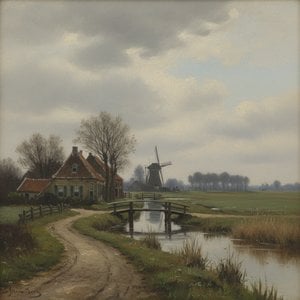
Marie Cazin: A Pioneer of Impressionistic Landscape Painting
Marie Cazin (1844 – 1924) stands as a remarkable figure in the annals of French art history, particularly recognized for her contribution to landscape painting and sculptural artistry during the Belle Époque. Born Marie Clarisse Marguerite Guillet in Paimbœuf, Brittany, she embarked on an artistic journey marked by unwavering dedication and collaboration with fellow artists like Juliette Peyrol-Bonheur and Jean-Charles Cazin—whom she married in 1868—establishing herself as a prominent voice within the burgeoning Impressionist movement. Her life’s work embodies a profound engagement with capturing the beauty of the natural world alongside exploring themes of femininity and labor, cementing her legacy as an artist who championed both artistic innovation and social commentary.
Early Life & Education: The Seeds of Artistic Talent
Marie Cazin's formative years were spent in Paimbœuf, where she honed her artistic skills under the tutelage of Juliette Peyrol-Bonheur, a celebrated Impressionist painter herself. This mentorship instilled in her a deep appreciation for plein air painting—working outdoors directly from observation—a technique central to the Impressionistic aesthetic. Peyrol-Bonheur’s influence wasn't merely pedagogical; it fostered within Cazin a conviction that art should strive to faithfully represent reality, mirroring the spirit of the era. The Breton landscape—characterized by its rugged coastlines and verdant hills—became an enduring subject for her artistic explorations.
Marriage & Artistic Partnership: A Shared Vision
Her union with Jean-Charles Cazin fostered an enduring artistic collaboration. Together, they navigated the challenges of establishing a career as artists while raising a family, fostering a supportive environment for creative exploration. Jean-Charles Cazin’s encouragement and understanding proved invaluable to Marie's artistic pursuits—a testament to their profound connection beyond the domestic sphere. Their partnership extended beyond mere companionship; it fueled mutual inspiration and ensured that their artistic endeavors remained intertwined throughout their lives.
The Flowering of Impressionism and Sculptural Recognition
Cazin’s artistic breakthrough arrived in the 1870s when she began exhibiting her paintings at the Salon des Artistes Français, gaining exposure to Parisian art circles and attracting critical acclaim. Notably, she participated in the Royal Academy of Arts exhibitions of 1874 and 1878, showcasing her talent alongside other prominent artists of the time—figures like Monet and Renoir who were shaping the very essence of Impressionism. Her canvases captured fleeting moments of light and color with remarkable precision, reflecting the Impressionists’ fascination with capturing the ephemeral qualities of nature. However, it was her foray into sculpture that truly distinguished her artistic achievements. Collaborating closely with Jean-Charles Cazin, she created monumental sculptures like “The Young Ladies,” which garnered considerable attention and were purchased by the government in 1899—now housed at the Musée du Luxembourg—demonstrating her versatility as an artist across mediums. This ambitious project showcased her technical prowess and solidified her reputation as a sculptor of distinction.
Les XX & Artistic Innovation: Embracing Avant-Garde Ideas
Marie Cazin’s involvement with Les XX, a group of avant-garde artists advocating for artistic freedom and experimentation, further cemented her position within the intellectual landscape of Belle Époque Paris. Les XX challenged traditional artistic conventions—particularly academic realism—and championed new approaches to artistic expression. Cazin's participation in this influential collective signaled her willingness to embrace innovative ideas and contribute to debates about art’s role in society—a characteristic that mirrored the spirit of the time and distinguished her from many of her contemporaries.
Themes of Femininity & Labor – A Distinctive Artistic Voice
Cazin’s artistic vision consistently centered on portraying women engaged in everyday activities—a deliberate choice that reflected the societal context of her time while simultaneously challenging conventional representations of femininity. Her paintings frequently depicted women working in rural settings, capturing scenes of agricultural labor and domestic life with sensitivity and realism. This focus wasn't merely stylistic; it served as a commentary on the role of women in society and championed their contributions to the economic fabric of France—a theme that resonated deeply with her own experiences and informed her artistic sensibilities. Her depictions of female figures often conveyed strength, resilience, and dignity—qualities that defied stereotypical portrayals prevalent during the Belle Époque.
Legacy & Enduring Influence
Marie Cazin’s artistic legacy extends beyond her individual creations—she nurtured the creative spirit within her son, Michel Cazin, who became a celebrated engraver, continuing the family's artistic tradition. Her enduring influence can be seen in her contributions to decorative arts, particularly her frescoes commissioned for the Gobelins Manufactory, and her involvement in memorial sculpture projects honoring figures like Hubert Cazin and Paul perrochaud—works that continue to inspire admiration for their beauty and craftsmanship. Ultimately, Marie Cazin remains an inspiring example of a female artist who navigated the complexities of artistic ambition with unwavering conviction—a testament to her enduring contribution to French art history.